

Showing posts with label ▷ 2014 Jun 07. Show all posts
Showing posts with label ▷ 2014 Jun 07. Show all posts
Saturday, June 07, 2014

Def'n: Green Wall & Gardening in Restricted Spaces
SSTattler: We will concentrate with “Green Wall”, "Tower Gardening”, and below, in "Gardening in Restricted Spaces" but there many options available. Very suitable in a small area i.e. apartment, balcony, ...
A green wall is a wall partially or completely covered with vegetation that includes a growing medium, such as soil. Most green walls also feature an integrated water delivery system. Green walls are also known as living walls, biowalls, ecowalls, or vertical gardens.
Such walls may be indoors or outside, freestanding or attached to an existing wall, and come in a great variety of sizes. As of 2012, the largest green wall covers 2,700 square meters (29,063 square feet or more than half an acre) and is located at the Los Cabos International Convention Center.
Green walls have seen a recent surge in popularity. Of the 61 large-scale outdoor green walls listed in an online database provided by greenroof.com, 80% were constructed in or after 2009 and 93% dated from no later than 2007. Many Iconic green walls have been constructed by Institutions and in public places such as Airports and are now becoming common, to improve the aesthetics. For example: Edmonton International Airport(Canada), Changi International Airport (Singapore) & Chhattrapati Shivaji International Airport (Mumbai, India).
Green Wall From Wikipedia, the free encyclopedia
 |
| An indoor green wall |
Such walls may be indoors or outside, freestanding or attached to an existing wall, and come in a great variety of sizes. As of 2012, the largest green wall covers 2,700 square meters (29,063 square feet or more than half an acre) and is located at the Los Cabos International Convention Center.
Green walls have seen a recent surge in popularity. Of the 61 large-scale outdoor green walls listed in an online database provided by greenroof.com, 80% were constructed in or after 2009 and 93% dated from no later than 2007. Many Iconic green walls have been constructed by Institutions and in public places such as Airports and are now becoming common, to improve the aesthetics. For example: Edmonton International Airport(Canada), Changi International Airport (Singapore) & Chhattrapati Shivaji International Airport (Mumbai, India).
Video: Green Wall & Gardening in Restricted Spaces
SSTattler: Many way to make a vertical garden especially if you have restricted spaces. Look at the tower, cheap bottles, pallet, hydroponic, build DIY or buy, ...,
A brief introduction to the vertical Garden Tower, the first and only available vertical patio farm which integrates composting and generates fertilizer! http://www.gardentowerproject.com (visit to learn more, available today!) Organic gardening anywhere and everywhere!
Standard YouTube License @ Garden Tower Project
The Garden Tower! The Composting Vertical Patio Farm
Published on Jan 12, 2013A brief introduction to the vertical Garden Tower, the first and only available vertical patio farm which integrates composting and generates fertilizer! http://www.gardentowerproject.com (visit to learn more, available today!) Organic gardening anywhere and everywhere!
Standard YouTube License @ Garden Tower Project
Saturday Comics

| For Better and For Worse Lynn Johnston - 2014/06/01  “You put (giggle) your underware..." | Dilbert Scott Adams - 2014/06/01  “This only make sense if the inspirational links..." |
Peanuts Charles Schulz - 2014/06/01 
“…my whole room smells like a wet dog!"
| Doonesbury Garry Trudeau - 2014/06/01  “Nephew, I think Z+Z Bud needs a motto,..." |
** I tried to get low or free price at the people http://www.UniversalUclick.com/ for the images for the cartoons. It was too high for Stroke Survivors Tattler i.e. we are not a regular newspaper and our budget is very low. Fortunately, you will have to do only 1-click more to see the cartoon image, it is legit and it is free using GoComics.com and Dilbert.com.
Note: Now SSTattler are running cartoons starting on the previous Sunday.
Eclectic Stuff
 |
Definition: Eclectic(noun) a person who derives ideas, style, or taste from a broad and diverse range of sources.
|
A New Guest Blogger for SSTattler:
Bill (William) Yates, M.D.
SSTattler: Welcome Bill Yates…! I think he has is nice articles for stroke survivors topics especially with his "neuroscience influence" approach. Please look at his Brain Post for more information.
See as well About Us. I will re-publish in September / 2014.
Guest Blogger - Bill (William) Yates, M.D.

See as well About Us. I will re-publish in September / 2014.
Guest Blogger - Bill (William) Yates, M.D.

- Translating Neuroscience Research into Advances for Better Care of Brain Disorders.
- Physician, Writer and Bird Photographer.
- Works at Laureate Institute for Brain Research:
- Research Psychiatrist, 1998 - present,
- Providing locum tenens psychiatric clinical and research services.
- Previous - Professor of Psychiatry:
- University of Iowa College of Medicine,
- University of Oklahoma College of Medicine.
- Education:
- University of Iowa,
- University of Nebraska College of Medicine,
- University of Iowa Graduate School.
- Lives in Tulsa, OK.
- Bragging Rights - Ranked #6 in the world in neuroscience influence on Twitter via wefollow.com.
- Follow me on Twitter at @WRY999 (www.twitter.com/WRY999).
- Blog is located at Brain Post (brainposts.blogspot.com).
- Email at WRY888[at]gmail.com.
Adaptive Gardening Comes in Many Forms
 |
| Rebecca Dutton Home After a Stroke |
Spring is here and I am dreaming about seeing colorful flowers as I walk up to the front door of my house. To be honest, adapted gardening did not initially make me happy. The first year I did it I was repeatedly frustrated because it is difficult to handle delicate plants with one hand. The second year was enjoyable because I had made all the mistakes the year before. I have gradually learned to look at my first attempt to do familiar activities as a rehearsal rather than a failure.
 I garden in a pot placed on a bench. I have a big pot that will not dry out if I forget to water it every day. I used to traumatize each plant I pulled out of the store's container one-handed until I learned to let the plants dry out a little before I transplanted them. The roots break loose from the container more easily if the soil is dry. After I fill the pot with soil, I put a plastic ring I made from a used disposable cutting board on top of the dirt. The ring gives me something to lean the 1st row of plants against. It also lets me create an outer ring of dirt to keep the plants away from the pot so the heat from the sun will not burn them. After the pot is planted I remove the plastic ring.
 Joanne Murphy is a stroke survivor who is more ambitious. Here is a photo showing how she uses old milk crates to do raised gardening. Read more by clicking on Joanne's inside garden.
See the original article:
in
Sunday Stroke Survival ~ Gardening 2014
 |
| Jo Murphey The Murphey Saga |
 |
3 sisters planting
|
Last year's garden was a make shift of what I had on hand in an attempt to regain a joy and necessity in my life. My allergies were considerably lessened by eating my organically grown vegetables.
I never stop researching. I believe death is the absence of learning and believe you should learn (relearn) one new thing a day. Or at least I try too. I spend hours on the internet in Google, Youtube, Pintrest, and assorted other sites just researching possibilities.
I'm fairly open to new things. I tend to be an innovator and try new things. If it makes my life easier...BONUS!
So after dealing with bread flats, bag gardening, and milk crates last year, I'm trying some new things this year. I've got all my compost and all those bags of organic soil from last year.
This year I'm trying something different. I decided to do vertical and raised-raised bed square foot gardening to see which method is simpler. If I don't try, I won't know. I surfed the web and found the cheap alternative, because finances are extremely tight. Whose aren't, right? .
Little Celebrations
 |
| Pamela Hsieh Rehab Revolution |
I was never raised in an environment where I was praised for my very existence, even if supposedly I was very easy to take care of, a fast learner. So it's not like I've grown accustomed to being coddled or heavily encouraged by positivity, but I discovered early on -- like, within the first year -- that it is absolutely essential to honor the little gains you make.
Even if it seems like the world's most banal accomplishment, if it is something you weren't previously able to do, it is a big deal.

Remember that if you haven't lost it, you don't instinctively know how important and exciting it is to lose it and see it return, because you've cultivated it and made it come back. Because you've healed. And this is especially true if it took a long time, since rehab is an ongoing, indefinite effort sometimes.
Meaningful Rehab Goals
 |
| Barb Polan Barb’s Recovery |
I am a gardener - gardening is one of my favorite hobbies.
I started gardening at my grandparents’ house when I was in elementary school. My loving Italian grandmother had a charming garden in the middle of her yard – with hybrid tea roses and a huge bleeding heart plant (Dicentra spectabilis). Although I don’t currently have any roses other than Knockout, I have a medium-sized bleeding heart that I keep hoping will hit giant-sized one of these years. Every time I see it, I think of her.
A common refrain in stroke rehab is that in order for a patient to relentlessly work on rehab, he/she should be working toward a goal that is significant and meaningful for him/her. A former golfer will work more diligently if she’s working on swinging a golf club, not pinning clothespins on a pegboard.
If gardening had been the significant and meaningful accomplishment to have as a rehab goal, I’d have a reasonably short distance left – from easiest to most challenging skills: (1) being able to pull the garden cart behind me, (2) being able to scramble over the rocks and granite outcroppings in our yard, (3) being able to use a spade to make a hole to plant something, instead of a trowel, which takes forever, and (4) pushing a wheelbarrow.
Not Accepting Everything
 |
| Andrea A Year of Living In My Head |
So I am almost to the point of looking for a position that more fits my training. My concern is I could be a bit delusional that I can still produce the same quality of work as pre-stroke. I just don't know. I know when I started my garden job that absolute crazy feeling in my head when my boss gave me run on instructions as in : Do This, Do That, Move This, Look for This, etc etc. I could feel my brain actually scrambling and freezing and locking... it did not know (or that part of my brain is "gone") where to put a series of quick instructions -- so it would just go blank and not remember any of them. My short term storage has been impacted, and it feels as though it has been misplaced. It is very wierd being in my head when it is missing something. You ever have that? It's like there is some sort of memory of what was, what I could do, but there is no way to touch it. I have a memory of being very competent and accomplished, but I feel kinda bumbling and floaty sometimes. I also cannot trust my "gut" as much, as I have discovered errors in my instincts--and I am a very "gut instinct" person! With work over 3 months my memory has changed & improved so that I actually can remember a string of instructions (at least the first 3 or 4). Last week I made a appointment with an occupational/speech therapist to work on memory. I also notice the muscles on the left side of my body have a different consistency than others. They are always very flaccid-loose-relaxed as if I just had a year long massage and they are jelly. I am not really complaining, just noticing. Pre-stroke I always loved learning new things, and new ways to see things. I thank the lovely heavens that my appreciation of the diverse ways we can navigate through a life is not diminished.
See the original article:
in
Negative Space
 |
| Marcelle Greene Up Stroke |
Graphic design uses a concept called "negative space." It's the empty space around whatever it is you want your audience to look at. Negative space helps define the subject. Properly used it's as important as what is there.
If the subject is "my life," then the stroke helped bring it into focus. What's important? As I regain energy, how do I want to use it?
Two years before the stroke, I left an all-consuming career to pursue a lifelong dream to write. I did write…some…but in the heady rush of freedom, I also let my life become busy with non-writing. I cleaned my house and tended my garden as if Sunset magazine would be doing a photo shoot. I tutored out of a compulsive need to contribute financially. I devoted myself to becoming the Best Auntie in the World.
Since the stroke I don't clean. I don't garden. I don't see my nieces and nephews as often. The stroke created negative space. In the quiet parcels of time between therapy and the few household chores I manage, I find myself drawn to my desk. It's relatively comfortable to sit here gazing at the computer. But there is only so much on-line Scrabble I can play and then I yearn for something more. I start to write.
The stroke is helping me to become "the me" I always wanted to be. As if by design.
See the original article:
in
Spring
 |
| Grace Carpenter My Happy Stroke |
Some of my words and memories still seem to be lying dormant. Then when conditions are right, they poke up into my consciousness.
Last week my sister came by to prune my rosebushes. Then we walked around the yard. I'm not a great gardener, but when she commented about a particular plant, I was delighted that I could remember the name. That's sweet woodruff, I said. I started it from a few sprigs many years ago.
Almost every day I walk around the garden now, and almost every day I remember more: bleeding hearts, that I almost pulled up that first summer in our house; irises, that my friend brought from Philly, nine years ago; the peony, that never blooms but always looks on the verge of it.
These are my memories, my words, I thought proudly. My garden.

See the original article:
in
A New Beginning
 |
| Robin Rocky Mountain Stroke Survivors |
I feel like this is my first spring since the strokes. I wish I had the words to describe the profound difference between last year and this year while describing the profound difference between now and before the strokes. I am still so limited. But I can do things! My brain still gets so overloaded sometimes. But it recovers more quickly.
Last year, overdoing it would mean a week of recovery. And it didn’t take much to overdo it. This year, I can gently push myself. And when I do overdo it (because I am the sort of person who doesn’t know my limits!) instead of falling or lying in bed, clinging to the bed, telling myself over and over again that I am not actually spinning, I feel somewhat dizzy and really snappy. I don’t like this aspect of me now, but I’ve learned it’s common among stroke survivors. When my brain gets tired, everything seems to be coming in too fast, too loud, too bright, and I snap at my kids, my husband, my dog, or (most often actually) my “stupid arm” and “stupid strokes”.
Be that as it may, it is spring and I’m out in the garden again. I can walk over irregular surfaces like a pro with a really funny wide-based gait but without falling. I started numerous batches of seeds indoors and I can transplant 8-10 seedlings before I have to stumble back inside to rest. This is HUGE! This is freedom. I don’t have to wait for someone else to do it for me or just do one plant a day. Not only that, I haven’t killed a single seedling through clumsy handling (though I do have trouble getting them in the hole without mauling them somewhat).
An Open Letter to "Payers" Regarding Stroke Recovery: You're Doing it Wrong
 |
| Peter G. Levine Stronger After Stroke |
Dear Insurance Providers,
I'm sure you want to help stroke survivors. A survivor that is home in the pursuit of happiness is healthier and cheaper.
But there's a problem... The systems that insurance companies and Medicare ("payers") have developed is a hodgepodge based on a patchwork of incorrect assumptions and old science.
 The following are some recommendations to better align insurance regulations with the aspirations of survivors.
1. Make immediate screening for TPA mandatory, even in the most rural hospitals.
2. Where a survivor goes for therapy matters. Unfortunately, the decision determining where the lion's share of recovery will take place is made within the first few days post-stroke— way too soon. Given the emerging healing in the brain acutely there is simply no way for any clinician to predict where that survivor is going to be, functionally, in a week, let alone a month – or several months out.
Is Your Relatives’ Care Home Acting Illegally? 10 Tips #Continuoushealthcare. @Kateallatt
 |
| Kate Allatt A Rocky Stroke Recovery |
I have recently been embroiled in a case which has concerned me so much that I write this blog in the hope it helps others.
Power to you!
In trying to tackle the care home management team, this information may be useful to you too. With the recent and distressing BBC Panorama under cover report of care in ‘care’ homes, this is actually quite topical.
Standard YouTube License @ NewsForYou2
Clarify the registered nursing home has the patients bed funded with a combination of health & Social care? (If it’s not a care home with nursing care for the resident, it may be a residential placement care home.)
More News on Blood Pressure and Stroke
 |
| Jeff Porter Faith of Stroke |
High blood pressure is a well-known stroke risk factor.
Now, it's important for patients whose blood pressure moves around between doctor visits should seriously explore blood pressure control. A recent report links variable blood pressure to stroke and other risk:
When comparing the highest versus the lowest levels of between-visit variability in systolic blood pressure readings, there were greater risks of coronary heart disease, stroke, hospitalization for heart failure, and all-cause death through a maximum of 5.7 years of follow-up, according to Paul Muntner, PhD, of the University of Alabama at Birmingham (UAB) School of Public Health.

The findings were consistent across various subgroups, including in both patients who were and were not at their blood pressure goals, he reported at the American Society of Hypertension meeting here.
"The key thing is that blood pressure variability has been known about for a long time, but it's just been ignored as a challenge to properly measuring blood pressure," Muntner told MedPage Today. "And I think data over the past 5 years similar to these have begun to accumulate to suggest that it has prognostic importance."
See the original article:
in
Six Basic Rules For Good Health
 |
| Jackie Poff Stroke Survivors Tattler |
every day is even better.
2 .F***ing gives proper relaxation for your mind & body.
3. F***ing refreshes you.
4. After F***ing don't eat too much... Go for more liquids.
5. F***ing can even reduce your cholesterol level !!!

Teaching a Child or Adult How to Talk or Speak with Clarity:
 |
| Mark A. Ittleman The Teaching of Talking |
The Teaching of Talking Learn to do Expert Speech and Language Stimulation at Home With Children and Adults.
Octavio Paz won the Nobel Peace Prize in Literature. He was an interesting gentleman of Latin persuasion who left his mark on the literary world. He also left indelible images of ideas in the minds of his readers. One of them was concerning the topic of dreams and how we are inspired to pursue life paths. Paz said that when we develop an idea for a life dream, we do not always know from whence it came. Paz said not to worry about it, but just be glad the dream was perceived and then to devote one’s mind, energy and passion to it. He reminded us that our dreams are deserved. We read, or watch something that can immediately resonate with us, and cause a drive or a passion for its fulfillment.
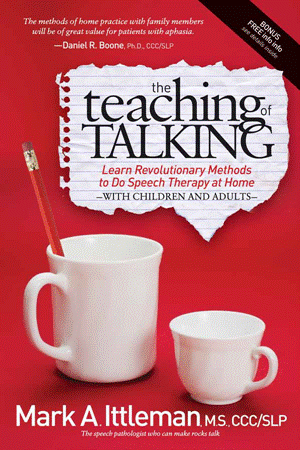
That thought hit home, and the title The Teaching of Talking was born.
SETTLEMENT!!!
 |
| Diane The Pink House On The Corner |
Oh my gosh, we settled today at mediation! What a darn long stressful day it was --- 7 hours, ga! And at one point, we were ready to walk out the door because of their piss poor offers....
But, somehow, our attorney pulled it off!
Afterwards, the Hospital Executive (who was there representing The Hospital) hugged me, and told me she hoped that this settlement would make our lives better! (Though she glared at our attorney and refused to shake his hand. ha!) Also the mediator hugged me with tears in her eyes! weird... but nice. (OK, no hugs from the defense attorneys... just shook hands --- the one-- most evil-- shook my hand and said "it was a pleasure working with you" and I said, "I wish I could say the same." you bitch -- though didn't say that, you know, the "you bitch" part.....)
Our attorney congratulated me, afterwards, for a great job, and I said what? great job? and he said that I didn't flinch, even when they threw "a lot of money" at me, I held out for what I knew Bob really needed. And he said, The Defense paid out more than they wanted to.
Subscribe to:
Posts (Atom)