Saturday, December 19, 2015

Saturday News


Contents of This Week Saturday News ▶︎ December 19th / 2015
CADASIL ("Cerebral Autosomal-Dominant Arteriopathy with Subcortical Infarcts and Leukoencephalopathy") is the most common form of hereditary stroke disorder, and is thought to be caused by mutations of the Notch 3 gene on chromosome 19. The disease belongs to a family of disorders called the Leukodystrophies. The most common clinical manifestations are migraine headaches and transient ischemic attacks or strokes, which usually occur between 40 and 50 years of age, although MRI is able to detect signs of the disease years prior to clinical manifestation of disease. A longer definition comes from Wikipedia.
          - CADASIL Documentary
          - C.A.D.A.S.I.L - A Familys Story in Less Than 5 Minutes.
          - Faces of CADASIL
          - CADASIL Explained
          - What is CADASIL Syndrome?
          - CADASIL - A Families - Fox 9 News
          - CADASIL Thoughts of Patients and Families
          - I Just Found Out I Have CADASIL
          - No one Cares About a 11 Year old who is Sick
          - What is a Rare Disease?
         Saturday News | Future Topic
         --------------+---------------------------------------------

         Jan/16/2016   | Bobath (NDT - Neuro-Developmental Treatment)
         Jan/09/2016   | iPad Pro & Apple Pencil
         Jan/02/2016   | 
    Emotional Recovery
         Dec/26/2015   | Christmas - A Cappella Quartet / Quintet

    Definition: CADASIL Syndrome

    CADASIL Syndrome From Wikipedia,
          the free encyclopedia.


    SSTattler: See as well http://www.cadasilassociation.org/ and www.CADASILfoundation.org ...

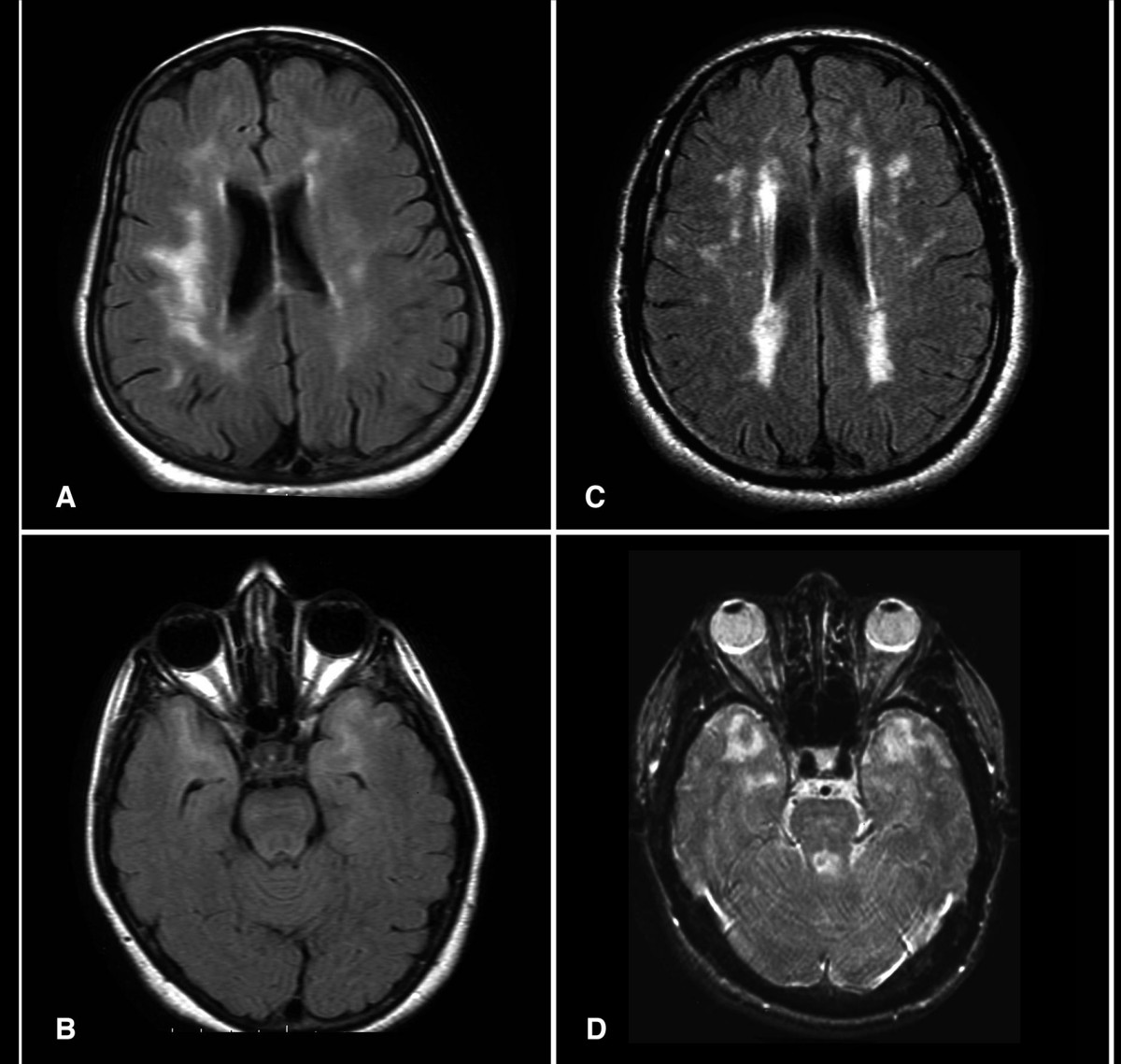
    Brain MRI from patients with
    CADASIL showing multiple lesions.
    CADASIL ("Cerebral Autosomal-Dominant Arteriopathy with Subcortical Infarcts and Leukoencephalopathy") is the most common form of hereditary stroke disorder, and is thought to be caused by mutations of the Notch 3 gene on chromosome 19. The disease belongs to a family of disorders called the Leukodystrophies. The most common clinical manifestations are migraine headaches and transient ischemic attacks or strokes, which usually occur between 40 and 50 years of age, although MRI is able to detect signs of the disease years prior to clinical manifestation of disease.

    Signs and Symptoms


    CADASIL may start with attacks of migraine with aura or subcortical transient ischemic attacks or strokes, or mood disorders between 35 to 55 years of age. The disease progresses to subcortical dementia associated with pseudobulbar palsy and urinary incontinence.

    Ischemic strokes are the most frequent presentation of CADASIL, with approximately 85% of symptomatic individuals developing transient ischemic attacks or stroke(s). The mean age of onset of ischemic episodes is approximately 46 years (range 30–70). A classic lacunar syndrome occurs in at least two-thirds of affected patients while hemispheric strokes are much less common. It is worthy of note that ischemic strokes typically occur in the absence of traditional cardiovascular risk factors. Recurrent silent strokes, with or without clinical strokes, often lead to cognitive decline and overt subcortical dementia. A case of CADASIL presenting as schizophreniform organic psychosis has been reported.

    Pathophysiology


    Video: CADASIL Syndrome

    CADASIL Documentary

    Uploaded on Sep 24, 2007

    A clip from a BBC documentary relating to CADASIL featuring Jack Shields and other sufferers. WMV from http://www.cadasiltrust.org.


    Standard YouTube License @ test


    Headline Blog: CADASIL Syndrome

    Definition: Blog (noun). Add new material to or regularly update to a blog. (≃1990s: blog shortening of weblog)

    Brain White Matter Changes Increase Dementia Risk

    Bill Yates
    Brain Posts
    Posted 27th October 2011

    Approximately a year ago, I reviewed some of the growing evidence of the clinical significance of brain white matter intensities or lesions.  Magnetic resonance imaging identifies these types of lesions but their significance had been unknown.

    Diffuse White Matter Hyperintentsity
    in CADASIL
    The review noted that white matter hyperintensities appear to increase future risk for several disorders including stroke and dementia.  Additionally, these lesions have increase mortality rates in some follow up studies.

    Now an additional study has examined the effect of these lesions on dementia.  Inaba and colleagues examined the progress of cognitive decline in a group of elderly individuals participating in the Honolulu-Asia aging study.

    The study followed 267 men between the ages of 74 and 95.  At baseline, brain MRI scans were rated for the presence and grade level of white matter lesions. A cognitive function test (Cognitive Abilities Screening Instrument) was obtained at baseline and five years later repeated.  Significant cognitive decline was defined as a drop of 12 points or more over the five year period.

    Eclectic Stuff

    Definition: Eclectic (noun). A person who derives ideas, style, or taste from a broad and diverse range of sources

    The Devastating Statement in Aphasia Therapy:
          “You have reached plateau.”

    Mark A. Ittleman
    The Teaching of Talking
    December 16 / 2015

    I’ll make this as brief as I can since it is a common occurrence in the rehabilitation field. It involves telling the person who is receiving rehabilitation they have “reached a plateau.” I have seen the devastation of what that can do. I have seen the depression, angst, and feelings of diminished self worth and hopelessness that a client or family member feels.

    Often in human endeavors people have said: “That can’t be done.” “It’s impossible,” or there is “no way you will ever walk or talk again!” We have read the stories of people who have overcome adversities and refused to listen to “educated opinions.”  When people don’t want to exert themselves the conversation frequently leads to the opinion that it is not achievable.

    I knew of a man who was in such despair after being told that he had reached a plateau, that he took his own life. His wife thought that the “professional should know,” and therefore did not question the recommendation to stop therapy. She later started seeking other professionals to help her husband but unfortunately it was too late.

    Please realize that the “plateau” is a common term used when the clinician or therapy institution does not have any more answers. Realize that it could mean you have drained the “knowledge base” there, and that it is time to seek other opinions, institutions, or professionals who may know of other ways to deal with the rehabilitation challenge. To find out more about other alternatives click here: http://teachingoftalking.com/screeningtestanddocs.

    Mark A. Ittleman, M.S., CCC/SLP
    Senior Speech Language Pathologist
    Author:     “Teaching of Talking”
                         http://www.teachingoftalking.com
    Facebook: https://www.facebook.com/moshe.mark.ittleman

    Reflections

    Marcelle Greene
    Up Stroke
    Friday, December 11, 2015

    I concealed my affected hand behind a mirror while I watched the reflections of my healthy hand open and close. This tricked my brain: As I watched the reflection of my healthy hand, I had the sensation that my affected hand mimicked the movement! But I couldn’t resist peaking behind the mirror, where I saw the reality of my curled limp hand. For me, that shattered any benefit of mirror therapy.

    "Pay no attention to that man behind
    the curtain." -Wizard of Oz

    What I find more useful is to study my healthy side for clues on how to use my challenged side. When working with SaeboFlex to grasp balls, I sometimes notice my movement feels unnatural. I am approaching the ball in a way that makes it easier to grasp given my disability. I stop and study how my healthy side would do it.  I observe the angle I reach from, the position of my hand, then try to mimic that with my affected side – because my objective isn’t to pick up a therapy ball – but to move my affected side as normally as possible.

    Day 14 Positive Affirmations

    Diana Smith
    Beyond Reality
    December 14, 2015

    A pic of me taking a pic of my grandsons footprints.  Yikes, I think my buddha belly is growing.

    A quote from Twitter:
    “We aren’t responsible for what people think about us, but we’re responsible for what we give them to think about us”. -H.B. Eyring…

    My response…that song…Let’s give them something to talk about…and think what you will, makes no difference to me, so I say and I am trying not to let anything bother me.

    Again affirmation from twitter:
    “The universe provides for my every want and need” ……..keep searching for what you need.


    See the original article:
    in

    You Can't Turn Back Time

    Beth Sinfield
    Beth's Story
    Saturday, 5 December 2015

    What's happened has happened, you can't turn back time, no matter how hard you wish.

    All the while, laying in bed on the Acute Stroke Ward at Addenbrooks' Hospital, just thinking 'Why me?' I stared at all the pictures of my friends and family on the wall in front of me, constantly crying and just wishing I could go back to the fun-loving 17 year-old that I was. Back to normality. Just seeing my name on medical documents sent me into a frenzy, 'my name isn't meant to be there..?' This just doesn't happen to anyone in my family. This doesn't happen to me. Up until now I had never been in hospital for anything. Never broken a bone, never suffered anything so serious.

    I was the only 17 year-old on that ward. Not that I could move about or speak to anyone, I couldn't make friends with people anyway because our ages were so different. That was another reason for moving me to the Regional Rehab Unit in Northwick Park, at least there I would be with people of similar age, they said. I remember meeting 2 or 3 young people on that ward, stories all so tragic and heartbreaking but so inspiring to see how despite, what had happened, they remained so cheerful.

    I accepted very early on that I'd had a stroke. Although I find it hard to comprehend sometimes that something so severe happened to me, never do I wish that it had never happened. I'm not saying that I'm thankful for it, no way, that's crazy! But basically it has set me on a path; I now know what I want in life. Apart from the typical things like love, good friends etc I now know what I want to do; help other brain injured people. Helping those who are going through what I've been through would honestly be the most rewarding thing. Knowing that I'm helping them go through what will be the hardest time of their lives would be invaluable to me. Getting messages now from fellow stroke survivors is just the loveliest thing; I can't quite explain how amazing it is to know that I'm inspiring others. I always get so emotional too, I think to myself 'are they really on about me?'

    50 Shades of Naughty Foods

    Sas Freeman
    December 13, 2015

    photo
    If you are like me, you like chocolate and don’t need an excuse to eat it. But there is good news for all you chocolate lovers out there. It has been discovered from a study that tracks the impact of diet on long term health of 25,000 men and woman that is highly beneficial. It was suggested they eat up to 100g of chocolate each day and findings identified that it was linked to reducing the risk s of heart disease and stroke.

    Dark chocolate has long been identified for its antioxidants and their benefits protecting against certain conditions; one study published last year claimed eating it regularly can prevent obesity and diabetes. Even that eating regularly, in moderation, can be beneficial for the heart. But it has been only more recently identified that milk chocolate has benefits too.

    So my message here is don’t obviously go mad but equally don’t feel guilty. Listen to your body and enjoy what you really feel like having. Moderation remains key.

    We can spread this goodness and take it a step further taking advantage of the time of year. As stroke survivors, having our daily difficulties, many of us know only too well what it is like not to be able to get out, to get to shops unless someone kindly offers to take us.

    Take this further people and think of people in different situations; those on their own, struggling with health or perhaps financially. You don’t have to know who they are, just be aware of their existence. Buy some chocolates and wrap them, and it could be lovely to receive. Put it in a bag, knock the door, then leave before you can be seen, you could even include a card a Christmas wish from someone hoping to spread Christmas cheer? Do what is right for you. Return home enjoy your chocolate whilst looking after your heart, knowing you have warmed someone else’s’ too.


    See the original article:
    in

    One More Way to Potentially Speed Treatment

    Jeff Porter
    Stroke of Faith
    Thursday, December 10, 2015

    Speed, as you know, is key in treating stroke patients.

    Recent news about telemedicine shortening door-to-needle time:

    ▶ A mobile stroke treatment unit (MSTU) operated by Cleveland Clinic which uses telemedicine to connect emergency team members to a hospital-based vascular neurologist, reduced time to tPA treatment by more than 25 minutes in an analysis of the first 100 patients transported. ...

    ▶ When the 100 MSTU patients were compared with 56 patients matched for age and stroke severity who were evaluated at hospital emergency departments, median door to CT completion time, door to international normalized ratio result time, and time to IV tPA administration were found to be shorter in the MSTU group:
    • Time from door to CT completion was 13 minutes in the MSTU group (IQR 9-21 minutes) and 18 minutes in the ED group (IQR 12-26 minutes)
    • Time from door to IV thrombolysis was 32 minutes in the MSTU group (IQR 24-47 minutes) and 58 minutes in the ED group (IQR 53-68 minutes)
    • Time to CT interpretation did not differ significantly between the two groups


    See the original article:
    in

    Weekly Columnists

    Definition: Columnist |ˈkäləmnist| (noun). A blogger or a journalist contributing regularly to a blog or newspaper

    Musing: Incidence of Stroke or Systemic Embolism in Paroxysmal Versus Sustained Atrial Fibrillation: The Fushimi Atrial Fibrillation Registry

    Dean Reinke
    Deans' Stroke Musing
    Sunday, December 13, 2015

    I won't know until I see the doctor but I'm suspicious I have atrial fibrillation also - Incidence of Stroke or Systemic Embolism in... 

    Takabayashi K, Hamatani Y, Yamashita Y, Takagi D, Unoki T, Ishii M, Iguchi M, Masunaga N, Ogawa H, Esato M, Chun YH, Tsuji H, Wada H, Hasegawa K, Abe M, Lip GY, Akao M.

    Author Information


    Abstract


    Background and Purpose:
    There is controversy on the relationship of the type of atrial fibrillation (AF) to stroke. Although several studies show that patients with paroxysmal AF (PAF) have a stroke risk similar to those with persistent or permanent AF, recent studies suggest that PAF is associated with a lower rate of stroke. Limited data on stroke risk associated with PAF are evident in Asian populations.

    Methods:

    Sunday Stroke Survival: Adventures in Christmas Baking

    Jo Murphey
    The Murphey Saga
    Thursday, December 25, 2014

    Today is Christmas and I pray that each of you have a day full of love and companionship.

    I decided that this year I would change things up and challenge myself. No, I didn't offer to do Christmas at my house. I'm still not ready or comfortable enough in my skill levels to take the challenge of 75 people in my home for dinner again yet.

    Instead of my usual cake pops, Rudolf and Santas, I decided to bake an 8" cheesecake. Actually two of them. One went to a neighbor who elfed me this year. More on that in a bit.

    This was a challenge/ adventure that almost undid me. My cheesecake takes about eight hours to make normally, but this was a twenty-four hour for each one. It's a good thing I started on Saturday) I made Double Chocolate and Peppermint Cheesecakes.

    The first challenge was making chocolate refrigerator cookies for the solid base of the cheesecake. Mixing the cookie dough went fine thanks to the stand mixer daughter #2 got me last Christmas. But rolling it into tube and then in plastic wrap was a nightmare. After two hours of playing with it, I finally got them into the freezer to chill. Yeah, they are refrigerator cookies when you have the time to let them chill in the Fridgidaire overnight, but I wanted to bake these off in a few hours. Once chilled, I sliced cookies off the rolls and placed them on a couple large baking pans. I think this is the first tie I used my big oven this year. They turned out perfect. Transferring to cookies from the pan to e rack to cool was another matter. They stuck to the parchment paper. You wouldn't think that any cookie made with THREE pounds of real butter would stick to anything, but they did. Eventually, they all cooled, and then I crumbled them in my mini food processor.

    Caregiver: Caregiving Consequences

    Diane
    The Pink House On The Corner
    Friday, December 11, 2015

    Yesterday, I had a dentist appointment.  This was the first one in many years. I tell you, not because my teeth are fine.

    For the past 4+ years, Bob has always come first. And when money was limited, there is just so much in the budget, that my health needs always fell by the wayside because Bob's needs were so much more...

    This is not an uncommon theme among caregivers. A recent report issued by NAC (National Alliance for Caregiving) and AARP indicates that among the estimated 34-40 million unpaid caregivers in the US, a full 67% report that they "put their care recipient's needs before their own".  That's a lot caregivers not going to the doctor or dentist.

    My teeth have been bothering me for years.  Yesterday, I finally had a molar extracted and a partial deep root cleaning -- the cleaning will be a two step process and will finish up with another appointment.  The doctor told me I was lucky that my long-time neglect hadn't caused me to lose more teeth...

    The procedure was not cheap. And not fun. And just goes to show how a caregiver can put themselves at risk when we neglect ourselves.

    Unfortunately, it's not a perfect world and too many caregivers do not have the time or money to take care of themselves....


    See the original article:
    in

    Jester: Bear Remover...

    Jackie Poff
    Stroke Survivors Tattler
    A homeowner in Alberta wakes up one morning to find a bear on her roof. She looks in the yellow pages and finds an ad for "Alberta Bear Remover." So she calls the number and a man says he'll be over in 30 minutes.


    The bear remover arrives and gets out of his van. He's got a ladder, a baseball bat, 12-gauge shotgun and a mean looking pit bull dog.

    "What are you going to do?" the homeowner asks.

    "I'm going to put this ladder up against the roof. Then I'm going to go up and I'll knock the bear off the roof with this baseball bat. When the bear falls off the roof, the pit bull is trained to grab his testicles and not let go. The bear will become subdued enough for me to put him in the cage in the back of the van."

    Then he hands the shotgun to the homeowner.

    "What's the shotgun for?" asks the homeowner.

    "If the bear knocks me off the roof...  Shoot the dog!!"

    TED Talks - Harald Haas:
          Forget Wi-Fi. Meet the new Li-Fi Internet

    TED
    Published on Dec 2, 2015

    What if we could use existing technologies to provide Internet access to the more than 4 billion people living in places where the infrastructure can't support it? Using off-the-shelf LEDs and solar cells, Harald Haas and his team have pioneered a new technology that transmits data using light, and it may just be the key to bridging the digital divide. Take a look at what the future of the Internet could look like.


    Standard YouTube License @ TED

    Rick Mercer Report: Bird Banding & Parliament's Back

    RMR

    Rick and Bird Banding

    Published on Dec 2, 2015

    Rick visits Long Point, ON to band birds with Bird Studies Canada as they track migration patterns.


    Standard YouTube License @ Rick Mercer Report


    Rick's Rant - Parliament's Back

    Published on Dec 2, 2015

    Rick’s Rant for December 1st, 2015.


    Standard YouTube License @ Rick Mercer Report

    Laid-Back Admin:
          Copyright © 2010 thru 2016 Stroke Survivors Tattler

    An unpredictable (typically large and
    random) number is used to begin
    generation of an acceptable pair of
    keys suitable for use by an
    asymmetric key algorithm.
    Pretty Good Privacy (PGP) and Public-Key Cryptography is a data encryption and decryption computer program that provides cryptographic privacy and authentication for data communication.

    This has Copyright © 2010 thru 2016 Stroke Survivors Tattler and digital message has PGP SIGNED MESSAGE & PGP SIGNATURE. Every SSTattler page at the bottom has a link says, Copyright © 2010 thru 2016 Stroke Survivors Tattler. A full copy of the text below says:


    ===================================================================
    1. All content (text, images, ... ) on this website is Copyright. 
    2. All rights reserved unless explicitly stated in writing.
    3. Feel free to link to any of my pages but:
      • If you would like to use any of my content, images or text for any other purpose, please contact me first by sending e-mail to SSTattler.
    Coder & Administrator / John C. Anderson

    -----------------------------------------------------------------------------------------------------------------------

    Here is the proper methods to: 
    1. Signed message, 
    2. Use the corresponding electronic PGP signature,
    3. If you need tools, please get http://gpgtools.org. Then you can see "Verification successful" (or not) of the PGP SIGNATURE:


    -----BEGIN PGP SIGNED MESSAGE-----
    Hash: SHA512

    Copyright © 2010 thru 2016 Stroke Survivors Tattler
    1. All content (text, images, ... ) on this
       website is Copyright.
    2. All rights reserved unless explicitly
       stated in writing.
    3. Feel free to link to any of my pages but:
         If you would like to use any of my content,
         images or text for any other purpose,
         please contact me first by sending e-mail
         to SSTattler11 AT gmail.com.
         
    Coder & Administrator / John C. Anderson
    -----BEGIN PGP SIGNATURE-----
    Comment: GPGTools - https://gpgtools.org

    iQIcBAEBCgAGBQJWbeUTAAoJEPeQvaJxvnHpGoMP/ir827oNGCikwN5sDJG2f2Ru
    ft15QsixEvJgoJKBOg+W9F5umlNeLZwVCBgYbS2z2HgMOnq/bMBvuioW7t3y5igc
    lxP6I3G8WhZQsyxm8NObThOFrZ86vy5M8L219QyaeZx4HuOq91RqrxPpNiDA657W
    EVaRXclRJz9M201k3sm1tD8yKGX7IdlXnYM9nWovYd7BVWva7sHSjEtHQmyrjMQq
    LgUdnsgNo173/SXTT2TFHs1m4M9KzI9AJE+p9Pof8cQVIkW1exVcAIdljJNTb6hB
    Y5WzgkuF+k0+u+HGuM7ypY03dgFpve9Ix7cGfowU0xnHruwiT/0ZX2UddZqx8Ota
    FhtnlGfuxOFMX5nW5Egb7+lXJTduCgeTfWXUCtKQWImkZhOpfvKbg2Icac6V7rDe
    t4dzhOUJXBi698qq0CqtrUEDVH8qHvirBfhygWRtC8ikirMArnGvsNemkX8wW0I3
    hgvKTkmSX80f4L1tRGzmsWOZ53Ea18yf8K2CpTgNB6Aoxq2+mG5UIKnFdRiGg3KK
    IoY4l1Df0xE2seGAHP6ExEZcSvvIRlDl8WcbA6Etndj6Yk/GrT50GMkU+zC5E/9B
    RD23c/z1oPUR3ZC4XMBjemVwxWcQ+ybm8bB0LQYtG+S771InhoI/G2nq0RGw0BGs
    QtP3VtUg6n2YvbHIbte/
    =c3Wm
    -----END PGP SIGNATURE-----

    Daily Comics


    For Better and For Worse
    Lynn Johnston

    Canada Family Events
    Dilbert
    Scott Adams

    Dilbert Office Events

    Edmonton Journal
    Malcolm Mayes
    Politics Views from Canada

    Doonesbury
    Garry Trudeau

    Politics Views from USA


    ** I tried to get low or free price at the people http://www.UniversalUclick.com/ for the images for the cartoons. It was too high for Stroke Survivors Tattler i.e. we are not a regular newspaper and our budget is very, very low. Fortunately, you will have to do only 1-click more to see the cartoon image, it is legit and it is free using GoComics.com, Dilbert.com and EdmontonJournal.com.

    ---------

    Saturday, December 12, 2015

    Saturday News


    Contents of This Week Saturday News ▶︎ December 12th / 2015
    Dementia, also known as senility, is a broad category of brain diseases that cause a long term and often gradual decrease in the ability to think and remember that is great enough to affect a person's daily functioning. Other common symptoms include emotional problems, problems with language, and a decrease in motivation. A person's consciousness is not affected. A dementia diagnosis requires a change from a person's usual mental functioning and a greater decline than one would expect due to aging. These diseases also have a significant effect on a person's caregivers. A longer definition comes from Wikipedia.
            - When Stroke Becomes Dementia. Dr. Amy Brodtmann Lecture
            - Stroke, White Matter Disease and Alzheimer's Disease:
                   Can Canada Avoid an Epidemic of Dementia?
            - OT Home Visits - Dementia vs Stroke - the Process and Outlook is 
                   Very Different!!
            - My Theory on Dementia, Blood Pressure & Stroke - Dr. Eric Berg DC
            - Stroke and Dementia
            - Stroke and Dementia: What Lessons for Us
            - A Deadly Interaction: The Connection Between Stroke and Dementia
            - Cut Your Risk of Dementia & Stroke
            - Living With Dementia and Stroke or Coronary Heart Disease:
                  Information for Consumers
            - Nun Study-Brain Health/Alzheimer's/Dementia/Stroke/Brain Exercise
            - Dementia, Stroke Risk Linked To Hand Strength, Walking Speed
           Saturday News | Future Topic
           --------------+---------------------------------------------

           Jan/09/2016   | Bobath (NDT - Neuro-Developmental Treatment)
           Jan/05/2016   | 
      Emotional Recovery
           Dec/26/2015   | Christmas - A Cappella Quartet / Quintet
           Dec/19/2015   | CADASIL Syndrome 

      Definition: Stroke and Dementia

      Dementia From Wikipedia, the free encyclopedia


      Dementia - Comparison of a normal aged brain (left)
      and the brain of a person with Alzheimer's (right).
      Differential characteristics are pointed out.
      Dementia, also known as senility, is a broad category of brain diseases that cause a long term and often gradual decrease in the ability to think and remember that is great enough to affect a person's daily functioning. Other common symptoms include emotional problems, problems with language, and a decrease in motivation. A person's consciousness is not affected. A dementia diagnosis requires a change from a person's usual mental functioning and a greater decline than one would expect due to aging. These diseases also have a significant effect on a person's caregivers.

      The most common type of dementia is Alzheimer's disease, which makes up 50% to 70% of cases. Other common types include vascular dementia (25%), Lewy body dementia (15%), and frontotemporal dementia. Less common causes include normal pressure hydrocephalus, Parkinson's disease, syphilis, and Creutzfeldt–Jakob disease among others. More than one type of dementia may exist in the same person. A small proportion of cases run in families. In the DSM-5, dementia was reclassified as a neurocognitive disorder, with various degrees of severity. Diagnosis is usually based on history of the illness and cognitive testing with medical imaging and blood work used to rule out other possible causes. The mini mental state examination is one commonly used cognitive test. Efforts to prevent dementia include trying to decrease risk factors such as high blood pressure, smoking, diabetes and obesity. Screening the general population for the disease is not recommended.

      Video: Stroke and Dementia

      When Stroke Becomes Dementia. Dr. Amy Brodtmann Lecture

      Published on Nov 20, 2014

      SSTattler: Very excellent lecture. The lecture takes about 37 minutes but you, especially stroke survivors, have to watch this... After the lecture there is about 20 minutes for Q&A - excellent as well! People typically have problems with thinking, speech and memory immediately after a stroke - but they usually recover.

      But one in three stroke survivors - even those who make a good recovery - slides into dementia. It might take two or three years to occur and the reasons have never been explained.

      The Florey is trying to find out why it happens and how we might intervene to help those likely to suffer.

      Dr Amy Brodtmann is a neurologist and a senior member of the Florey’s Stroke Division. She is the co-head of our Division of Behavioural Neuroscience. Dr Brodtmann is an NHMRC clinical career development fellow and is managing a longitudinal study of changes in brain volume and cognition following stroke.

      Proudly supported by the Florey and the National Stroke Foundation.


      Standard YouTube License @ The Florey Institute of Neuroscience and Mental Health


      Headline Blog: Stroke and Dementia

      Definition: Blog (noun). Add new material to or regularly update to a blog. (≃1990s: blog shortening of weblog)

      Dementia, Alzheimers and Stroke Survivors:
            Is There a Connection?

      Joyce Hoffman
      The Tales of a Stroke Patient
      Dec 6, 2015

      I always wondered, if Ronald Reagen, the 40th President of the United States, could get Alzheimers, with a plethora of decisions and strategies he had to accomplish, then anyone could get Alzheimers. When he died on June 5, 2004, at 93-years-old, it was pneumonia that killed him, a complication of Alzheimers. He wrote in a public statement early on in the disease in 1994, "Unfortunately, as Alzheimer's disease progresses, the family often bears a heavy burden." And indeed it does. My mom had Alzheimers.

      Age is known as the most significant factor for dementia, the early stage of potential Alzheimers. Though it is uncommon to get dementia before 65, it happens. After 65, the likelihood of developing Alzheimer's disease doubles about every five years: 1 in 14 people over the age of 65 and 1 in 6 over the age of 80. The risk factors include increasingly higher blood pressure, changes in the immune system, and an increased incidence of some diseases including stroke.

      But what is the reason, I ask. As it turns out, there are multiple reasons:

      Tools for Alzheimer's Screening: BrainCheck

      Bill Yates
      Brain Posts
      Posted 15th October / 2015

      Screening for cognitive decline and early Alzheimer's disease presents a clinical challenge for primary care providers.

      A variety of tests and tools are available for use but limited research has focused on testing in primary care settings.

      Michael Ehrensperger and colleagues recently published a study of a brief tool for screening for cognitive decline called BrainCheck.

      This tool combines a patient interview, an informant interview and the Clock Drawing Test administered in combination.

      The importance of this tool is that it has been studied in a feasibility and validation study design with 52 general practitioners in Switzerland and in a specialized Memory Clinic.

      The key elements of the design include the following:

      “Veterans and Brain Disease”

      Steven H. Cornelius
      Music and Stroke
      Posted on April 26, 2012

      New York Times / April 25, 2012

      Veterans and Brain Disease


      By Nicholas D. Kristof

      He was a 27-year-old former Marine, struggling to adjust to civilian life after two tours in Iraq. Once an A student, he now found himself unable to remember conversations, dates and routine bits of daily life. He became irritable, snapped at his children and withdrew from his family. He and his wife began divorce proceedings.

      This young man took to alcohol, and a drunken car crash cost him his driver’s license. The Department of Veterans Affairs diagnosed him with post-traumatic stress disorder, or P.T.S.D. When his parents hadn’t heard from him in two days, they asked the police to check on him. The officers found his body; he had hanged himself with a belt.

      That story is devastatingly common, but the autopsy of this young man’s brain may have been historic. It revealed something startling that may shed light on the epidemic of suicides and other troubles experienced by veterans of wars in Iraq and Afghanistan.

      A Test That Predicts when Survivors may Die

      Peter G. Levine
      Stronger After Stroke
      Tuesday, July 3, 2012

      A test of mental ability after stroke can predict how long a survivor will live (Find the study here.)

      Poor performance on these tests can predict mortality in stroke survivors, a full decade before death. Previous tests have shown a link between heart disease and dementia after stroke and mortality. This is the first to show small amounts of cognitive decline correlating to mortality.

      Here are the tests that they used. The longer it takes to do the tests the more "impaired psychomotor speed." Participants that were the slowest third of the group for both tests were more likely to die.

      In this study, the mean result for TMT A was 47 seconds and for TMT B, 119 seconds.

      Also a decline in mental function before a stroke can be an indicator of an impending stroke.

      Good luck!


      See the original article:
      in