 |
| Definition: Blog (noun). Add new material to or regularly update to a blog. (≃1990s: blog shortening of weblog) |

Showing posts with label ⌘ Related. Show all posts
Showing posts with label ⌘ Related. Show all posts
Saturday, April 02, 2016
Headline Blog: Mixed Transcortical Aphasia

Mixed Transcortical Aphasia Without Anatomic Isolation of the Speech Area
Steven Z. Rapcsak, MD, Lauren B. Krupp, MD, Alan B. Rubens, MD, and Johannes Reim, MD
"We report two patients with mixed transcortical aphasia following left frontal lobe infarctions. Although there was no evidence of anatomic isolation of the speech area on computed tomograms or magnetic resonance imaging scans, single-photon emission computed tomogra- phy in one case demonstrated diminished blood flow over the left parietal convexity suggestive of "functional isolation" of the posterior perisylvian language zone. (Stroke 1990^1:953-956)
Mixed transcortical aphasia is characterized by reduced or absent spontaneous speech, severely impaired language comprehen- sion, and preserved repetition. Although the localization of lesions producing mixed transcortical aphasia is variable, the syndrome is seen most often with diffuse or multifocal pathologic changes that involve both anterior and posterior left hemisphere cortical association areas but spare the perisylvian language core. According to Goldstein, the critically placed lesions produce an "isolation of the speech area" posteriorly from the "ideational field" of the parietal association cortex and anteriorly from frontal areas important for the production of volitional speech. Since Broca's area, Wemicke's area, and the arcuate fasciculus are usually spared, repetition remains intact.
Acute mixed transcortical aphasia is uncommon. Recently, Bogousslavsky et al described four cases of acute mixed transcortical aphasia in the setting of internal carotid artery occlusion with computed tomographic (CT) evidence of simultaneous anterior precentral-central sulcus artery territory embolic infarction and posterior watershed infarction related to hemodynamic insufficiency. These cases support Goldstein's contention by demonstrating both ante- rior and posterior anatomic isolation of the speech area.
We report two cases of mixed transcortical aphasia in which CT and magnetic resonance imaging (MRI) showed only frontal left hemisphere infarcts.
"We report two patients with mixed transcortical aphasia following left frontal lobe infarctions. Although there was no evidence of anatomic isolation of the speech area on computed tomograms or magnetic resonance imaging scans, single-photon emission computed tomogra- phy in one case demonstrated diminished blood flow over the left parietal convexity suggestive of "functional isolation" of the posterior perisylvian language zone. (Stroke 1990^1:953-956)
Mixed transcortical aphasia is characterized by reduced or absent spontaneous speech, severely impaired language comprehen- sion, and preserved repetition. Although the localization of lesions producing mixed transcortical aphasia is variable, the syndrome is seen most often with diffuse or multifocal pathologic changes that involve both anterior and posterior left hemisphere cortical association areas but spare the perisylvian language core. According to Goldstein, the critically placed lesions produce an "isolation of the speech area" posteriorly from the "ideational field" of the parietal association cortex and anteriorly from frontal areas important for the production of volitional speech. Since Broca's area, Wemicke's area, and the arcuate fasciculus are usually spared, repetition remains intact.
Acute mixed transcortical aphasia is uncommon. Recently, Bogousslavsky et al described four cases of acute mixed transcortical aphasia in the setting of internal carotid artery occlusion with computed tomographic (CT) evidence of simultaneous anterior precentral-central sulcus artery territory embolic infarction and posterior watershed infarction related to hemodynamic insufficiency. These cases support Goldstein's contention by demonstrating both ante- rior and posterior anatomic isolation of the speech area.
We report two cases of mixed transcortical aphasia in which CT and magnetic resonance imaging (MRI) showed only frontal left hemisphere infarcts.
Case Reports
..."
See the full article:
Mixed Transcortical Aphasia Without Anatomic Isolation Of The Speech Area
in
Saturday, March 26, 2016
Headline Blog: Environmental Enrichment (Neural)
|
| Definition: Blog (noun). Add new material to or regularly update to a blog. (≃1990s: blog shortening of weblog) |
BDNF
 |
| Amy Shissler My Cerebellar Stroke Recovery |
I had never heard of this and didn’t know what the hell it was until I took a course taught by Peter G. Levine. BDNF stands for brain-derived neurotrophic factor. That’s a really long name for a protein. BDNF is a protein that is produced by the brain. It helps neurogenesis – it makes new brain cells. New brain cells = neuroplasticity. Neuroplasticity is the rewiring of the brain. BDNF has been referred to as Miracle-Gro for the brain. So we want it. Stroke survivors want a lot of it. Exercise stimulates its secretion. So the moral of the story is…..workout……a lot. Here, read this.
See the original article:
in
How to Change Your Own Mind, Literally

SSTattler: Re-published February 13, 2016 How to Change Your Own Mind, Literally.
"You can't be too skinny or too rich," said my old college buddy back in the 60s. But now you know the truth. Skinniness sometimes is related to anorexia or bulimia. And you've heard stories about the deaths of lottery winners who blew their money on drugs or died from being poisoned. My friend got it wrong. She should have said, "You can't be too brainy."

There are four key truths about neuroplasticity:
- Neuroplasticity is ongoing throughout life and involves brain cells and neurons.
- Neuroplasticity can happen for two distinct reasons--as a result of learning, experience, and memory or as a result of brain damage.
- Neuroplasticity can vary by age, and while plasticity occurs throughout life, certain types of changes are more predominant.
- Neuroplasticity and environment, both together, play an essential role in the process.
Neurogenesis (#2)
 |
| Richard (Dick) L. Burns Live or Die: A Stroke of Good Luck |
It was long thought that we were born with as many brain cells as we'll ever have. The brain never regenerates itself, regrows and replaces dead ones after injury or stroke.
My book, "Live or Die - A Stroke of Good Luck" tells why this is not true, that brain cells regenerate, new cells actually grow and replace dead ones. And, if this were not true, I wouldn't be alive, functioning, learning to play a new sport, writng a book.
Read all about this in the new Winter Edition of "StrokeSmart," Magazine published andf distributed nationally by the National Stroke Association.
More on the medical studies, doctors, scientists, countries to come.
See the original article:
in
Brain Plasticity Will Blow Your Mind
 |
| Rebecca Dutton Home After a Stroke |
SSTattler: Re-published January 30, 2016 Brain Plasticity Will Blow Your Mind.
New research on brain plasticity will blow your mind. One amazing finding is that new stem cells are produced in the lateral ventricles of the adult brain (1). What is even more amazing is how these stem cells migrate from the back of the brain to the olfactory bulb in the front of the brain (2). Using time lapse imaging scientists have been able to watch stem cells latch onto a blood vessel highway and drag themselves to their destination. First, brain chemicals push stem cells away from their birth place. Additional chemicals stop the stem cells from getting off track along the way. As the cells approach their destination more chemicals pull them in the right direction.
Equally amazing is the fact that new stem cells are produced in the hippocampus that controls memory (2). Since learning is life-long, it is hard to believe that neuroscientists used to believe that remembering everything we learn can be crammed into the memory cells we were born with. The adult brain grows thousands of new stem cells in the hippocampus every day (3). Diffusion tensor imaging allowed scientists to see significant microstructure changes in the hippocampus after two hours of training (4).
Enriched Environments Help Recovery After Stroke
 |
| Peter G. Levine Stronger After Stroke |
SSTattler: Re-published February 24, 2016 Enriched Environments Help Recovery After Stroke.
Social interaction
Hands
Exercise
What is an enriched environment (EE)?
An EE is something that forces you to learn. Forced to learn. You have to be forced to learn. Learning can be forced by everything from curiosity to circumstance.
In fact, the brain will not learn (change) unless its forced. Why would your brain change if it is comfortable? What if the brain changes while you're comfortable? It may change to the point where you are no longer comfortable.
And a lack of comfort is icky.
I Did WHAT?
 |
| Barb Polan Barb's Recovery |
Let’s do the math: In the stroke community, one topic is about how many repetitions are required to result in rewiring our brain to communicate with a distant muscle no longer connected to its original boss in our brain. We exercise aerobically to optimize neurogenesis, and we try repeatedly to perform the feat we want to accomplish. How many times do we have to repeat it? Two weeks ago, I had the thrilling success of using my left biceps femoris, semitendinosus, and semimembranosus muscles (a.k.a. hamstring) for the first time post-stroke. Out of curiosity, I decided to answer the “how many repetitions does it take?” question: In addition to all the muscle-specific exercises demanded of me by my therapists over the years and many uses of the hamstring Nautilus equipment at the Y, along with attempting to raise my knee (and use my hamstring) every step up on stairs, plus electrical stimulation, and taking nearly-daily walks – all performed over a span of the 3.5 years since having a stroke – I have also WALKED. By that I mean daily incidental walking (incidental to life, with at least a short walk). When I got my new Bioness, I turned in my “trial” unit and it turned out to have saved all my daily walking data, which ranged from a low of 2,500 to a high of 5,000 or 6,000; that’s at the very least an average of 2,000. Although a person with a proper gait is advised to walk at least 10,000 steps/day, I don’t think 2,000 for me is shoddy. I have done that every day for 3.5 years. 365 x 3.5 x 2,000 = 2,555,000. That is two-and-a-half MILLION attempts to use my hamstring. A daunting number, but it works out to about 170 attempts per hour for a 12-hour day ( 7 a.m. to 7 p.m.) or 3 times/minute during everyday life, which doesn’t seem too hard to do. Got to focus on these fingers.
See the original article:
in
Mentors can be Friends to Man and his Best Friend
 |
| Mark A. Ittleman The Teaching of Talking |
 |
| My Friend and Mentor Armando Cruz (My dog Jackie’s friend also!) |
This article is different. Mentors are those who communicate with you. They share information, they teach, advise, and express events of their lives that may help those with whom they speak. The Mentor I wish to write about today is a man of varied talents, and one who manages people. He is a physicist, salesman, corporate sales manager, husband, father, RVer, patron of the cinema, and just a friendly guy! He is very likable; even canines like him. He always has a pocket full of dog treats, even when he is wearing formal work attire!
[Guest Article] You are What you Choose to Be
 |
| Pamela Hsieh StrokedUP |
 Debbie is Pamela’s personal trainer.
Ever since I was a young girl I always did my absolute best at everything I did. Some may say I was a “perfectionist,” but I simply call it “driven.” Whenever I committed to doing anything, whether it was winning the social studies fair, getting the solo in the high school dance show, graduating college with honors, or getting promoted to a management position, I never let any environmental or life circumstance hinder my ability to succeed. Don’t get me wrong, I certainly had obstacles and worked hard to achieve all of these things, but I never made an excuse as to why I couldn’t do any of these things. I chose who I wanted to be and continue to make these choices every day. Some of you may think this is not that easy and we all don’t have control over life but the bottom line is — we do.
As a certified personal trainer, one of my favorite things I tell all my clients is, “It’s not easy, but it is simple.” This could not be truer. So many times I hear clients say they “can’t work out” or “can’t find time” to work out or make healthy food choices and all I hear in my head is “I choose not to work out or eat healthy.” This is the truth. Time is not found, it is made. I mentioned before that I had obstacles that attempted to get in my way when working towards certain goals in life. For example, I was diagnosed with type I diabetes when I was six years old. I could have easily used this as an excuse as to why I couldn’t handle a four-hour dance rehearsal or ever have a profession as a personal trainer. I figured a personal trainer had to be in “perfect health,” rather than plagued by a chronic disease usually characterized by obesity and poor health habits. Instead, I chose to use this as a tool for my success. What better way to help prevent others from becoming diabetic due to obesity than to help change others’ lives for the better with a detailed understanding of eating healthy and exercising to manage their health? As a result, I chose to make personal training my career. This was one of the best decisions I ever made.
Resonance
 |
| Steven H. Cornelius Music and Stroke |
Music psychologist Eric Clarke takes an “ecological approach to perception.” He writes that, “Perception is a self-tuning process” in search of resonance, and that resonance is a “perceiving organism’s active, exploratory engagement with its environment” (Ways of Listening: An Ecological Approach to the Perception of Musical Meaning 2005:17-19). For him, strategies for achieving resonance are necessarily adaptive, influenced by both our physical and cultural environments.
I am sympathetic with Clarke’s ecological framework and the idea of achieving emotional/social resonance (or proper “fit”) through environmental engagement. But I would have been much more comfortable with his ideas had he put thinking at the front of his argument, although he perhaps includes thinking as a part of perception. (We do perceive our thinking, after all.)
Clarke writes, “We detect a sound and turn to it.”
Could Your Brain Repair Itself? - Ralitsa Petrova
 |
| TEDEducation |
Imagine the brain could reboot, updating its damaged cells with new, improved units. That may sound like science fiction — but it’s a potential reality scientists are investigating right now. Ralitsa Petrova details the science behind neurogenesis and explains how we might harness it to reverse diseases like Stroke, Alzheimer’s and Parkinson’s.
Lesson by Ralitsa Petrova, animation by Artrake Studio.
Standard YouTube License @ TED-Ed
Saturday, March 19, 2016
Headline Blog: Anomic Aphasia
|
| Definition: Blog (noun). Add new material to or regularly update to a blog. (≃1990s: blog shortening of weblog) |
Decay Occurs in Speech Therapy: Aphasia
|
| Mark A. Ittleman Teaching of Talking |
 There is an interesting word in our language that is not commonly used by lay people.
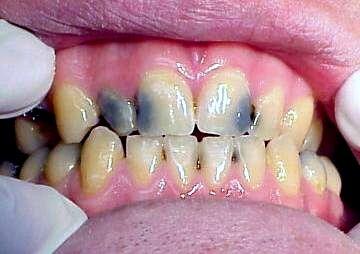
Decay is a deterioration and occurs with teeth, roads, super highways, buildings, homes, and objects that we own. In fact, maintenance is one of the most costly financial outlays for our teeth, health, and what we own.
Decay also occurs with speech, language, and aphasia. Some people with aphasia learn new words and concepts readily, but may actually have that word, or concept decay with time. If a word or a concept is not repeated often, it may become “forgotten” or fall out of consciousness or automatic speech.
My friend who has speech therapy with me twice a week online has a mild aphasia. He has rather functional speaking but he has difficulty expressing himself and may have occasional confusion comprehending what is said to him and may also have periodic anomia or difficulty recalling a word that he wants to express. He practices the words of difficulty. He writes them down, he practices saying them each day on his commute to work (self-employed). His wife also stimulates those words intermittently when they are together.
Singing
|
| Amy Shissler My Cerebellar Stroke Recovery |
My speech therapist wasn’t there when I told my student clinician (I do speech therapy at a university) that I’m taking singing lessons. She was so thrilled when she found that out that she wrote me an email. Here it is…….
Hi Amy,
Sorry I missed you last week; however, I was on vacation with my family in Hilton Head. I spoke with Emily regarding your session and she informed me that you are now taking voice lessons. This is great news!!!! I am so interested to hear how you like them and if you notice any changes in your voice as a result. There is some research on the use of music / rhythm / Melodic Intonation Therapy in the success with patients who have expressive language deficits as a result of a CVA (aphasia). As Emily probably discussed with you, music engages the right side of the brain in the production of speech (as language and speech are primarily left brain). This is also why we utilize “chant therapy” to engage the right brain. This has been noticed in individuals who stutter (these individuals can sing fine; however, when they speak they may still stutter). I look forward to discuss this with you further next week, enjoy your holiday!!!!!
We may have to do a session of Karaoke :0)
~Annette
Now, a couple of my thoughts.First of all, I will NEVER do karaoke, ever.Second, it’s a good thing I chant all the time in yoga.Third, ok…………. I LOVE, LOVE, LOVE my speech therapist. She’s awesome and amazing! Love her. However, I’m confused about something. In a year and a half of going to this speech therapy I have never been challenged to raise my voice high and use a higher pitch. The reason for this is because I have a lot more control, as does everyone, at lower pitches. My first day of the singing lessons he had me go as high as my voice could go. But this is speech therapy it’s not singing therapy.
As Dean said once “The problem I have with Peter is that he is constrained with staying within the approved therapy guidelines. That silo is not where the breakthroughs in stroke will occur.” No, it’s not. You have to think outside the box, and try things that you never thought you’d try.
See the original article:
in
50 Shades of Stroke – Aphasia
 |
| Sas Freeman |
Another complication stroke survivor’s are faced with is Aphasia. This is a terribly frustrating complication, we can hear conversations as before, know how we would wish to respond or join in, yet we are unable to participate, the words we would like to say just wont come out. People often then begin to do one of two things they believe will help, yet truly they don’t. They talk to us in baby speak as if we have rewound our intellect back to toddler days; or they speak or answer questions for us by guessing what we are attempting to say. Don’t get me wrong , I’m not blaming them, none of us know how to handle the situation. Its just that although we appear to be displaying difficulty and are slow, we wish to get there unaided and finally get the words out. We can use pictures to illustrate things we are trying to say and help conversation this way.
 |
| 5o-shades |
One thing that helps me when I am having difficulty communicating with someone new is to focus with my eyes on something else other than who I am talking to. I apologise and explain that I am not being rude but need to use the focus to concentrate on my response, it works.
Music, song, practice, patience and self belief #50shadesofaphasia
See the original article:
in
I'm not Drunk, "Retarded", or Mentally Unstable
|
| Peter G. Levine Stronger After Stroke |
Its a pretty simple calculus: If you don't use it you lose it. But there's a corollary: If you don't try it you can't possibly gain it. For example, if you use an AFO to walk during the early days after stroke, you'll not easily not use the thing again.
And if I choose not to play violin- an instrument I've never played- I'll not get better at violin. So, both learning for anyone and relearning after stroke involves taking your brain (where learning happens) out of your brain's comfort zone.
 Which leads me to spouses. I've met a ton of 'em. The wife is aphasic, the husband loves her, knows what she's trying to say and finishes the sentence for her. (When its men I always get the feeling they're saying to themselves, "Finally, I get to do the talking!") The spouse can become the exact thing they don't need.
I always liked talking to folks who are aphasic. I usually get trampled by conversations because I'm slow in the think department. Aphasic folks give me a chance to ruminate a bit. Try it. Slow the conversation.
But "I've gotta get on with my life. How is it good to have my wife talk slowly when we're trying to check out (or ask directions, or talk to the gas station attendant)?"
Aphasia Basics
 |
| Jeff Porter Stroke of Faith |
Traditionally, in the United States, June is, among other things, Aphasia Awareness Month.
And those involved have a lot of work to do to generate awareness. I'd be willing to guess - maybe even a small wager - that most people have no idea what aphasia is.
As someone whose stroke floored me - temporarily - with aphasia, I offer this basic information for you to pass along to people you know:
Aphasia is a disorder caused by damage to the parts of the brain that control language. It can make it hard for you to read, write and say what you mean to say. It is most common in adults who have had a stroke. Brain tumors, infections, injuries and dementia can also cause it. The type of problem you have and how bad it is depends on which part of your brain is damaged and how much damage there is.
There are four main types:
Some people recover from aphasia without treatment. Most, however, need language therapy as soon as possible.
- Expressive aphasia - you know what you want to say, but you have trouble saying or writing what you mean
- Receptive aphasia - you hear the voice or see the print, but you can't make sense of the words
- Anomic aphasia - you have trouble using the correct word for objects, places or events
- Global aphasia - you can't speak, understand speech, read or write
Read the entire article linked above. Lots of other links for good resources about aphasia.
See the original article:
in
Coming Soon: "After Words," a Film about Aphasia
 |
| Grace Carpenter My Happy Stroke |
If you're reading my blog, you probably know what aphasia is, and how devastating it can be. But so many people have never heard the word. Raising awareness of aphasia--what it is, and how it can radically change a person's life--is important. It will help more people to get the support they need to lead a productive life.
So I'm really happy that After Words, a film about living with aphasia, is airing on many PBS stations, including WGBH in Boston. It will air in Boston on February 3 (Super Bowl Sunday) at 3pm. If your local PBS station isn't on the schedule that the National Aphasia Association has published here, ask your station to air it.
Please watch it, talk about it with friends, and use the word "aphasia." Talk about how Gabby Giffords has it. Or how common it is: more than 1 million Americans are estimated to have it, and countless family members are affected, too.
In addition to the PBS showings, there are two special screenings in Boston (March 3) and New York (April 10). The screenings include conversations with cast members, the directors, producer, and (in New York only), Oliver Sacks.
Full disclosure: I'm in it; my kids are in it; many of my friends from the Aphasia Community Group of Boston are in the film; and one of my former speech pathologists, the amazing Jerry Kaplan, is one of the directors.
Subscribe to:
Posts (Atom)