

Showing posts with label ▷ 2014 Mar 01. Show all posts
Showing posts with label ▷ 2014 Mar 01. Show all posts
Saturday, March 01, 2014

Def'n: Balance
Balance (Ability) From Wikipedia, the free encyclopedia
In biomechanics, balance is an ability to maintain the line of gravity (vertical line from centre of mass) of a body within the base of support with minimal postural sway. Sway is the horizontal movement of the centre of gravity even when a person is standing still. A certain amount of sway is essential and inevitable due to small perturbations within the body (e.g., breathing, shifting body weight for one foot to the other or from forefoot to rearfoot) or from external triggers(e.g., visual distortions, floor translations). An increase in sway is not necessarily an indicator of dysfunctional balance so much as it is an indicator of decreased sensorimotor control.
Maintaining balance requires coordination of input from multiple sensory systems including the vestibular, somatosensory, and visual systems.
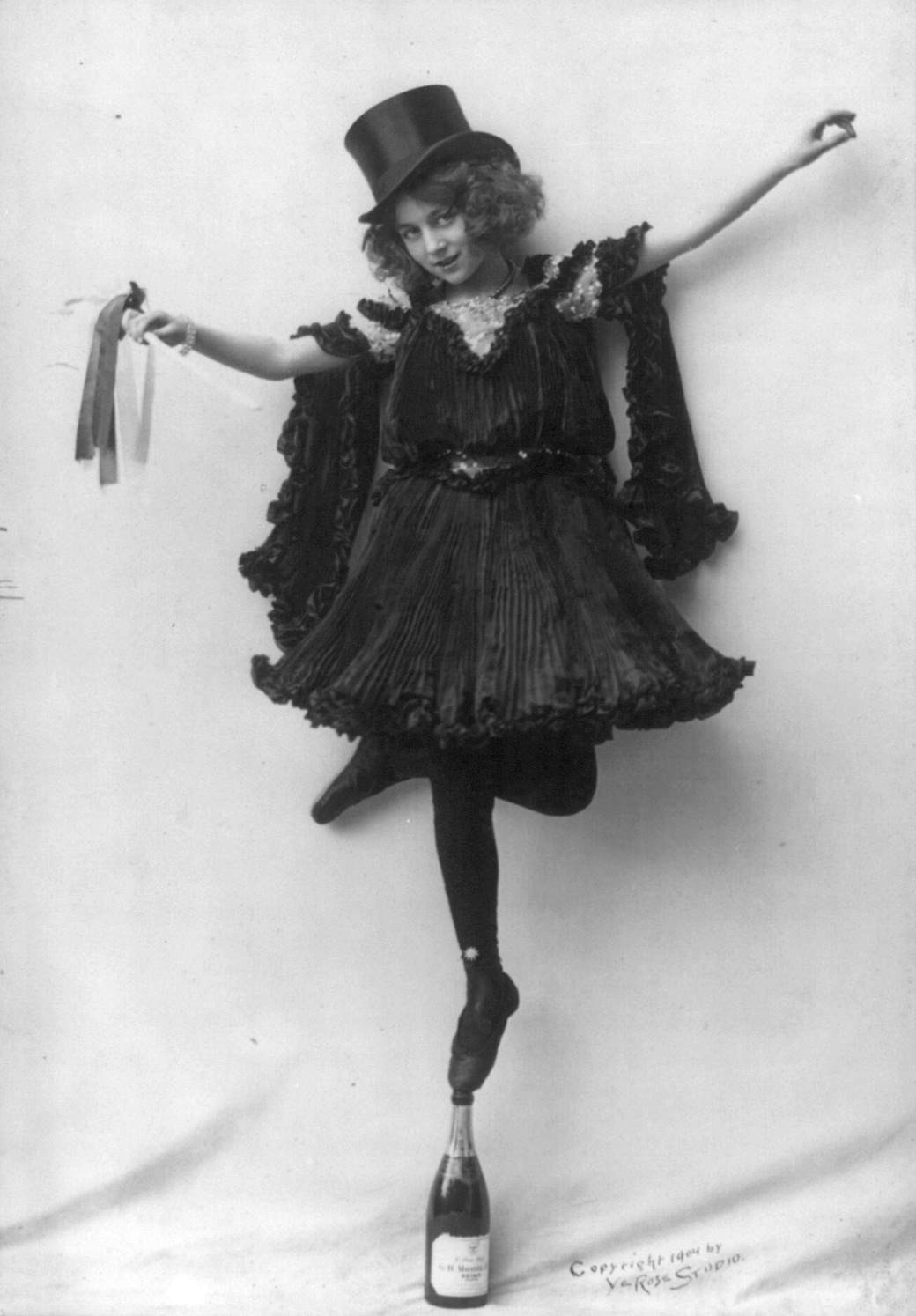 |
A woman demonstrating the ability to balance
|
Maintaining balance requires coordination of input from multiple sensory systems including the vestibular, somatosensory, and visual systems.
- Vestibular system: sense organs that regulate equilibrium; directional information as it relates to head position (internal gravitational, linear, and angular acceleration)
- Somatosensory system: senses of proprioception and kinesthesia of joints; information from skin and joints(pressure and vibratory senses); spatial position and movement relative to the support surface; movement and position of different body parts relative to each other
- Visual system: Reference to verticality of body and head motion; spatial location relative to objects
Video: Balance
SSTattler: The last YouTube you have to see to get better...
http://rehabharness.com
Gait and Balance Activities: Rehab Harness "Gait training System, Therapy and Rehab Harness and Rail Company with the most comfortable, easy to use, ergonomic and customized harnesses on the market, for unloading, walking support, body weight support treadmill training, gait physical therapy, locomotor training and gait training, for amputees with prosthetics, stroke rehabillation, and cerebral palsy. We work with Prism Medical (prismmedicalltd.com) and biodex (biodex.com)"
Standard YouTube License @ REHAB HARNESS (OFFICIAL YOUTUBE CHANNEL)
Gait and Balance
Published on Sep 12, 2013http://rehabharness.com
Gait and Balance Activities: Rehab Harness "Gait training System, Therapy and Rehab Harness and Rail Company with the most comfortable, easy to use, ergonomic and customized harnesses on the market, for unloading, walking support, body weight support treadmill training, gait physical therapy, locomotor training and gait training, for amputees with prosthetics, stroke rehabillation, and cerebral palsy. We work with Prism Medical (prismmedicalltd.com) and biodex (biodex.com)"
Standard YouTube License @ REHAB HARNESS (OFFICIAL YOUTUBE CHANNEL)
Saturday Comics

| For Better and For Worse Lynn Johnston - 2014/02/23  "Elizabeth, if you want to see your hair in ponytails,..." | Dilbert Scott Adams - 2014/02/23  "GAAA!!! I just realized I'm in idiot!" |
Peanuts Charles Schulz - 2014/02/23 
"What? Oh, yeah,... sure, absolutely,..., uh huh,..."
| Doonesbury Garry Trudeau - 2014/02/23  "Overseeing the digitalization of chats and grudges..." |
** I tried to get low or free price at the people http://www.UniversalUclick.com/ for the images for the cartoons. It was too high for Stroke Survivors Tattler i.e. we are not a regular newspaper and our budget is very low. Fortunately, you will have to do only 1-click more to see the cartoon image, it is legit and it is free using GoComics.com and Dilbert.com.
Note: Now SSTattler are running cartoons starting on previous Sunday.
Eclectic Stuff
 |
Definition: Eclectic(noun) a person who derives ideas, style, or taste from a broad and diverse range of sources.
|
AFO, 911 & Other Disasters
 |
| DianeThe Pink House On The Corner |
I feel like I've just run a marathon after spending this whole week dashing to seven different doctor's offices, first to drop off medical records release authorization forms, then to pick up medical records. And these darn offices are spread across the city. I tell you, I put some miles on The Green Machine, though I don't know how many for sure, as the odometer doesn't work.
On one my last mad dashes, half-way home it began to rain and I'm thinking, oh crap, because I've only got one working windshield wiper, and it's a pretty jerky wiper at that. So I turn it on and, of course, you know it, there's this rather loud CLUNK! and the thing dies. Now, this is not just the wiper blade that I'm talking about, those are easy to replace, this is the whole darn mechanism: the rod that goes down under the dash which snapped. Bubba had warned me this was about to blow. I thought I had a bit more time...
So there I am, driving in the pouring rain, with no windshield wipers. I can't see a thing. The rain, plus the fact that I really need a new prescription for my glasses, but haven't been able to afford it. I am half blind. And, to add injury to insult, the darn radio fizzles out. I tell you, my knees were weak when I got home.
Tumor Radiation Therapy
 |
| Andrea A Year of Living In My Head |
My tumor is a meningioma. Attached to the lining of my brain, but not the brain itself. It is a large grape size, and pressed tightly against my brain stem with my hearing and balance nerves running near it.
That is the risk of the Gamma Knife surgery, that those nerves will be harmed. I am at the point of not being able to take in information. I feel this is a major fail on my part- the woman who does research on the best toenail clippers of 2011-- and I can't even research this surgery beyond the cursory. I am going to trust my doctors. They have no idea what a big deal that is for me.
I have all my xmas shopping done, the tree up. Today and tomorrow are for cleaning the house and putting the lights up outside. The next day is surgery prep and surgery. I am going with the "I will be fine" tagline.
My therapist recommended I write notes to each of my kids in case something happens. You have no idea how that made me cry, but she was right. Since I am a major procrastinator the tendency is to obviously put it off, but I cannot. I wrote little notes, but really, how can you write something as if you will never say it again? I know I was missing crucial parts but I guess it is what it is.
I also started going to a mindfulness therapist - which is meditation - my favorite part about that is when she starts talking calmly her small fluffy dog sacks out next to her and starts snoring. Her skills even work on dogs.
The gamma knife will kill the tumor, turn it into scar tissue. If it is fast growing it will come back. If it is malignant (very small small chance) it will come back. But there is a high probability it will stop it altogether.
Strangely enough, I am in a happy place right now. My stroke effects are minimal other than memory and odd left side awareness issues. I have people coming out of the woodwork to support my family, and this stubborn independent woman is learning to graciously receive help as it is offered.
See the original article:
in
Clinical Correlates of Between-Limb Synchronization of Standing Balance Control and Falls During Inpatient Stroke Rehabilitation
 |
| Dean Reinke Deans' Stroke Musing |
So if sensorimotor impairment may cause falls, what therapy is needed to bring it back to normal? Its a simple question. I was tested in one of these called a Balance Master 4 weeks post-stroke. The force plates I was standing on could move side to side, front to back and tilt in various directions, all the while the three sides; front of you and each side were moving around. You were strapped into a harness to catch you when you fall. After it was all done my PT ran my scores thru the universe of results and at that time my age of 50 results were better than the average 50 year old male. I just told him I would really have enjoyed that testing challenge when I was healthy. Its like kneeling on a yoga ball for balance practice. This was all absolutely necessary for keeping upright in a squirrely whitewater canoe. My favorite was a Mad River Outrage. Ok, feeling sorry for myself again.
Sage Journals - Abstract etoc
ABSTRACT
Background. Stroke-related sensorimotor impairment potentially contributes to impaired balance. Balance measures that reveal underlying limb-specific control problems, such as a measure of the synchronization of both lower limbs to maintain standing balance, may be uniquely informative about poststroke balance control. Objective. This study aimed to determine the relationships between clinical measures of sensorimotor control, functional balance, and fall risk and between-limb synchronization of balance control. Methods. The authors conducted a retrospective chart review of 100 individuals with stroke admitted to inpatient rehabilitation. Force plate–based measures were obtained while standing on 2 force plates, including postural sway (root mean square of anteroposterior and mediolateral center of pressure [COP]), stance load asymmetry (percentage of body weight borne on the less-loaded limb), and between-limb synchronization (cross-correlation of the COP recordings under each foot). Clinical measures obtained were motor impairment (Chedoke-McMaster Stroke Assessment), plantar cutaneous sensation, functional balance (Berg Balance Scale), and falls experienced in rehabilitation. Results. Synchronization was significantly related to motor impairment and prospective falls, even when controlling for other force plate–based measures of standing balance control (ie, postural sway and stance load symmetry). Conclusions. Between-limb COP synchronization for standing balance appears to be a uniquely important index of balance control, independent of postural sway and load symmetry during stance.
See the original article:
in
Fall Hazards Are Subtle
 |
| Rebecca Dutton Home After a Stroke |
 Babies learning to walk do not get hurt when they fall because they are 18 inches (45 cm) tall. When I fall I go crashing to the ground like a tree that has just been cut down. Stroke survivors with impaired balance need procedures and equipment that prevent falls. It's the small things we do not pay attention to that trip us up. I do not fall because I crash into my sofa. I fall when I do not lift my hemiplegic (paralyzed) leg high enough to stop my toe from catching the edge of a rug which lifts the rug up. The rugs in the photo keep the floor dry when people at church track in rain and snow. I have fallen when my toes caught the edge of this type of rug. I learned the hard way to look down to see where the edge of the rug is before I step onto it.
Another procedure keeps me safe at bedtime. I rely on my vision to tell me if I am vertical. If I turn around after I darken a room by turning the lamp off I stumble badly. I quickly learned to make sure I am turned to face the lighted room I am heading towards before I look down to find the light switch. It's a relief to find the lit room as soon as I look up.
If these procedures sound trivial, let me tell you about a stroke survivor who could have ended up in a long-term care facility because of a bad fall. He has impaired balance so the hospital staff gave him a long-handled reacher so he would not lean over to pick up objects on the floor. But using a reacher at home was frustrating. If he was downstairs the reacher was upstairs. If he was at one end of the house the reacher was at the other end of the house. This repeated aggravation tempted him to reach down to pick up something even though he knew it was not safe. He fell and broke his sound wrist. When he finally got back home he bought three more reachers. A reacher is always close because he has two reachers per floor with one at each end of the house.
I learned not to let subtle fall hazards lull me into a false sense of security because they do not make me fall every time I encounter them. Are there hazards in your home you are not paying attention to, like a poorly lit front porch or extension cords snaking across a room?
See the original article:
in
Out of the Comfort Zone
 |
| Grace Carpenter My Happy Stroke |
Right after the stroke, I was warned repeatedly to be very, very careful. So I was. I went without falling at all for more than six months after the stroke. When I did finally fall, it was a very gentle plop in my backyard. I've stumbled some other times, but I've always been able to catch myself.
But since October, I've fallen three times. The last time was Monday, when I got up early (very unusual for me) and decided to go outside to get the newspaper with my PJs and robe on. As I was climbing up the four steps up to the porch, with the newspaper clutched under my right arm, I suddenly lost my balance and fell sideways. I landed beside the steps, into a pile of plastic shovels. I broke my daughter's play shovel. I got a scratches on my right hand knuckles. My dignity was hurt. I was shook up.
 Sometimes a little thing can mess up my balance: an especially windy or cold day; an outfit I haven't worn much; two steps that don't have a place to grab on to; holding something I usually don't hold. That day, I was challenged by all these things. (That, and my lack of coffee.) Usually I'm meticulous about preparing myself, but I didn't do that on Monday. I just wanted to get the damned newspaper.
My husband and I agree that, in some ways, it's a sign of progress: I'm pushing at the edges of my comfort zone. I just hope that I can get through this phase of my recovery without any more serious injuries than scratched knuckles.
See the original article:
in
Ten Steps
 |
| Marcelle Greene Up Stroke |
For more than a decade, I've belonged to a women's group that gets together every Saturday morning. We meet in a Craftsman-style house. There are ten cement steps leading up to a broad wooden porch. The steps are uneven with no railing up the right-hand side. Post-stroke, when I first tackled those steps, I climbed only with my strong leg, using my cane for balance and pausing often to rest.
Each week my Saturday women would stand on the porch watching like nervous mothers and exploding into smiles when I reached the top stair. In time I found the courage to climb leg over leg.
A couple months ago I set a goal of climbing the stairs without my cane. One of my Saturday women would climb beside me so that I could grab her if I lost my balance. Last weekend I tried for the first time to climb alone. I lost my balance on the eighth step and called for help. Then I went back to the bottom and tried again. That second time I cleared the tenth step. My Saturday women hugged me and we cried.
A long time ago my first boss taught me this: "Marcelle, you're going to encounter two kinds of people in this world – those who pull you up and those who pull you down. The ones who pull you up are 'Balcony People' and those are the people you want in your life."
She was right and I found mine standing on a porch.
See the original article:
in
Balance
 |
| Amy Shissler My Cerebellar Stroke Recovery |
Good balance depends on 3 things. These are your vision, vestibular system, and proprioception. I described proprioception in an earlier blog post. The vestibular system is in the inner ear and controls equilibrium. In school, one way we tested our balance was by doing the Foam and Dome Test. The first thing we would do is time how long we could just stand there without shoes. Next, a dome was put on our heads, this took away our vision so we were only relying on our vestibular system and our proprioceptors. Next, with the dome still on our head, we had to stand on a piece of foam and this took away our proprioceptors so by the end of the test we were relying solely on our vestibular system. You can’t really do anything to mess up the vestibular system. It’s a test for balance and it tells what needs to be worked on. There are different variations of this test. After my stroke, I had terrible balance. The vestibular system goes to a lot of areas in the brain but some of it is controlled by the cerebellum. Proprioception - controlled mostly by the cerebellum. My vision was OK after a month. So I had 2 strikes against me. My cerebellum was damaged and therefore both my vestibular system was messed up as well as my sense of proprioception. Now, my balance is far from normal but sooooo much better. I can now balance on my right leg for 20 seconds. If you want to learn more than you ever wanted to about balance, go here. (This link downloads a powerpoint presentation).
See the original article:
in
Sunday Stroke Survival ~ It's All About Balance
 |
| Jo Murphey The Murphey Saga |
I'm trying to find my new normal after my second event (stroke). I don't know if I can do it but I'm going to try follow the stroke e-zine guides that republish me for March. I know it isn't March yet (almost) but they will publish the articles during March. So here goes...
 It's all about balance in everything you do either as a stroke survivor or not. I know the gist is supposed to be about balancing to keep from falling but I am taking a different tact because I can. :oP
I'm going to talk about rebalancing your life. You've heard the old saying, "All work and no play makes Jack a dull boy" or something to that effect? It is so true. When you don't listen to your body other things crop up to make you listen and regain your balance.
In the hospital and when I first came home for about three months, I was in rehab mode. In fact, I had little energy to do anything else because I was exercising three times a day! I was that determined I was to get everything back. I refused to compromise with what was. I had no energy to speak of to socialize. When I wasn't physically moving towards improving my body, I was attempting to improve the cognitive function of my brain and dealing with overcoming my aphasia issues. I was an automaton. Sleep, medications, eat, exercise, and rest. All because I was told that this was the way to get it all back in recovery.
Yoga and Balance
 |
| Jeff Porter Stroke of Faith |
Personally, I'm not into yoga. Then again, maybe I should be. My own stroke didn't leave me with balance issues, but that is a very common occurrence. Stroke is the leading cause of permanent disability, and often, balance is affected.
WebMD recently reported that yoga may improve balance of stroke patients:
- The study shows stroke survivors who participated in a specialized post-stroke yoga class improved their balance by up to 34%.
- Researchers say the participants also experienced a big boost in their own self-confidence after their yoga practice and became more physically active in their communities.
- "It also was interesting to see how much the men liked it," says researcher Arlene A. Schmid, assistant professor of occupational therapy in the School of Health and Rehabilitation Sciences at Indiana University-Purdue University, Indianapolis, in a news release.
See the original article:
in
Stroke Victim? Survivor, Triumphant or Stroke Warrior!!!
 |
| Gary center - Receiving recognition as a Provincial Library volunteer |
Maybe I was a stroke victim and maybe I never was. There was a period of about six weeks post stroke when I couldn't walk. In fact, for part of that time I was bed-fast and in a coma. I never lost the will to recover and with the much appreciated help and support of friends, family and health care professionals I was able to stand and then walk short distances before I left rehab. Determined to walk I established a personal routine of walking while at the same time learning to work within the confines of severe fatigue, balance issues and Left side deficit. Now, almost 12 years post stroke I still struggle with fatigue, noticeable balance issues and Left side deficit but I maintain a regular routine of walking as part of my recovery. I have never considered myself a victim but rather a survivor or as some have termed it "Stroke Triumphant": "STROKE WARRIOR". Three keys to recovery are to maintain a positive attitude, set attainable goals and work at it every day. Also, a forth very important key is - NEVER, EVER GIVE UP!!!
See the original article:
in
Stroke Rehabilitation
 |
| Richard Burns Live or Die: A Stroke of Good Luck |
Same excuse. Know you've got to write blogs twice a week, at least once... but then you don't sell that little book that tells what your new life is all about - how, how long, the perils, the set-backs, the challenges that face this new you. Eventually, a better new you.
They say that home is where the heart is. In this case it's where the brain is.
Home rehabilitation allows for greater flexibility so that the patient may tailor their program of rehabilitation and follow individual schedules. Stroke Survivors may participate in an intensive level of therapy several hours a week. Or follow a less demanding schedule, according to doctor's instructions and their own abilities and time. It is suggested that such arrangements may be best suited for one type of therapy at a time. Note that patients who depend on Medicare coverage must meet "homebound" requirements to qualify for these types of therapy. The major disadvantage of home-based rehabilitation services is the lack of specialized equipment. But then there's you and your purpose and desire and the advantages of practicing skills and developing alternate and compensatory strategies in their own living environment. In recent trials, intensive balance and strength rehabilitation in the home was equivalent to treadmill training at a rehabilitation facility in improving walking.
Always remember that you're not alone anymore. Research-qualified organizations such as National Stroke Association, American Stroke Association,National Institute of Health, National Institute of Neurological Disorders and Stroke, National Institute on Deafness and Other Communication Disorders, Easter Seals, Aphasia Hope, National Aphasia Association, National Rehabitation Inforfmation Center - the list goes on.
Next up - how you.
Richard Burns
www.liveordieburns.com
See the original article:
in
PT is for Personal Training!
 |
| Pamela Hsieh Rehab Revolution |
I’ve already written about personal training before, but I’d like to revisit the topic. Since around 2008, I’ve worked with a number of personal trainers and gone through dry spells as well. Like anything else, there are pros and cons to regularly working with a trainer, but in this case the pros heavily outweigh the cons. I think the only downside to working with a trainer is the costs — both financial (though some practices will take medical insurance as long as it is rehabilitative) and of time.

I’m fortunate enough to have had a free training session with a trainer at my gym who wowed me! In thirty-five minutes, she had me burn 380 calories (to know this, a heartrate monitor is an excellent tool) without my getting on a single cardio machine! The explanation? The exercises she had me doing were specially tailored to my needs, rather than just being the generic one-size-fits-all programs that everyone does.
I’ll only be working with her once a week, unfortunately, but with her guidance I expect results to show quickly. My particular program will first factor in what’s called corrective exercise, involves logging what I eat every day, and requires me to get in cardio as much as possible in between the strength training. In addition to my chiropractic strength and balance exercises, I should be just short of bionic by the end of a couple months!
I’d love to ask my trainer, who is apparently also a writer (and a dancer!), to write a guest article for us, so I’ll keep you posted on that.
To our healing,

See the original article:
in
What Rush?
 |
| Barb Polan Barb's Recovery |
A second post for today ... Every year on the anniversary of the stroke I had, I try to do some challenge I haven't done since the stroke. So far, I've made a list of what I learned in the first year; walked on Crane Beach (a large beach with very fine-grained sand, which makes it difficult on the dry areas); and walked 2 miles around Eastern Point. I've been wondering lately what I would do to acknowledge my 4th anniversary, and have been thinking about something water-related. The first time I brought up the topic, my aquatic PT suggested doing 16 laps (one-quarter mile), doing my modified running in the water with 4 floats keeping my head above water. I suggested treading water sans floats. She was very negative about it, and said she didn't think I'd be able to kick hard enough and "scull" my arm fast enough to keep my weak side afloat. "How long?" "15 minutes is good, right?" Dale nodded. That "can't" attitude clinched it; since then I've been mulling it over even more. Today I brought up the topic again, and she agreed to help me try to tread water naked. "First," she said, " we'll get rid of this dumbbell, then put a smaller float here, get rid of that other one, and you might just have to accept keeping that last little one." She immediately took the dumbbell, which I've been using to help balance myself when I'm feeling a little tippy. I didn't sink, and I didn't tip over. Then she pulled off the large around-the-right-arm float she wanted to replace with something smaller, but then didn't replace it with anything. I didn't sink, just listed to my left as I put more weight on the float on that side, not a problem. Then she cocked her head and eyed the smaller around-the-arm float under my left armpit. "Wait, wait, wait," I said, "we have until November to accomplish this; it's not like we have only to the end of the week. November 12th." Ironically, of the 2 of us, I'm the more goal-oriented, and I tend to rush to get an exercise finished, while she wants me to relax and do all the motions very slowly. I can't wait to see what floats she takes away from me on Friday.
See the original article:
in
Stroke-Life Balance

We’ve all heard of work-life balance. Some people feel there is no such thing. Some lean more towards work and some more towards life. I was also struggling with work-life balance before the stroke. I worked three (long) days a week to spend more time at home with my family…but I actually worked from home every single day to make up for not being there in person. When I was home, it was a constant struggle…housework or zoo? home-cooked dinner or more time with the kids and a frozen pizza? As my kids are growing, I could sometimes integrate things a little more: make supper together, make a few phone calls for work while cuddling with my son.
Stroke-life balance isn’t something you hear much about… but for those who have had a stroke (or really have any other chronic medical condition that affects their stamina), it is a constant struggle. There are several reasons this is difficult:
- TIME. We are all given 24 hours in a day…but if you, like me, need to sleep for at least 12 of them to be halfway human, you’ve just cut out a big chunk of time.
Speed is Good.
 |
| Peter G. Levine Stronger after Stroke |
The ability to get from one place to another is essential to every animal. The speed at which travel takes place is an essential to determining the success or failure of everything from food acquisition to escaping danger. Gait requires input from the brain, spinal cord, peripheral nerves, muscular power, and joint and cardiovascular health.
Because of all these systems are required to coordinate gait, gait speed is an indicator of the health of many physiological systems. In all animals, gait speed decreases with age. In humans, the speed of our mobility is predictive of so much more than if we will eat, or are eaten.
What is remarkable about testing gait speed is how much it reveals about people. Here is a laundry list.
- A decline in gait speed predicts a decline in attention
- An increase in gait speed predicts a substantial decline in mortality while a decrease in gait speed predicts an increase chance of mortality
- Gait speed correlates well with functional ability, future health status and the patient’s confidence in their balance
- Gait speed predicts where discharge will take place (home, SNF, etc.), the chance of hospitalization, an increase in medical costs, disability and mortality
- Gait speed predicts the need for rehabilitation
- Gait speed can be used to determine the effectiveness of a particular rehabilitation treatment option.
- Gait speed can be used as a surrogate for quality of gait; the faster the walking, generally speaking, the higher the quality of gait.
And much more!
Also, gait speed is modifiable. Walking speed is not only predictive of decline, it can also predict improvement.
See the original article:
in
Subscribe to:
Posts (Atom)