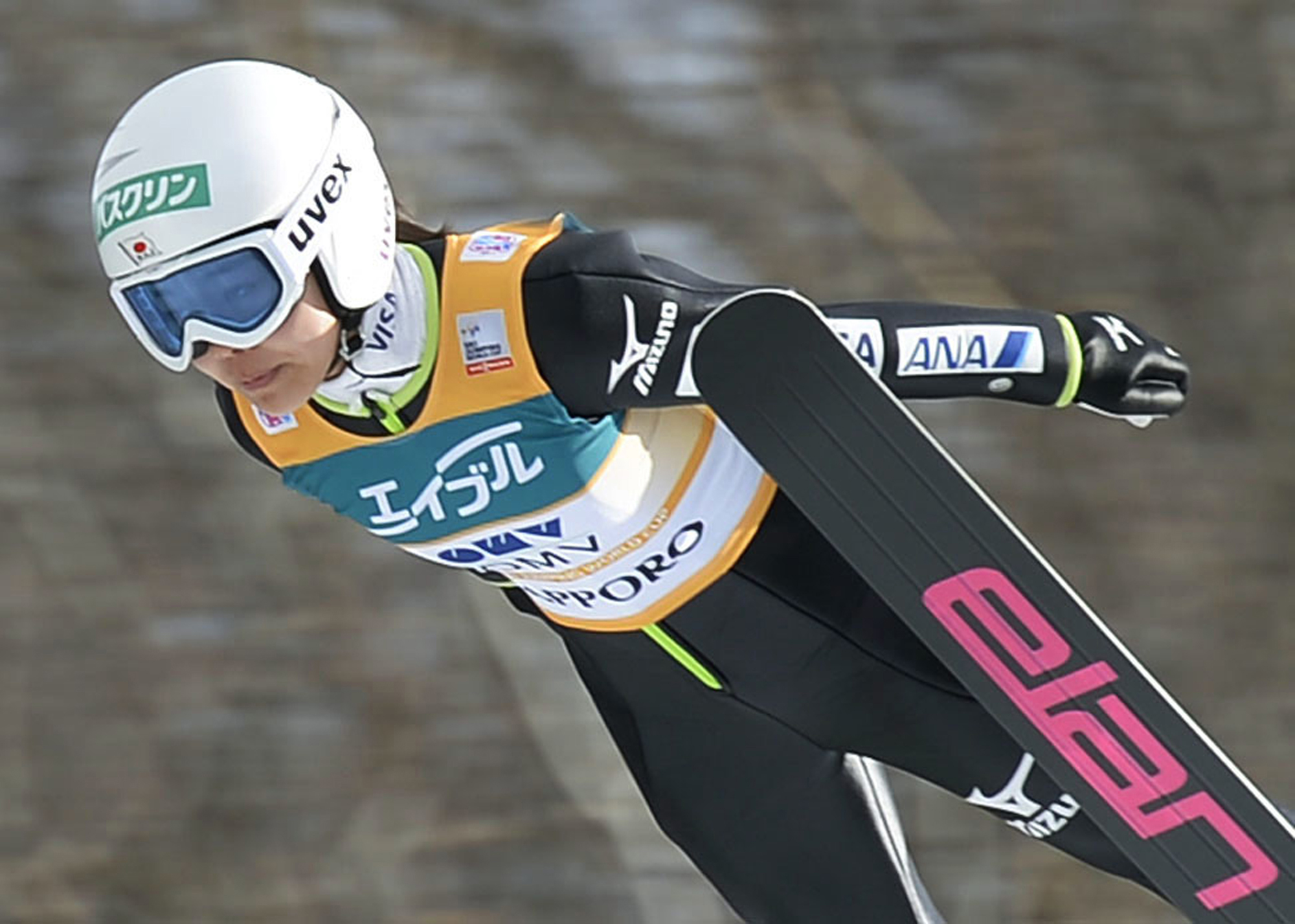
- Headline - Passion for Skiing
- Eclectic - Many articles from many Guest Bloggers about Stroke
- Cross-Country Skiing Stroke Rehab
- Learning to Ski is like Learning to Dance
- A Good Quality of Life is Complicated
- Three-Month Anniversary
- Dartmouth's Passion for Snow
- Treating Even Mild High Blood Pressure Can Pay Off
- Caregivers and Therapists Learning Expert Speech Therapy Methods for Aphasia and Dysarthria
- Do I Have A Migraine, Or Is This A Stroke?
- Great Question!
- Stroke Awareness
- Fitting In
- Diet, Weight Loss and the Brain Links: Weekend Reading
- So Much to Blog About -- So Little Time!
- Richard Feynman - The Difference Between: Knowing the Name of Something and Knowing Something
- Weekly Columnists
- Sunday Stroke Survival: Skiing! Yep, That's Me.
- Jackie The Jester: Celebrating 50 Years Together.
- TED Talks - Ben Saunders: Three Things to Know Before You Ski to the North Pole
- Rick Mercer Report: Rick and Canadian Ski Patrol
- Laid-Back Administration: Guest Bloggers Site
- Daily Comics: FB Or FW, Dilbert, Mayes, Doonesbury
Showing posts with label ▷ 2015 Jan 17. Show all posts
Sunday, January 18, 2015
Saturday News
Definition: Passion for Skiing
Passion for Skiing From Wikipedia, the free encyclopedia
SSTattler: I was 12 years old and I was introduced to ski jumping (a style of Nordic). My 12 years old friend said “hmmm, there is no wind, lets go jumping...” and I did it (modulo falling a lots at the start)! Later, I was introduced to downhill (Alpine), and x-country (Nordic). It was like heaven!
But when I had a stroke, so I assumed, skiing is done for me.
Not true - 1) now I'll go downhill (with only 1-pole of course), 2) x-country kinda of same is downhill, 3) jumping - I quit when I was in the early 20's (now I'm a little bit older :-),
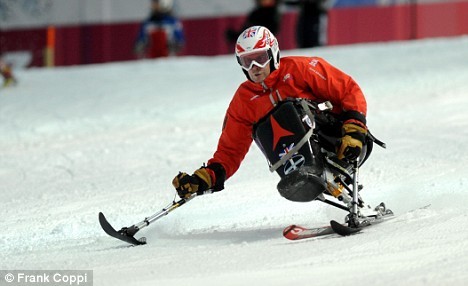
4) Carrie L (see About Us) told me to try "Snowshoes for Stroke Survivor” and it is very, very comfortable and I will go using snowshoes in Edmonton every winter. So, really, it doesn't make any difference. The only thing is you will have to change adaptive skiing, change your style, maybe you can be a competitor in the Paralympics (below), and, other than that, you will have a lots of fun!
Passion for Skiing is a book published in 2010 about the contributions of people from Hanover, New Hampshire and Dartmouth College to winter activities, particularly the sport of downhill skiing and highlights this history of skiing from 1910 to the current era. It was authored by Dartmouth alumnus Stephen L. Waterhouse (Dartmouth College Class of 1965, Tuck Business School Class of 1967), a native of Sanford Maine and part-time Vail, Colorado resident with the help of other alumni and ski historians.
The Dartmouth College impact on skiing continues. The college maintains its own ski area, the Dartmouth Skiway, a 100-acre (0.40 km2) skiing facility located over two mountains near the Hanover campus in Lyme Center, New Hampshire, that serves as the winter practice grounds for the nationally dominant Dartmouth ski team. Along with the Middlebury College Snow Bowl, the Dartmouth Skiway is one of two remaining college-owned ski areas in the eastern United States. Dartmouth and Hanover have been home to numerous members of the National Ski and Snowboard Hall of Fame.
Video: Passion for Skiing
Adaptive Ski Program Strengthens Rehab Patients
WESTON, Mo. — Any uphill battle has to include a climb.
Snow Creek Ski Resort is known for thrills on their hills. Adaptive skiing makes it possible for rehab patients to experience the same energy. The Rehab Institute of Kansas City works with instructors at this resort to help traumatic injury patients get back in the game, using skis to help speed their recovery.
“We basically go alongside them and teach balance techniques,” Corey Wright, recreational therapist, said. “We focus on the affected limb as much as possible so it’s as therapeutic as possible.”
Wright has worked with therapy patients in the snow for the past four years. He sees patients with medical needs of all kinds, ranging from stroke and traumatic brain injury to spinal cord damage.
Experience in the snow isn’t required. However, 16-year old Jamie Reaves was an avid skier before suffering a stroke three years ago.
“It allows me to go fast down hills again,” Reaves said. “Doing it as a kid was always fun. Now, coming back to it is even better.”
But Ben Avery is only here for the fun. His first ride down the slope could help with rehab work, which he’s been doing since his car crash eight years ago.
“It’s so amazingly exciting!” exclaimed Avery. “I get to try a new thing!”
Snow sports are not necessarily part of a rehab program, but confidence-building certainly is. Corey Wright says its not important for these skiers to look as if they’re ready for an olympic team. However, it is important for them to know there’s no mountain they can’t climb.
“It shows them that after whatever injury that’s occurred, life isn’t over,” Wright said. “They can exist in any aspect of society just like anyone else.”
And knowing that makes the climb seem like fun.
Rehab Institute of Kansas City can be found here.
Snow Creek Ski Resort is in Platte County near Weston, Mo. Here’s a link to their website. Contact Tom Sanders at Snow Creek for more information about the Adaptive Ski Program.
Eclectic Stuff
Cross-Country Skiing Stroke Rehab
![]() |
| Dean Reinke Deans’ Stroke Musing |
We have about 3 inches of snow here. Walked across the parking lot to the woods with my skis and one pole. Its about 30 F here, so quite warm, no need for long underwear. The ground isn't frozen yet so I had good traction with my pole. I'm using my waxless skis because they are slower and better able to take skiing over branches, rocks and dirt. My waxable wood skis are beautiful but it may be years before I can handle the speed of them. I went without the AFO because it cramps my toes a lot. It was a problem because my ankle rolled a lot, forcing me to ski very slowly and awkwardly trying to keep the weight on my inside. I cut short the loop, maybe one third mile. While I very seldom roll my ankle when walking the action of skiing is completely different since you are trying to push the ski forward with a flat foot. And the spasticity of my ankle tries to point the toe downward and to the underside. This is so common there should be a stroke protocol to overcome this and be readily available to every survivor. Only 30 minutes skiing. On New Years I'll try again probably with the AFO.
This used to be my one of my main cardiovascular exercises and I would do it for hours. That will be years ahead. But I won't give up.
See the original article:
in
Learning to Ski is like Learning to Dance
| Alex Dixon A Stroke of Luck |
by Alex Dixon
Skiing and dancing are very similar; they are both hard and take a lot of skill to do. Some people say you have the skill or you don’t. But for me, I’m the opposite, I can’t dance to save my life but I learned that I am not that bad at skiing. I still think the athletic ability skipped a generation though. I learn over time that it doesn’t matter what people think, if you like doing it just do it such as dancing for me. My family went to Colorado for skiing and my parents found an adaptive skiing program for me. The instructors and the volunteers were great with me. I enjoyed laughing at my “mess ups”. I learned to ski and I just had fun doing it.
See the original article:
in
A Good Quality of Life is Complicated
![]() |
| Rebecca Dutton Home After a Stroke |
Rehabilitation for stroke survivors focuses on physical recovery and functional skills like dressing. Yet physical and functional abilities can only partially predict a person's quality of life (1). Clarke discovered underlying mechanisms that explain why some clients experience a sense of well-being after a stroke and others don't (2). Physical and cognitive disabilities are less disruptive when they: (a) permit participation in self-defining activities that contribute to a positive self-identity and (b) are counterbalanced by adaptive strategies and social resources.
Self-defining activities. Three of Clarke's subjects defined themselves as very physically active before their stroke (e.g. skiing, gardening, etc.). One subject who used to be physically active said "What quality is there left?" Five of Clarke's subjects did not define themselves by their physical activities so their sense of well-being was higher. For example, they appreciated things like modifications that allowed them to drive again. Teaching and helping others used to define me and they still do. My experience as a teacher and an OT help me explain things when I present to stroke support groups and OT students. For me participation in self-defining activities has been an important way to reclaim a feeling of self-worth.
Three-Month Anniversary
![]() |
| Barb Polan Barb’s Recovery |
As it turned out, today ended up being my first day truly home alone - no houseguest to help me in the morning, no brother showing up to work on the house and tend the fire. It was definitely a milestone - also because it was the three-month anniversary of when I had the stroke. In Julie Fox Garrison's book, she makes a big deal of anniversaries, throwing a big "homage to my hemmorrhage" party on the one-year anniversary of her hemmorrhagic stroke. When I read about it, it seemed like a bad idea to "celebrate" something so awful; I,on the other hand, like the idea of honoring the anniversary, not as a celebration of the onset of the ordeal, but as a way of celebrating the successes that have occurred since the challenge began: a celebration of life and of progress. Since that morning three months ago, I am in awe of what my body and mind used to accomplish so nimbly, so effortlessly:not only was my left hand adept at a few small tasks, but my mind could handle being bombarded by problems to solve, numbers to crunch, words to re-arrange to create clarity, and so on. Now I'm often in a muddle, with understanding and clarity a distant memory. I know that every day three months ago, I completed the puzzles in the daily paper: a crossword, a jumble, Sudoku and a Cryptoquote (this was always the most challenging of the puzzles, but I used to solve it every day). Not any more, although the crosswords are easy enough now.
Dartmouth's Passion for Snow
![]() |
| Dr. Beagle C. Cranium Stroke Survivors Tattler |
Dr. Cranium: The YouTube doesn’t include disabilities but the movie is great...
Dartmouth's Passion for Snow will be highlighted towards the end of 2012 in a full length documentary film, produced by Lisa Densmore '83 with support from leading movie makers Rick Moulton, Roger Cotton Brown '57, Jim Butterworth T'91 and many others. This short teaser clip illustrates a portion of the final film that will be premiered in the East (Hanover, NH; October 2012) and the West (Vail, CO; December 2012) with expected play at selected film festivals and on PBS/other cable channels. The story to be told will highlight one of Dartmouth's greatest achievements as an institution. It will show how Dartmouth College, its 3 graduate schools and the local community in the Hanover NH area have made many snow related contributions to the world we live in today, including being the preeminent force in the development of the modern skiing industry which is over twice the size of a business giant like Microsoft. The elements to be covered range from the snow related tales of Ted Geisel '25 (aka Dr. Seuss) and Bob May '26 (creator of the Christmas story involving Rudolph the Red Nosed Reindeer) to the initiation of college ski racing/ski teams/race techniques and the creation of the first ski lifts to the leadership of the first US Mountain troops (the 10th Mt. Division in WW II) to the founding and management of most major US Ski Areas such as Sun Valley, Aspen, Vail, Keystone, Telluride, Copper Mountain, Sunday River, Wildcat, Shawnee Peak, Sugarloaf, Killington, Waterville Valley, Alta, Alyeska and much more.
The story will point out the impact of Dartmouth's founding in the snow-filled hills of New Hampshire by Eleazar Wheelock in 1769, the saving legal effort of Daniel Webster in 1818-19, and the initiation of the very first graduate engineering and business schools in the US as well as the 4th medical school by 1900. It will show how graduates from Dartmouth have had the unique mix of skills to not only develop skiing activities, but also generate all the related support activities from ski clothing and equipment companies to ski movies to ski area real estate developments, medical centers/clinics, restaurants/hotels/retail stores and every other aspect of contemporary ski town operations. The film will include interviews with some 35 individuals including legends like former US Surgeon General, Dr. C. Everett Koop, world renowned ski historian John Allen, several of Dartmouth's dominant group of National Ski Hall of Famers, and recent Winter Olympic medal winners, Andrew Weibrecht '09 and Hannah Kearney '15. The film is based on the award winning book, Passion for Skiing (2010, 440 pages, http://www.PassionforSkiing.com) by Stephen Waterhouse '65 T'67 and many other writers.
Standard YouTube License @ Dartmouth
Treating Even Mild High Blood Pressure Can Pay Off
![]() |
| Jeff Porter Stroke of Faith |
I'm a big believer in watching blood pressure - it can be a sign of many, treatable problems. That includes stroke. In fact, high blood pressure is a leading cause of strokes.Plus, it's an easy number to get checked - with consultation with a health professional, you can buy and learn to use a device to check it at home - and it involves no needles, scalpels or lab results.
Now, recent study shows a link between treating even mild high blood pressure pays off for stroke prevention:
Treating for blood pressures in the 140/90 to 160/99 mmHg range reduced stroke and mortality risks, according to a meta-analysis of patient-level trial data.
Treating mild hypertension with an antihypertensive drug or more intensive regimen yielded a significant 28% relative reduction in incident stroke compared with placebo or a less intensive blood pressure-lowering regimen over 5 years, Kazem Rahimi, MD, of the George Institute for Global Health at the University of Oxford, and colleagues found.So keep up with those numbers and follow your doctor's advice. A relatively easy action on your part can save you - and the ones you love - a lot of agony.
See the original article:
in
Saturday, January 17, 2015
Caregivers and Therapists Learning Expert Speech Therapy Methods for Aphasia and Dysarthria
More and More Caregivers are stepping out and desiring Mentoring in The Teaching of Talking Methods. They are all wives and mothers of people with aphasia and TBI. There are even some Dads and Husbands who are learning speech and language stimulation methods! Some of the Qualities of these individuals that I've noticed are as follows:
It's great to work with people who are dedicated and open to learning new methods that truly work! What’s even more exciting is when the whole family gets on board, and each one is mentored in methods that facilitate speaking. Now families are learning what to do to help their loved one during formal therapy and after discharge.
To find out more about leaning expert speech and language stimulation methods please click here: http://www.teachingoftalking.com or e mail: markittleman@teachingoftalking.com.
Moshe Mark
Mark A. Ittleman, M.S., CCC/SLP
Senior Speech Language Pathologist
Author Teaching of Talking
- Strongly desirous of wanting improved speaking and communication.
- Have strong family ties with their spouse or child. They have strong love in their hearts for the person who has difficulty speaking.
- Are truly interested in learning speech and language stimulation material.
- They have integrity and perform speech and language stimulation at home, and are very consistent with visits and applying new techniques.
- Are focused on one thing: Doing whatever it takes to help their love one speak and communication better.
It's great to work with people who are dedicated and open to learning new methods that truly work! What’s even more exciting is when the whole family gets on board, and each one is mentored in methods that facilitate speaking. Now families are learning what to do to help their loved one during formal therapy and after discharge.
To find out more about leaning expert speech and language stimulation methods please click here: http://www.teachingoftalking.com or e mail: markittleman@teachingoftalking.com.
Moshe Mark
Mark A. Ittleman, M.S., CCC/SLP
Senior Speech Language Pathologist
Author Teaching of Talking
Do I Have A Migraine, Or Is This A Stroke?
![]() |
| Ramon Florendo Life after a “STROKE" |
Posted Teresa Bitler in StrokeSmart
Strokes and transient ischemic attacks (TIA), or mini-strokes, often have very similar symptoms to migraines with aura: visual disturbances, speech impairment, and muscle weakness. Knowing the difference can save your life.
What is a Migraine?
A migraine is a severe headache that can induce nausea, vomiting, and sensitivity to light, sounds, and smells. In up to 30 percent of all incidents, sufferers experience an aura, or warning, consisting of visual disturbances, numbness, and speech difficulties leading up to their migraine. These warning signs are very similar to the symptoms of a stroke.
What is a Stroke?
Great Question!
![]() |
| Peter G. Levine Stronger After Stroke |
I get a lot of questions about stroke recovery and try to answer the best I can given the fact that I have rarely met the folks I'm giving advice to. Here is an email I got recently. Hopes the following exchange helps some folks!
Dear Mr. Levine,
In March of 2014 my friend had a stroke. She is 59, very gifted and motivated. She has received physical and occupational therapy from local facilities since then and has made a lot of improvement. We have obtained a Neuromove unit and recently got a Walkaide device for her foot, but it is looking like we are reaching the limit of local expertise to help her push forward. She has been very motivated up to now, but upon not satisfactorily acheiving some of her 6 month goals, has hit a rough patch. So we are just searching for anything that might spur her on at this point. We have looked into constraint induced programs locally, but not impressed with what we have found. Also, she is very reluctant to undergo the frustration she thinks this therapy will be. We don't want to encourage her to do something difficult without knowing it has a good chance of helping her. I am writing to you because your book has been a huge help in "coaching" her, and I thought you might know someone in New England who we could go to for help.
"Joan"
Hi "Joan,"
A couple quick things; it looks like you're doing the right thing re: NeuroMove, and the walkaid. I'm a pretty big fan of both of those.
Stroke Awareness
| Sas Freeman |
Last week I received a circular on social media suggesting that Stroke has a new indicator, in addition to – S *Ask the individual to SMILE. T *Ask the person to TALK and SPEAK A SIMPLE SENTENCE (Coherently) (i.e. Chicken Soup) R *Ask him or her to RAISE BOTH ARMS (STR- the first 3 letters of stroke), the tongue is the fourth & a new indicator of stroke and you should:
Ask the person to ‘stick’ out their tongue. If the tongue is ‘crooked’, if it goes to one side or the other, that is also an indication of a stroke.
But it’s not just recognising the symptoms of stroke when its happening but raising awareness of what causes strokes so they can be prevented where possible. More and more young people are having strokes, women during pregnancy, woman with diabetes are twice as more likely to suffer a stroke than men who have diabetes. People with Atrial Fibrillation are at risk of stroke yet if they are aware of this condition and are seen by their GP, put on the correct medication, this risk can be removed. These are just a few examples that with greater awareness, strokes could be reduced and/or prevented.
Fitting In
![]() |
| Amy Shissler My Cerebellar Stroke Recovery |
Christmas Day was a long ass day for me. It involved a lot of acting as normal as I can and trying to fit in as much as I can in front of a bunch of different people at 3 different houses. And I was absolutely exhausted by the end of the day and needed 2 days to recover. AND a comment was made in jest about my intelligence and I’m extra super ultra sensitive about that so I got extremely pissed off. A lot of people probably think “it’s been almost 4 years, why is it still such an issue?” It is still very much an issue, and I’m assuming always will be. My brain isn’t like ‘normal’ peoples’ brains, it is majorly different and affected and I can’t do certain things and now that I look quite normal and sound kinda sorta close to normal, no one gets it. It was much easier to get people to understand that I can’t do certain things or need lots of breaks when I looked and sounded terrible. But I don’t now. My introverted personality made days like this exhausting for me before the stroke, but now….well now I get anxiety about it beforehand and it takes a few days to recover and feel ‘normal’ again. Ah well, c’est la vie.


See the original article:
in
Diet, Weight Loss and the Brain Links: Weekend Reading
![]() |
| Bill Yates Brain Posts |
Here are links to a series of abstracts that I am reviewing for this month.I will do a full post on some of the most interesting and important research on this topic over the next month.
Clicking on the title will link you to the PubMed abstract. Most articles highlighted in this post have free full-text access.
Mediterranean Diet and Chromosome Telomere Length
This recent study from the Harvard Nurse cohort examined telomere length in reference to a score of adherence to a Mediterranean type diet. Nurses with higher Mediterranean type diets had longer telomere lengths suggesting better chromosome aging.
Genotype, Cognition and the Mediterranean Diet
This prospective study of diet intervention examined the role of genes on response to diet for changes in cognition measured by the Mini-mental Status Examination and the Clock Drawing Test. The study found positive effects of a Mediterranean diet intervention on cognition although effects were not as robust in those with the Alzheimer's linked APOE gent.
Obesity, Inflammation and Brain Disorders
So Much to Blog About -- So Little Time!
![]() |
| Diane The Pink House On The Corner |
I tell you, these past couple of weeks have been complete chaos. Not to mention the usual up-teen million doctors/therapy appointments, bills to pay, insurance company to argue with, etc. etc,, but the potential Buyer of our house sent over not only a home inspector but also a plumber, AC guy, roofer and termite guy.
Then paperwork back and forth, with the Buyer wanting Bob & me to PAY for a new roof, etc. Well, I put my foot down on that -- even though my realtor warned we could lose this buyer -- but lo and behold, the Buyer still wants the house. So kudos to me for standing strong. And to Bob, who when I read him the Buyer's list of demands, said, and I quote, "Fuck him!" Ha!
Believe me, Bob may have aphasia, but he isn't about to be taken for a ride!
So we have a tentative closing date of Feb. 16th! And I gotta do some serious packing! And the new house is no-where near done! Or at least it seems so, to me. Plus there is taxes and transferring our homestead exemption and buying new appliances and ceiling fans and etc. etc. etc. Not to mention trying to find a painter and RIGHT shade of pink!! And the contractor calling nearly daily with dumb decisions like - "do you want the closet on the right side or left side of the tub???" and ga! Too many decisions to make --- And Bob has a half dozen doctor appts scheduled this month and twice weekly therapy plus a bone scan for his foot pain plus a peg tube replacement ---- argh!
I did cancel 3 doctors and cut out a couple therapy appts -- but still....
Today, I'm packing up the Christmas tree! Then, I need to pack up the rest of the house. How on earth have we accumulated so much stuff???? aaargh!
And I can't even find my desk -- under all this paperwork. And oh! Did I tell you about food stamps? Who way back in August, when we requested them to close our account, somehow never got the message -- ?? And now they want us to pay them $858! For money they credited to our account but we never used --- jeepers. So there is that mess to straighten away.... grrrrr....
So I'm outta here with about ten thousand things to do and I am majorly stressed out -- and if this blog is quiet, you know why!
See the original article:
in
Richard Feynman - The Difference Between:
Knowing the Name of Something
and
Knowing Something
![]() |
| Sharon D. Anderson Stroke Survivors Tattler |
SSTattler: Thanks Sharon for links aphasia <---> physics...!! A part of the whole article is in fs Farnam Street.
Richard Feynman, who believed that “the world is much more interesting than any one discipline,” was no ordinary genius.
His explanations — on why questions, why trains stay on the tracks as they go around a curve, how we look for new laws of science, how rubber bands work, — are simple and powerful. Even his letter writing moves you. His love letter to his wife sixteen months after her death still stirs my soul.In this short clip (below), Feynman articulates the difference between knowing the name of something and understanding it.
See that bird? It’s a brown-throated thrush, but in Germany it’s called a halzenfugel, and in Chinese they call it a chung ling and even if you know all those names for it, you still know nothing about the bird. You only know something about people; what they call the bird. Now that thrush sings, and teaches its young to fly, and flies so many miles away during the summer across the country, and nobody knows how it finds its way.Knowing the name of something doesn’t mean you understand it. We talk in fact-deficient, obfuscating generalities to cover up our lack of understanding.
Standard YouTube License @ x1x2x3ct
See the full article:
in
Sunday Stroke Survival: Skiing! Yep, That's Me.
![]() |
| Jo Murphey The Murphey Saga |
I've made more confessions on this blog of late than a Catholic makes in church...well, maybe not a good Catholic. Here's another one. I haven't been snow or water skiing in decades. Woah! That feels better to have gotten that off my chest.To be honest, I wasn't exactly good at either one. Remember I'm a nerd. I prefer books and the search of knowledgeable enrichment over physical. It's not even that I'm anti-jock because I was one of those too at one time in swimming, field hockey, soccer, and even golf. Skiing requires balancing on one or two sticks of wood. You skimmed surfaces, supposedly, but I always sank. The same was true with skating both roller and ice. I'd always end up on my butt taking many helpless victims with me. I learned young that you have to pick your battles if you ever dream of winning. That's not to mean I didn't do it, I did. But I didn't excel at it.
I prefer to ski through life---Screech!
You: Wait a minute! I've read your blog for a while now. It doesn't sound like you're skiing through anything, but hitting every wake or tree as you do it.
Me: Well I do prefer skiing through life. A girl can dream, can't she?
Subscribe to:
Posts (Atom)