

Showing posts with label ▷ 2014 May 17. Show all posts
Showing posts with label ▷ 2014 May 17. Show all posts
Saturday, May 17, 2014

Def'n: Art of Memory
SSTattler: After a stroke you must re-build, re-construct, and sometimes use a different piece of your brain, and train it to grasp "memory". See also Games to Develop Your Brain and Video Games for Rehabilitation in SSTattler. See commercial companies:
For the 1966 non-fiction book, see The Art of Memory.
The art of memory (Latin: ars memoriae) is any of a number of a loosely associated mnemonic principles and techniques used to organize memory impressions, improve recall, and assist in the combination and 'invention' of ideas. An alternative and frequently used term is "Ars Memorativa" which is also often translated as "art of memory" although its more literal meaning is "Memorative Art". It is sometimes referred to as mnemotechnics. It is an 'art' in the Aristotelian sense, which is to say a method or set of prescriptions that adds order and discipline to the pragmatic, natural activities of human beings. It has existed as a recognized group of principles and techniques since at least as early as the middle of the first millennium BCE, and was usually associated with training in rhetoric or logic, but variants of the art were employed in other contexts, particularly the religious and the magical.
Techniques commonly employed in the art include the association of emotionally striking memory images within visualized locations, the chaining or association of groups of images, the association of images with schematic graphics or notae ("signs, markings, figures" in Latin), and the association of text with images. Any or all of these techniques were often used in combination with the contemplation or study of architecture, books, sculpture and painting, which were seen by practitioners of the art of memory as externalizations of internal memory images and/or organization.
Because of the variety of principles and techniques, and their various applications, some researchers refer to "the arts of memory", rather than to a single art.
- CogniFit: Brain Training, Brain Games and Brain Fitness,
- Lumosity: Brain Games & Brain Training,
- Cogmed: Working Memory Training,
- LearningRx: Brain Training,
- and many more...
Art of Memory From Wikipedia, the free encyclopedia
 |
| Graphical memory devices from the works of Giordano Bruno |
Techniques commonly employed in the art include the association of emotionally striking memory images within visualized locations, the chaining or association of groups of images, the association of images with schematic graphics or notae ("signs, markings, figures" in Latin), and the association of text with images. Any or all of these techniques were often used in combination with the contemplation or study of architecture, books, sculpture and painting, which were seen by practitioners of the art of memory as externalizations of internal memory images and/or organization.
Because of the variety of principles and techniques, and their various applications, some researchers refer to "the arts of memory", rather than to a single art.
Origins and History
Video: Art of Memory
We divided two broadly types in this SSTattler:
This film was shown at the start of a session at the 2013 UK Stroke Assembly. It describes some stroke survivors' and carers' experiences of memory problems following a stroke.
Standard YouTube License @ thestrokeassociation
I. Problems of Memory, and,
II. Training to Get Better.
I. Problems of Memory
UK Stroke Assembly 2013 - Memory Problems
Published on Nov 21, 2013This film was shown at the start of a session at the 2013 UK Stroke Assembly. It describes some stroke survivors' and carers' experiences of memory problems following a stroke.
Standard YouTube License @ thestrokeassociation
Saturday Comics

| For Better and For Worse Lynn Johnston - 2014/05/11  "Farley! It's 'Farley Dog'" | Dilbert Scott Adams - 2014/05/11  "Okay, let's see how employee 3452378 is doing." |
Peanuts Charles Schulz - 2014/05/11 
"Some of these seem to be a little too flippant..."
| Doonesbury Garry Trudeau - 2014/05/11  "Amazing. Outsider art.... by an insider!!" |
** I tried to get low or free price at the people http://www.UniversalUclick.com/ for the images for the cartoons. It was too high for Stroke Survivors Tattler i.e. we are not a regular newspaper and our budget is very low. Fortunately, you will have to do only 1-click more to see the cartoon image, it is legit and it is free using GoComics.com and Dilbert.com.
Note: Now SSTattler are running cartoons starting on the previous Sunday.
Eclectic Stuff
 |
Definition: Eclectic(noun) a person who derives ideas, style, or taste from a broad and diverse range of sources.
|
Stroke and Memory: Connected?
 |
| Jeff Porter Stroke of Faith |
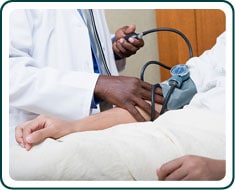
An interesting article about the possible connection of stroke risk and predicting memory problems. Some details about the research on how stroke risk profile may also predict odds of memory problems:
"Overall, it appears that the total Stroke Risk Profile score, while initially created to predict stroke, is also useful in determining the risk of cognitive problems," study researcher Frederick Unverzagt, PhD, says in a news release. He is a professor of psychiatry at the Indiana University School of Medicine in Indianapolis.
After taking into account complicating factors, getting older and having thickened heart muscle were both independently linked with future memory problems. High systolic blood pressure (the first number in a reading) also appeared to raise a person's odds of memory decline, even in the absence of heart muscle thickening.
You can't change every potential stroke risk factor, but some - blood pressure, as cited above, for example - can be addressed through exercise, diet or medication. Now, it seems, you might be able to steer away from memory problems, too.“Our findings suggest that elevated blood pressure and thickening of the heart muscle may provide a simple way for doctors to identify people at risk for memory and thinking problems,” Unverzagt said.
See the original article:
in
Fatigue and Stroke, aka I'm Hittin' the Wall
 |
| Joyce Hoffman The Tales of a Stroke Patient |
(This post is not only for stroke survivors. It is for caregivers, family, friends, health professionals, and others who want to understand fatigue and stroke).
I always pushed myself to the limit. I was like my father, who was shot in his auto parts store by some robbing druggies in 1971 and died on the spot, putting an end to his boundless energy. He worked twelve hours a day, seven days a week, and yet, when he returned home, he ate dinner at 8pm, and sometimes went out again, and always on the weekends, with my mother, who was a stay-at-home mom and had to deal with my boundless energy.
But now that I've had a stroke, my energy has boundaries. All my friends will tell you. I get an entire list of the things I want to do in a day, but I'm always changing the schedule because when it comes to the list, I'm just too damned tired to finish all of it. Why is that? I wanted to know, and I found out a whole lot.
 Everybody feels tired at some point. It's the body's way of saying, "Slow down and rest awhile." But the National Stroke Association (NSA) says that post-stroke fatigue (PSF) affects as much as 70 percent of stroke survivors. PSF happens without warning and happens as much as years after the stroke. PSF is not just feeling tired and wanting to take a nap. With PSF, you have to take a nap.
The NSA identified 3 types of fatigue for stroke survivors:
Sunday Stroke Survival ~ Memory or Lack There Of
 |
| Jo Murphey The Murphey Saga |
 |
I don't know who drew this but it fits!
|
Having a mind like a steel trap, a sponge, a filing cabinet before my stroke I still have difficulty with memory. I call it my dyslexic/ADD brain now. I know I know what I know, but the trouble is finding the material I need at a given moment.
When I was a young child, mnemonics helped train my memory to what it was pre-stroke defined as a photo and phonographic memory. I've digressed in time trying to retrain my brain. The only problem with mnemonics is that you have to remember what those letters or words stand for. I'll ponder the letters and can't remember only to get side tracked as a new image or thought flutters across my brain. Sometimes it's just easier to remember what I'm trying to remember. For example- mathematics order of solving an equation is parentheses, powers, multiple, divide, add, and subtraction. The mnemonic is "Pretty please my dear aunt Sally." Or something like that. I always found that mnemonic hard to remember even when I had all the marbles in my head.
- Grrrr! Spilled Coke Zero on my keyboard last night and now the keys are sticking making my life difficult. That's what I get for being lazy and not dismantling my keyboard and cleaning it right away. Be back to memory after I do that.
- Back! Geez, that was quick! Actually 3 hours have past.
Cooking the Beets
 |
| Grace Carpenter My Happy Stroke |
Usually I think my memory was unaffected by the stroke.
Then it happens: something I used to do that comes back, almost without effort -- and I realize that part of myself has been missing for almost two years.
Like last week, I was rummaging around the fridge, and saw that we had some beets that were looking old. My family loves beets. Neal and I love the taste; the kids love fact that eating beets makes their pee turns red.
I used to cook beets every so often -- pre-stroke -- after the kids were in bed. I would start them simmering, and them do something else: do emails; pay bills; write. It was very satisfying.
 When I saw the beets last week, my hands got to work. I got the beets out from the fridge, turned the water on (with my right hand!) and put the beets on to boil. I put the timer on, then browsed the Web. Neal and I took turns checking on the beets, making sure that they weren't boiling over. When they were done, I slipped the skins off, and then put them in a container for salad for some other day.
There is no punchline here. No funny story about weird things I forgot to do, or a story about the kids' reaction. It's just about this feeling I have, that my mind is like a bicycle slowly changing gears upwards.
Click.
See the original article:
in
Brain Power
 |
| Pamela Hsieh Rehab Revolution |
If you suffer from memory, or perhaps even limbic system (like me, I think) issues, here's a heads up (har, har).
 According to this month's issue of Psychology Today, "new research confirms that doing aerobic exercise for thirty minutes, three times a week, can enlarge the hippocampus, a part of the brain that regulates emotion and memory."
All the more reason to get cracking at the gym, don't you think? Start off slow, especially if it has been a while, and build it up.
(And don't forget to do some fine motor exercises, like piano scales, afterward. Click that link to review my previous post on the benefits of post-cardio therapy.)
Couldn't hurt. It's also a good idea to do intervals (bouts of intense, fast movements broken up with short periods of lighter moves), probably, from all the fitness articles I've been reading up on. Plus, you'll be strengthening the ol' ticker -- and maybe shedding a few pounds -- so why the heck not? I recommend the elliptical, since it's gentler on the shins, has various settings for different needs, and is more fun than a treadmill.
PS. On the nutrition front, check on CNN's report on "the dirty dozen." Just FYI.
As brain expert Dr. Daniel Amen says, what's good for your heart is good for your brain. Keep it in mind!
To our healing,
Pamela
See the original article:
in
“Therapy” Without Insurance
 |
| Robin Rocky Mountain Stroke Survivors |
Many people with stroke have such devastating injuries that they feel blessed to be able to feed themselves. Cerebellar stroke is a little different. I can move everything, do everything…just in the wrong place and at the wrong time. And when I fatigue I can’t get messages through. It’s not that I’m weak…it’s that the communication between my brain and body is off.
Because of this quirk of cerebellar stroke, I simultaneously feel really guilty for complaining and also generally misunderstood. In general, the best therapy I can have at this point is to do coordinated movements over and over and over. Compared to someone with a more normal stroke, this is easy. Compared to how I was before, this is very, very hard work! Because I’m cognitively fine, I also find activities like tapping cups or cones (common occupational therapy) not only boring, but somewhat irrelevant. I learn tapping cups very quickly…but tapping cups isn’t what I need to fully function. Cognitively speaking, I can function as a doctor but I need to practice language and memorization and could probably due to improve my focus as well. Playing computer games just doesn’t do it for me.
Thinking & Memory
 |
| Richard Burns Live or Die: A Stroke of Good Luck |
Stroke can cause damage to parts of the brain responsible for memory, learning and awareness. Stroke survivors may have shortened attention spans or problems, or even loss of short term memory. Stroke survivors may lose the ability to plan ahead, comprehend meanng, learn new tasks, and other mental activities. Two very common problems are denial of these impairments, or any impairments, and this is complicated by the the loss of learned purposeful movement of the body.
But, as we said before, these are not problems, these are opportunities.
Tied-in are emotional disturbances. Many people who have had a stroke feel fear, anxiety, frustration, anger, sadness, a sense of grief for their mental and physical losses. Don't over-do, over-react. These feelings are a natural reaction to the mental trauma. Emotional disturbances and personality changes are natural reactions. Clinical depression, a sense of hopelessness at the inability to function is the most common disorder. Signs of this are sleep disturbances, a change in eating patterns leading to wieght loss or gain, lethargy, social withdrawal, irritability, fatigue, self-loathing and deprivation, even suicidal thoughts.
All these things can be treated with medication and counseling.
But the medication, the most effective counseling must be helped by you, the stroke survivor. You will make it all effective. Remember, you've got ot put one foot down at a time, one foot in front of the other, again and again and again and again - until it's right. It may take awhile, but the result is worth it.
Interested in the result? Just read the book, "Live Or Die, A Stroke of Good Luck".
Dick Burns
See the original article:
in
Memory Aids Have to Be in My Face
 |
| Rebecca Dutton Home After a Stroke |
When I forgot to pick up a friend who has a brain injury I felt guilty. She blamed herself because she thought she had remembered the wrong date. This painful experience taught me that memory aids have to be in my face. I can repeatedly ignore a stack of reminders sitting in an out of the way place. I use classic memory aids in some unusual ways.
 The current month sits on my kitchen table where I eat breakfast. I used to highlight important events, but the page of bright colors was distracting by the end of the month. Now I use 2 colored tabs to mark important dates and move the tabs when the events are over. I fold the page for each month in half and put future months in the napkin holder on the right. Every piece of paper is stuffed in it's respective month. The arrow is pointing to a month that has a postcard from my dentist reminding me to make an appointment. I got that postcard six weeks ago. If I had put the postcard on my kitchen counter who knows where it would be now. I also tear a page from an amusing day-to-day calendar before I start to eat which tells me what the current date is. Remembering can be fun. Breakfast = funny joke = date.
A word of caution about memory aids. What helps one person remember doesn't make a bit of sense to another person. The memory aids I use are only examples that may help you discover memory aids that work for you. There are also lots of places that meet the "where you sit down every day" criteria. Negotiate with your family to find a prominent place that you can put your memory aids. It requires others to adjust to a few changes, but they will appreciate your improved memory. Readers of my blog have said how organized I am. I fooled you. My memory is on paper.
See the original article:
in
Black Crayons and Perfection
 |
| Marcelle Greene Up Stroke |
I continue to fret about how the stroke affects my nieces' and nephew's perception of me. Above is a page from one niece's kindergarten journal after Thanksgiving last year. The two of us stand in my backyard. There's the hot tub, the patio table and…
 "Abigail, what's that?”
"A trash can."
I'm more recognizable: There's my cane, my glasses, and a pizza on my head. (Oh, sorry – that's a hat.) What puzzles me most is why I'm dressed for a funeral. Really? Of all the crayons she reached for black? I look like an old lady with both feet in the grave.
I suppose I should focus on the fact that of everything my niece did during that four-day weekend, she chose to document the afternoon spent at my house.
My favorite memory of that afternoon is of Abigail and me walking up the drive. I felt a strange sensation in my stroke-numbed palm, looked down and saw her little hand in mine. She had slid it easily between my clawed fingers. I was amazed. She hadn't given it a thought – as if I was completely normal.
Which makes me think: Perhaps my concern about the children's perception is more a problem of how I see myself.
 As if to underline that idea, here's the card Abigail made for me at Thanksgiving this year:
I'm trying not to let it go to my head.
See the original article:
in
Pieces of Me
 |
| Barb Polan Barb's Recovery |
Ever happen to you that, after having lost someone - to death or from a break-up - you catch glimpses of that person everywhere you go? There's a stranger ahead who walks like a friend you lost to cancer, or whose turn of his head reminds you of your last boyfriend. When it happens, I study the person intently until I find a reason to differentiate that person from my lost loved one, then back off. It takes time to wear off. Even though my mother died 22 years, 11 months, and 12 days ago, I still see characteristics of hers in 60-year-old women on the street. My daughter is a songwriter - and much of her early inspiration came from heartache. One song I particularly like is "Pieces of him." The singer has been dumped by her soulmate and sees "pieces of him everywhere." Although I might not be right about what she meant, I always interpret it that way - as though she sees the person the way my missing beloveds haunt me. Maybe not. But, in fact, this happens to me frequently now post-stroke - I catch glimpses of my former life and the people and circumstances that are lost to me; to cope, I try to focus on now and my future from HERE, not from THERE. I don't dwell - just watch until it's gone. Suppose I see a rower I used to spend a lot of time rowing with: my first reaction is a blast of pleasure, and then a lateral link (to my memory folder) to watching her/his back during a row; and I watch until I realize how far I have to go, the work I have to do - the rewarding work - to get there again. Or while doing my editing work, I want to leap in and correct something going wrong, but I realize it's not my responsibility anymore - and I back off and wait for it to be solved by someone else. I loved jumping in to fix something before, but my choice to commit to being a writer is perfect for my life based on where I am now. Last night I was frustrated by being limited to using just one hand. I was crying while I struggled with a washcloth and a bottle of soap in the shower, which is a pretty good place to cry. This morning, though, after a dream in which I watched everyone's second hand helping with tasks (and glimpsing myself doing the same), I woke up thinking how impressed I am by myself for making it as far as I have one-handed. And one-legged, because my leg is progressing right along and works very well for me RIGHT NOW and given how it started - I was not able to put weight on it without falling. All I have to do to recover is to remember being in rehab and the nurses insisting on putting on my bed alarm, which would go off if I sat on the edge of my bed - a precursor to me getting out of bed, standing and falling. BTW, eventually I could explain to my visitors how to shut off the alarm - it wasn't hard, just out of my reach; that is, it would alarm if I tried to get in position to push the button off. Busted.
See the original article:
in
Aphasia & Memory Loss
 |
| Diane The Pink House On The Corner |
I swear, the more I learn about aphasia, the less I understand. I don't think even the experts know exactly what is going on inside an aphasic's mind. All through Bob's professional speech therapy, the therapists' were in agreement on one thing, which was the use of flashcards to help relearn the names of objects. But flashcards have not proven to be very effective with Bob. No matter how many times he is shown a flashcard picture of, say, an elephant, he cannot seem to remember from one day to the next that that is indeed an elephant...
Same goes with our morning routine, after bedbath and I get him dressed for the day, I always quiz him on the names of "socks" "pants" and "shirt" as we put these on. I've been doing this for nearly six months and Bob sometimes remembers these names and other times, he will insist that "socks" are "pancakes" or that "pants" are indeed "sandals" and the "shirt" still leaves him just confused.
Which makes me wonder just how much of this is aphasia and how much of it is due to short-term memory problems. Bob also suffers from long-term memory loss. It seems, in fact, that whole chunks of his memories have disappeared since the stroke. He cannot remember, for example, that he has sisters. This became apparent to me when someone asked Bob if he had any "brothers or sisters". And Bob shook his head "no" and even after I explained that he did indeed have two sisters (living) and one deceased, he looked at me totally confused, then insisted I was wrong. He also seems to have no recollection that he was previously married and that marriage produced two children.... I do wonder if any of these long term memories can come back. Be restored, so to speak.
Though, I suppose, the loss of certain memories could be considered a blessing of sorts.
Anyway, for the moment, I've ditched the flashcards and we have begun working on short-term memory issues.
 |
Bob's Memory Game
|
A special thanks to Jenn who sent Bob this Memory Game from Hasbro. The game consists of cardboard picture cards which are turned upside down and the idea is to remember where certain pictures are located and to collect pairs.
The first time Bob attempted this game, he was absolutely terrible at it. He's still not very good, but getting better the more we play it.
And it helps that it is a competitive game, because simply he hates to lose!
See the original article:
in
Not Accepting Everything
 |
| Andrea A Year of Living In My Head |
So I am almost to the point of looking for a position that more fits my training. My concern is I could be a bit delusional that I can still produce the same quality of work as pre-stroke. I just don't know. I know when I started my garden job that absolute crazy feeling in my head when my boss gave me run on instructions as in : Do This, Do That, Move This, Look for This, etc etc. I could feel my brain actually scrambling and freezing and locking... it did not know (or that part of my brain is "gone") where to put a series of quick instructions -- so it would just go blank and not remember any of them. My short term storage has been impacted, and it feels as though it has been misplaced. It is very wierd being in my head when it is missing something. You ever have that? It's like there is some sort of memory of what was, what I could do, but there is no way to touch it. I have a memory of being very competent and accomplished, but I feel kinda bumbling and floaty sometimes. I also cannot trust my "gut" as much, as I have discovered errors in my instincts--and I am a very "gut instinct" person! With work over 3 months my memory has changed & improved so that I actually can remember a string of instructions (at least the first 3 or 4). Last week I made a appointment with an occupational/speech therapist to work on memory. I also notice the muscles on the left side of my body have a different consistency than others. They are always very flaccid-loose-relaxed as if I just had a year long massage and they are jelly. I am not really complaining, just noticing. Pre-stroke I always loved learning new things, and new ways to see things. I thank the lovely heavens that my appreciation of the diverse ways we can navigate through a life is not diminished.
See the original article:
in
Game Yourself Bright
 |
| Peter G. Levine Stronger After Stroke |
Over the years I've had a lot of questions about recovery of cognitive function. And it's difficult question because it's not my area. Or is it?
 |
My Dad. Super smart. (I was adopted.)
|
Memory, association, concept formation, language, attention, perception, action, problem solving and mental imagery.
As you can see, many of those terms can relate to movement. In fact, motor learning (the learning of new physical movement, or relearning in the case of stroke survivors) is like any other cognitive function. Whether you're learning how to move better or learning mathematics or French or whatever, the processes are similar. Both involve physical change within the brain. Both happen in the 1 to 3 mm cortex of the brain, and both involve repetitive challenging practice. There is no separation between "cognitive" and "motor learning."
9 Things NOT to say to Someone With a Brain Injury.
 |
| Kate Allatt A Rocky Stroke Recovery |
SOURCE: http://strokerevelations.com/9-things-not-to-say-to-someone-with-a-brain-i-44952
 Brain injury is confusing to people who don’t have one. It’s natural to want to say something, to voice an opinion or offer advice, even when we don’t understand.
And when you care for a loved one with a brain injury, it’s easy to get burnt out and say things out of frustration.
Here are a few things you might find yourself saying that are probably not helpful:
Young Blood Reverses age-Related Impairments in Cognitive Function and Synaptic Plasticity in Mice
 |
| Dean Reinke Deans' Stroke Musing |
This was written up a year ago here: Factor That Reverses Aging of Heart Discovered - young blood. Why haven't we seen any human trials? I'm sure we could get grandchildren to donate blood. And if it works this would be so damned simple to implement. All the more reason to cultivate young friends. Well this is in mice but would you attempt this anyway? NATURE MEDICINE - Young blood reverses age-related impairments in cognitive function and synaptic plasticity in mice.
As human lifespan increases, a greater fraction of the population is suffering from age-related cognitive impairments, making it important to elucidate a means to combat the effects of aging1, 2. Here we report that exposure of an aged animal to young blood can counteract and reverse pre-existing effects of brain aging at the molecular, structural, functional and cognitive level. Genome-wide microarray analysis of heterochronic parabionts—in which circulatory systems of young and aged animals are connected—identified synaptic plasticity–related transcriptional changes in the hippocampus of aged mice. Dendritic spine density of mature neurons increased and synaptic plasticity improved in the hippocampus of aged heterochronic parabionts. At the cognitive level, systemic administration of young blood plasma into aged mice improved age-related cognitive impairments in both contextual fear conditioning and spatial learning and memory. Structural and cognitive enhancements elicited by exposure to young blood are mediated, in part, by activation of the cyclic AMP response element binding protein (Creb) in the aged hippocampus. Our data indicate that exposure of aged mice to young blood late in life is capable of rejuvenating synaptic plasticity and improving cognitive function.
See the original article:
in
Subscribe to:
Posts (Atom)