Showing posts with label ▷ 2013 Mar 02. Show all posts

Saturday, March 02, 2013

Assistive Cane & Walking Stick (or Poles)


Assistive Cane From Wikipedia, the free encyclopedia.


An assistive cane is a walking stick used as a crutch or mobility aid. Canes can help redistribute weight from a lower leg that is weak or painful, improve stability by increasing the base of support, and provide tactile information about the ground to improve balance. Ten percent of adults older than 65 years use canes, and 4.6 percent use walkers.

Wooden Cane

In contrast to crutches, canes are generally lighter, but, because they transfer the load through the user's unsupported wrist, are unable to offload equal loads from the legs.

Another type of crutch is the walker, a frame held in front of the user and which the user leans on during movement. Walkers are more stable due to their greater area of ground contact, but are larger and less wieldy and, like canes, pass the full load through the user's wrists in most cases.

Parts of Medical Canes


Bottom of a quad cane showing ferrules
The basic cane has four parts. These parts vary depending on the design of the cane and the needs of the user.

  • Handle The handle of a cane is extremely important to the user. Many different styles exist, the most common traditional designs are the Tourist, or crook handle, the Fritz Handle and the Derby Handle. Ergonomically shaped handles have become increasingly common for canes intended for medical use, both increasing the comfort of the grip for the user (particularly important for those users with disabilities which also affect their hands or wrists), and better transmitting the load from the user's hand and arm into the shaft.
  • Collar The collar of a cane may be only a decorative addition made for stylistic reasons, or may form the structural interface between shaft and handle.
  • Shaft The shaft of the cane transmits the load from the handle to the ferrule and may be constructed from carbon fiber polymer, metal, composites, or traditional wood.
  • Ferrule The tip of a cane provides traction and added support when the cane is used at an angle. Many kinds of ferrules exist, but most common is a simple, ridged rubber stopper. Users can easily replace a ferrule with one that better suits their individual needs.

Modern canes may differ from the traditional fixed structure. For instance, a quad cane has a base attached to the shaft that provides added stability by having four ferrules, and an adjustable cane may have two shaft segments telescoping one inside the other to allow adjustment for multiple sizes.

All cane users who need a walking cane for medical reasons should consult a medical professional before choosing the style that is right for them. It is particularly important that the cane is the appropriate height for the individual user

Types of Canes

  • White canes: specially for assisting the visually impaired, these are longer and thinner and allow the user to "feel" the path ahead. They also alert others, such as motorists, to know the user is blind and therefore use caution. In the UK, red banding on a white cane indicates a deaf-blind user.
  • Folding canes: have several joints, generally linked by an internal elastic cord, allowing them to be folded into a shorter length when not in use.
  • Forearm canes: are either regular canes or offset canes with additional forearm support, allowing increased stability and load shifted from the wrist to the forearm.
  • Quad canes: have four ferrules at the base, allowing them to stand freely, and offering a more stable base for standing.
  • Tripod canes: open in tripod fashion. Often available with an attached seat.
  • Adjustable canes: feature two or more shaft pieces for a telescoping effect that allows the user to lengthen or shorten their walking cane to fit to size. This feature can be combined with other variations.
  • Shillelagh: a cane made of blackthorn wood, originating in Ireland and still a recognized symbol thereof.

Accessories


  • The most common accessory is a hand strap, to prevent loss of the stick should the hand release its grip. These are often threaded through a hole drilled into the stick rather than tied around.
  • A clip-on frame or similar device can be used to stand a stick against the top of a table.
  •  In cold climates, a metallic cleat may be added to the foot of the cane. This dramatically increases traction on ice. The device is usually designed so it can be easily flipped to the side to prevent damage to indoor flooring.
  • Different handles are available to better match the size of the user's hands and their medical needs.
  • Rubber ferrules give extra traction on most surfaces.

Handedness

Canes are generally used in the hand opposite the injury or weakness. This may appear counter-intuitive, but it allows the cane to be used for stability in a way that lets the user shift much of their weight away from their weaker side and onto their cane, thus preventing their center of balance from swaying from side to side as they walk. It also allows for fluid movement that better matches walking, as the hand opposite the leg generally sways forward in normal human locomotion. Personal preference, or a need to hold the cane in their dominant hand means some cane users choose to hold the cane on the same side as the affected leg.

See the full article Assistive Cane From Wikipedia, the free encyclopedia.


Walking Stick From Wikipedia, the free encyclopedia.


Trekking Poles
A walking stick is a device used by many people to facilitate balancing while walking.

Walking sticks come in many shapes and sizes, and can be sought by collectors. Some kinds of walking stick may be used by people with disabilities as a crutch. The walking stick has also historically been known to be used as a defensive or offensive weapon, and may conceal a knife or sword as in a swordstick.

Walking sticks, also known as trekking poles, pilgrim's staffs, hiking poles or hiking sticks, are used by hikers for a wide variety of purposes: to clear spider webs, or part thick bushes or grass obscuring the trail; as a support when going uphill or a brake when going downhill; as a balance point when crossing streams, swamps or other rough terrain; to feel for obstacles in the path; to test mud and puddles for depth; and as a defence against wild animals. A walking stick can be improvised from nearby felled wood. More ornate sticks are made for avid hikers, and are often adorned with small trinkets or medallions depicting "conquered" territory. Wood walking sticks are used for outdoor sports, healthy upper body exercise and even club, department and family memorials. They can be individually handcrafted from a number of woods, and may be personalised in many ways for the owner.

A collector of walking sticks is termed a rabologist.


Accessories

  • The most common accessory, before or after purchase or manufacture, is a hand strap, to prevent loss of the stick should the hand release its grip. These are often threaded through a hole drilled into the stick rather than tied around.
  • A clip-on frame or similar device can be used to stand a stick against the top of a table.
  • In cold climates, a metallic cleat may be added to the foot of the cane. This dramatically increases traction on ice. The device is usually designed so it can be easily flipped to the side to prevent damage to indoor flooring.
  • Different handles are available to match grips of varying sizes.
  • Rubber ferrules give extra traction on most surfaces.
  • Nordic walking (ski walking) poles are extremely popular in Europe. Walking with two poles in the correct length radically reduces the stress to the knees, hips and back. These special poles come with straps resembling a fingerless glove, durable metal tips for off-road and removable rubber tips for pavement and other hard surfaces.

See the full article Walking Stick From Wikipedia, the free encyclopedia.


Walking Canes: How to Choose, Measure and Use.

"Famous" Physical Therapists Bob Schrupp and Brad Heineck present information on how to choose, measure, and use the right cane for yourself or a loved one.


Standard YouTube License @ physicaltherapyvideo's channel


How to Use a Cane

In this video, Jose' Silva provides instructions on how to use a cane.


Standard YouTube License @ CaregiversTrainingVideos


Steve's First Walk With Cane

Stroke survivor takes his first walk with a cane three and a half weeks after a large ischemic stroke left his left side paralyzed. The chronology of events in his stroke recovery can be found in the Stroke Recovery Journal at http://www.strokesurvivorblog.com/.


Standard YouTube License @ StrokeSurvivor2008's channel


Walking With a 4-Pronged Cane


On November 25, 2009, I had a stroke. An aneurysm burst in my brain, I began to slur my words and then (apparently) I collapsed on the floor of my apartment in San Luis Obispo. I was only 21 years old at the time.

I was airlifted by helicopter to Cottage Hospital in Santa Barbara. Dr. Alois Zauner, a nationally respected neurosurgeon on staff, began immediately to try to determine how to stop the bleeding. By early the next morning, he was able to stop the bleeding by opening up my skull and putting two clips on the bleeding artery. By that time, my parents had arrived and were informed that I needed to be put into a medically induced coma.

I was kept in a coma for four weeks to allow my brain to heal and any swelling to go away. In total, I was in the hospital in Santa Barbara for five months. I came home to Moraga, California in March 2010 and weighed only 102 lbs -- having lost over 40 lbs. during my hospital stay.

The doctors believe I should fully recover, but the process takes quite a bit of time. Fortunately, I'm young, so my body and my brain's ability to recover is very good. My recovery includes improving the use of my right arm and leg and my brain's ability to retrieve and use the right words when speaking and writing. Right now, I am using Dragon Dictate software to help write this story. Because of the stroke, it is difficult for me to type with only my left hand and also because I'm still having a bit of difficulty spelling words correctly. As you can see from the videos, my language skills and my walking have improved a lot since the stroke. The videos you see show my slow but positive recovery beginning in April 2010 and continuing to this day.


Standard YouTube License @ sperbaby's channel


Walking With a Cane

Here I am walking with a cane. You can observe my sense of humour coming back.


Standard YouTube License @ sperbaby's channel


Recovery Following a Massive Stroke - Sandra

Sandra was unable to get in or out of bed and could not take any steps following a massive stroke 6 months earlier which forced her to live in a nursing home under full care. After spending five weeks at Ability Camp she now has new freedom and can get out of bed, walk with a walker or cane and is returning to her own home!


Standard YouTube License @ Abilitycampinc


Walking With a Cane (Demo)

This video demonstrates how a patient can walk with a cane.

This how-to series, made possible by the Norma Oppenlander Fund, is designed to provide persons afflicted with PSP, CBD and related diseases with demonstrations of techniques that can be utilized to make daily tasks easier to perform.

Website: www.curepsp.org.


Standard YouTube License @ CurePSP's How-To Series


Stroke Survivor Walks With the Quad Cane & Theraband

Six weeks after a massive stroke paralyzed his left side, Stroke Survivor Steve is equipped with a Theraband (an elastic band), which helps him to lift his leg so he can walk more fluidly. Read more about his stroke recovery at http://www.strokesurvivorblog.com


Standard YouTube License @ StrokeSurvivor2008's channel


Stroke Survivor Walking Across America (With a Cane)


Standard YouTube License @ The News On 6 Video


Walking Home First Time Since Major Stroke Teacher Leyva Scripps

How would you handle this? Tell her what you think at CaringForMissLeyva.com

Isabel and husband Richard celebrated their second wedding anniversary while Isabel was in the hospital following her stroke. Rick is a former TV news reporter whose new career is that of sole caregiver. He's a Contributing Writer for The Stroke Network.org. When he can find someone to sit with Isabel he works as a free-lance cameraman and on camera spokesman, as well as writing, editing, and voice-over work from home when possible.

Isabel and Richard live in Oceanside, California, San Diego County, California, U.S.A.

See as well Caregiver Rick for Stroke Survivor Isabel, Saturday, April 28, 2012, on SSTattler.


Standard YouTube License @ Caring For Miss Leyva-Griffith


LEKI Sierra Single Staff Pole

How to use your Sierra as a monopod, adjust the length for your preference and the purpose of the Carbide Flextip / Rubber Tip.


Standard YouTube License @ LekiUSA's channel


REI Hiker Walking Staff Review

Lightweight, compact, and useful: that's what the REI Hiker Walking Staff is all about. Whether you're hitting the trail or just going for a leisurely walk outside, the Hiker is a great companion to take along. It's durable construction and well-designed body help to take a little of the stress off of you're walk and also provide a bit of safety.

It features:

  • Antishock springs can be turned on and off with a twist of the pole—use the extra cushion for going downhill; set it rigid for support uphill.
  • Shocklight springs are located inside the inner shaft; thus, are quieter and smoother than other pole springs.
  • Foam grip and wide, padded wrist loop ensure a comfortable and secure hold; cork knob unscrews to create a monopod camera mount.
  • Small-diameter trekking basket keeps the durable carbide tip from sinking into soft dirt and sand, yet resists catching in underbrush.
  • The three-section shaft compacts small enough to strap to a daypack.
  • Measures 51 inches open and 28.5 inches closed; grip length is 8 inches.
  • Shaft material: Aluminum 7075-T6.
  • Available at REI for approx $60.


Standard YouTube License @ jumpTheMap


Trek-Tech TrekPod Tripod

Jared from Trek-Tech demonstrates An outdoor/indoor-friendly tripod that can serve as a walking staff, monopod, and much more.


Standard YouTube License @ marketnewsmag


Home Made Walking Cane

Just got this Cane finished. It is Wild Lilac and it grows wild near the rivers edges of B.C. Very nice wood, once sanded down, and makes a fine walking stick or support Cane.


Standard YouTube License @ Sean C


Handmade Canes and Walking/Hicking Sticks

This is a movie about hand made canes and walking/hiking sticks I make and have made. I do NOT use power tools.


Standard YouTube License @ 40ED40

Saturday Comics


For Better and For Worse
Lynn Johnston - 2007-10-20

"Grandpa? It's me ... Michael."
Dilbert
Scott Adams - 2013-02-26

"...company is suing us for patent infringement!"

Garfield
Jim Davis - 2013-03-01

"Liz thinks I'm sweet..."

Betty
Delainey & Rasmussen - 2013-03-01

"Get me a 5-hour energy and a red bull..."   


*For Better and For Worse" is a serious topic of stroke but with a very nice cartoons. It is all about Grandpa Jim had a stroke and 88 further cartoon "strips" that happened to Grandpa Jim. (See as well 
 the author Lynn Johnston).
** I tried to get low or free price at the people http://www.UniversalUclick.com/ for the images for the cartoons. It was too high for Stroke Survivors Tattler i.e. we are not a regular newspaper and our budget is very low. Fortunately, you will have to do only 1-click more to see the cartoon image, it is legit and it is free using GoComics.com and Dilbert.com.
*** Changed from "Pickles" to "Betty" -- "Betty" is a excellent cartoon and Gary Delainey & Gerry Rasmussen are authors/artists/cartoon-strips and they live in Edmonton.

Eclectic Stuff & Articles

Definition: Eclectic(noun) a person who derives ideas, style, or taste from a broad and diverse range of sources.

Sunday Stroke Survival ~ Me and My Cane / My Shadow

Jo Murphey
The Murphey Saga
Sunday, February 24, 2013

I was going through old records today looking for a particular record (yes the old vinyl kind) to play while I was writing. I ran across an old 45 that I've had since childhood. Now I've had this song stuck in my head. Arghhh! Don't you just hate when that happens! Now you can get it stuck in your because I found it on youtube. That leads me into my blog for today about canes. See, music is good for something. 


I started singing it to my cane. Might as well I thought, since it is stuck in head anyhow. My cane is, for right now, an extension of me similar to my shadow. I don't go anywhere without it just like my shadow. In other words, I was making applesauce or lemonade.

Transitioning from wheelchair to a hemi walker was a big step towards independence for many and mobility for stroke survivors, and I was no different. I remember when, after I got out of the hospital, asking my PT if she thought I could transition to a cane instead of the walker. Wheelchairs and walkers are just bulky. They are hard to get in and out of cars and hard to do anything other than be mobile with them. A stroke survivor is hard pressed to get a wheelchair in and out of the car without help, and there goes the independence. Being dependent after so many years of independence is a tough pill to swallow. 

Then came the hard decision. After she said yes, the decision was mine of whether to get a quad cane or single cane.Yes, my balance was improved but was it improved enough for a single cane? The doubts came into play with my head. The quad cane offered more stability. The single cane offers a compact size and more use time. Now, humming the theme from Jeopardy, what is it with me and music today! At least Peter Pan is out of my head. Decisions, decisions. The only way to know for sure was to try.

I went to my local CVS. They know me there and don't bother me much as I block one of their aisles trying each cane out. Since it is one of their long aisles, there was ample space to try it out. In the end, money ruled. I would get more use out of the single cane for longer. I knew from past experience with walking canes which one supported me best. 

Then my husband and daughter got involved. Ya gotta love families, don't you? I wanted to buy a roll of duct tape to cover their mouths. 


Husband: You aren't going to have a basket to carry your wallet in. Maybe you need one of these nifty cane purses. What color do you want? Black, blue, green or white? Here's a print one, how about it? 
Daughter: You don't want one of those plain canes. Look at all these pretty ones. How about this hot pink flowered one? You can pretend you're in Hawaii. Don't you want more than one to color coordinate with your wardrobe? At this last question, my husband and I looked at her as if she was nuts. 
All I wanted was a cane to walk with! Geez! Before when I went to purchase a cane, you had a choice of black and silver colored canes or wood, and different styles. And I thought I only had to make a decision between a quad or single cane. I bought the blue print cane and black purse just to shut both of them up. 

I guess I should have been thankful to be just shopping for a cane I could use, but I was tired. Before shopping, I'd had a triple therapy session between PT, OT, and speech. My first true test if I'd made a mistake in cane choice was trying it out on an uneven surface like my front yard. 

I got out of the car when we got home and immediately grabbed the cane that I just bought. A chorus of, "Are you sure?" followed my decision. The driveway was no problem and then I hit the grass. I wobbled but caught my balance and oh so slowly made my way to the front door. I'd already fallen severely once and didn't want a repeat performance. The next challenge was getting up two small steps with the cane. I did it much to chagrin of my husband and daughter who hovered with arms outstretched to catch me if I fell. As if I wasn't having doubts about my choice already. 
By my next therapy session, I was sure. I told my therapist with unhidden pride, "Look. I've transitioned!" 

It took me a short amount of time to get my cane to react as a part of me. Although I walk around my house without it now, it is still part of my life and will be for the foreseeable future. Eventually, I'll reach a point like last time when I feel stable enough to walk without it no matter what terrain is underfoot, but for now....it's me and my shadow. My shadow and me...

See the original article Sunday Stroke Survival ~ Me and My Cane/ My Shadow 

                                        in The Murphey Saga

Cane Exercise for Stroke Rehab

Dean Reinke
Deans' Stroke Musing
Saturday, October 2, 2010

This is not medical advice, just something I do.

Found a couple of exercises to use with my cane.

For flexibility in the shoulder and ROM (range of motion) I started by using the pulley over the door, but that was only available in one place and it was extremely hard to get my hand open enough to grab the handle. So I tried something different, putting the grip handle of my cane in my affected hand, I grabbed the lower part of the cane with the unaffected hand and used that to push my affected arm up. First straight in front of me, then to the side and eventually to the rear. I would try to get my affected hand to the level of my head.  After a while I could get it well above my head. Next step was to move the arm around in a semicircle around my body as it was up in the air.

I first had to use the unaffected arm to push the affected arm around but was able to get the affected arm moving by itself. A recent addition is to put the grip of the cane in my affected hand and push the left arm straight out to the side and then place the tip of the cane on my hip. I then try to move my arm behind my back, this stretches my spastic pecs out and forces my biceps to quiet down. I know this has helped both my arm swing and relaxing my biceps. This de-weighting of the arm has led to other similar advances.

For working on my triceps I used my cane also. First sit down on a chair and place your cane in front of you, affected hand on the grip, tip on the ground, starting out you can use your unaffected hand to fully extend your affected arm. As you get better at this you will be able to use your affected arm only to extend your arm and then pull it back. I started out by doing 50 reps of these nightly, ended up doing them also when waiting at a bus stop bench, or when sitting in a waiting room. For working on your shoulder muscles when your arm is extended straight in front of you,move your arm to the right and left, seeing how far down you can go. This I use to mimic moving the steering wheel on a car.

By using the cane in these manners I am carrying around my exercise equipment all day long.

Remember you didn't hear this from me, ask your therapist first.

Stroke Exercise Videos ~ Cane

Dean Reinke
Deans' Stroke Musing
Saturday, December 1, 2012

These come to you via the StrokeNation on youTube channel. I like the fact that they have 14 exercises using a cane, and 3 with a Hula hoop. But you know the drill, nothing on your own unless your doctor/therapist approves. You know how dangerous that cane is - it might turn into a snake(1)(2) or a sword cane(3) or gun(3) or self-defense(4)(5). 

-- Deans' Stroke Musing

1. God ordered Musa to throw his cane onto the ground. As a sign to Musa from God the cane was transformed into a snake. Musa became scared, but God ordered Musa to pick it up, as it would change back to its original form. 
2. And Aaron cast down his rod before Pharaoh and before his servants, and it became a serpent. But Pharaoh also called the wise men and the sorcerers; so the magicians of Egypt, they also did in like manner with their enchantments (Exodus 7:10-11). 
The magicians of Egypt in modern times have long been celebrated adepts in charming serpents; and particularly by pressing the nape of the neck they throw them into a kind of catalepsy, which renders them stiff and immoveable, thus seeming to change them into a rod. They conceal the serpent about their person, and by acts of legerdemain produce it from their dress, stiff and straight as a rod. Just the same trick was played off by their ancient predecessors.... [A]nd so it appears they succeeded by their “enchantments” in practicing an illusion on the senses (2002, 1:295, Exodus 7:11-14).  
3. The best known such hybrid weapon is the sword cane, still made and used for personal defence. Rifle canes were impractical in the days of matchlock ignition, but with the invention of mechanical locks, it was possible to design one that worked. There surely are a few wheel-lock examples in museums, and rifle canes were made on a custom basis in the flintlock era. The invention of the percussion cap and a more easily concealed firing mechanism made rifle canes really practical weapons. 
4. Cane as a Weapon is a book by Andrew Chase Cunningham presenting a concise system of self defense making use of a walking stick or umbrella. 
5.  Cane Fighting: what cane to buy for self defence with a cane Boomers are getting older but though most feel very in-control of their lives, some have just a wee bit of edginess about self defence. Therefore many are very interested in cane fighting and self defence with a cane. I have been teaching self defence with the cane to seniors and women for over 12 years and one of the most common questions I have been asked is, “What is the best cane to buy for self defence?” 

See the original article Stroke Exercise Videos
                                        in Dean's Stroke Musing.
As well look at serious articles Dean's Stroke Musing / Cane.

Exercise. Energy. Recovery.

Peter G Levine
The Stroke Recovery Blog
Sunday, February 24, 2013

There are good reasons for muscle strengthening after stroke, of course. But therapists know these reasons well. For instance, the muscles on the affected side, even the ones that are the most spastic and seem overwhelmingly strong, are usually no more than half as strong as the unaffected side. Because spasticity is such an issue after stroke, some clinicians believe that strengthening "tight" spastic muscles will exacerbate spasticity. Research has shown that this is untrue; exercising muscles does not increase spasticity. It is important to focus on the muscles that are the weakest, of course. For instance, most stroke survivors have no problem at all bending their elbow, but extending their elbow is often very difficult, especially at the end of the range of motion. In this case it would be wise to work the triceps because it is the weaker of the two muscle groups.

The other form of exercise that therapists focus on is cardiovascular. Unfortunately stroke survivors get a double whammy: They are in half as good cardiovascular shape as age-matched couch potatoes, but everything they do takes twice as much energy. A good example is walking. Before stroke, walking takes very little energy. Most of the energy is expended in small bursts of muscle power, perfectly timed to use momentum forces and gravitational pull. After stroke, gait loses its subtlety and coordination. The gait that is typically left in the wake of stroke uses twice as much energy as prior to the stroke.

So cardio and muscular strengthening are important, but viewed as more of a "pre-process" than the process itself. In fact, many of the leading-edge treatment options (i.e., repetitive practice, CIT, forced use) are considered "intensive." They require that the survivor "hits the ground running" and be able to withstand the rigors of the intensity right from the get-go. In this regard there is a necessity for the survivor to be in pretty good cardiovascular and muscular shape prior to the initiation of treatment. Once the survivor has the stamina, the focus comes off the body and shifts to the brain.

See the original article Exercise. Energy. Recovery.
                                        in The Stroke Recovery Blog

Mastering The Condom Catheter (Well, sort of...)

Diane
The Pink House On The Corner
Friday, February 22, 2013

Earlier this month, I took Bob to see the urologist because his overactive/neurogenic bladder symptoms had worsened. Suddenly, Bob is peeing every 15 minutes or so. And this is problematic, to say the least, especially if we are not at home. This problem was also keeping poor Bob up all night long.

So I tell the urologist all of this plus the fact that he's only peeing about a "thimble full" at a time. The urologist gets out the big scope that they use to look inside a bladder. The minute he inserts the scope, Bob starts to pee. I mean, really pee. Pee is shooting up, around that scope, like a fountain.

And this is not a "thimble full" but seems to be the entire contents of Bob's bladder. And there's nothing protecting Bob, his clothes or the wheelchair except a little blue "chuck" that the nurse had laid over Bob's lap.  Now, the chuck is getting soaked, Bob is getting soaked, his pants and wheelchair cushions all soaked.... in fact, the urologist himself is getting a bit soaked.

The urologist doesn't seem to even mind, he just says, "Hey, look! He's peeing!" He says this as if he's absolutely delighted about this shower of pee. Then he adds, "And it smells really, really good!"

Okey dokey. Though this does make me wonder just what kind of doctor would want to devote his entire career to working with pee....

The urologist tells us that Bob's bladder "looks good", there's no obstructions though the prostate is a bit enlarged, but not so much as to cause a worry, and the only thing he can see is that Bob's bladder has a "decreased capacity" from the last exam, meaning it's shrunk....

We leave the urologist's office soaked with pee and armed with a new medication and a prescription for condom catheters and a referral for a home health nurse to "teach me" how to use them.

Now, I have long resisted such a thing as condom catheters. Mainly, because I've always thought that if Bob's brain is ever going to rewire and control his bladder, he needs to actually try to control his bladder. But after more than two years dealing with this, I finally gave in. I mean, I am really tired of spending all our time in the men's room whenever we go out. And it's not only that, but every time he has to urinate it's a BIG emergency. It becomes a mad, frantic dash to the nearest bathroom with Bob practically in tears and me, pretty much killing myself trying to get him there in time. So my idea was to get some external condom catheters to use when we go out, and maybe we could actually go out a little more. You know, do something fun? And also for at night, so Bob can get some sleep. But not to use them 24/7 at home. That way, Bob's brain can still have a chance to "rewire".

Anyway, the home health nurse arrives but she's under the impression that she's here to set up a feeding tube pump. I tell her that we already have a feeding tube pump and it's all set up and I've been using it for over two years, and that she's supposed to be here to "teach me" how to put on a condom catheter.  And that's when she tells she has no clue how to do that. She's never applied a condom catheter to a patient in her entire nursing life.

Then she says, "In fact, I've never even put a regular condom on a guy. Have you?"

When I tell her that it's been long time and in another life since I've done anything like that, she asks Bob, "Do you know how to put condom on?"

Bob says, "Um.....um.... Huh?"

"Well," the nurse says, "I did put on condom on a banana once. In school. Can't be that hard." So she opens the "free sample" packet we got from the urologist and finds the directions. She reads these out loud. They are:
1. Open package.
2. Unroll sheath over penis.
3. Connect connector to drainage tubing.
"Sounds simple enough," she says, then opens the package containing the drainage bag and shows me how to connect the tubing of the bag to the tube on the condom catheter, which she knows how to do because this, she says, works just like a Foley catheter. Then she says, "You want to practice putting the condom on me?" And she holds up two fingers.

I kid you not. She actually wants me to put a condom catheter on her fingers.

Which I decline. By now, I am thinking, this whole darn thing is rather ridiculous, because, you know, I can read directions too. And I certainly do not need to practice putting a condom on her fingers.

The nurse packs up her stuff and leaves but not before telling me that if I have any trouble with this procedure, just google it. She's sure there's probably some good how-to videos on You Tube.

All righty. So now, I'm on my own.

I don't know if you've ever seen a condom catheter, but it pretty much looks like a regular condom with a spout at the tip. You unroll it, as the directions say, just like a regular condom, i.e. "unroll sheath over penis". The spout attaches to the tubing of the drainage bag, so that when the person pees, it goes straight down the spout and into the tube and into the bag.... Which is a great idea, in theory.

The problem is getting the darn thing on to begin with.

The big difference between putting on a regular condom and a condom catheter is that when a regular condom is used, the recipient, um, rather rises to the occasion. Not so with a condom catheter. In fact, the effect is quite the opposite. So instead of being like putting a condom on, say, a banana, it's more like trying to put a condom on a blob of jello.

You can imagine the problems this causes.

So, I've been tearing my hair out trying to get this condom catheter on. It's rather like wrestling with a large fat worm. A very flaccid, wiggling, large fat worm, at that. And just when you think you've got the thing on the tip, sort of perched there like a little stocking hat, and you start to "unroll the sheath", the condom will spring back at you, like shooting a rubber band. I tell you, it sometimes takes me twenty minutes to get the darn thing on him.

And yes, I've googled it. Unfortunately, all those You Tube videos show a nurse applying a condom catheter on a plastic manikin.  Easy that. When you're working with hard plastic.

After three days of this struggle, I woke up one morning with my legs aching like you would not believe. And I thought, what the heck did I do? Because I couldn't remember, you know, falling or running into anything. Then, I noticed two large bruises on my upper thighs. But still, I could not remember how I sustained this particular injury. Later, when I was leaning over the hospital bed, wrestling once again with the fat wiggling worm, I realized that, not only was my back killing me, but my thighs were pressing hard against the bed rail in that exact spot those bruises appeared. Who knew this would be such dangerous work?

Then, the other day, while again wrestling with the fat wiggling worm, Bob looked at me and said the magic words: "pump it up". And I about slapped myself on the forehead, because why didn't I think of that? You see, Bob has a penile implant, this device was put in years ago after radiation treatment for cancer caused a myriad of problems. But, personally, I only know the basics of its operation and Bob, being now one-handed, can't do it himself--it's two handed job. So back to google and praise the lord, there are directions. And I manage to pump him up, get that condom catheter on, and pump him back down. Still no easy feat, as you are sort of feeling around in the dark for certain implanted buttons and gizmos---but better than wrestling the worm.

Yesterday, we went to see Bob's primary care doctor. I was glad to see that Bob handled wearing the condom catheter just fine. I was worried it might be uncomfortable. And it was nice to just sit in the waiting room without running to the men's room every 15 minutes.

Oh, and I did give that primary care doc a piece of my mind about the Foley catheter incident. He said, "Well, let's take it out right now." That's when I told him that wouldn't be necessary, as the thing was already gone -- and the guy actually laughed. He was so shocked, he actually laughed right out loud. I tell you, he now knows better than to mess with me.

See the original article Mastering The Condom Catheter
                                       in The Pink House On The Corner

Another Success Story for The Teaching of Talking Method

Mark A Ittleman
The Teaching of Talking
June 21, 2012

A series letters to/from Mark and Diane by The Teaching of Talking.

This is my friend Diane who has been reading pre published copy of The Teaching of Talking and receiving personal coaching. Our method uses conversation as the vehicle while using revolutionary language stimulation methods.

I am overjoyed at the progress Diane and Bob are making with The Teaching of Talking method.

A Conversation With Bob
Me: Today, we go to Pain Management. The transport will be here at 12:30. 
Bob (looks at his watch): OK 
Me: Last time, Stephanie said she would ask the doctor if he would increase your medication. Or if not, if there was a different medication you could try. 
Bob: Right. 
Me: But I need to know, would you want to change your medication? 
Bob (touches his shoulder): The problem is here. (Touches his forearm) Not here. 
Me: The doctor said the Botox shots in your arm were supposed to help your shoulder. I know it isn’t working. We’ll talk about that, too. 
Bob: OK 
Me: But I need to know, do you want to change your medication or just stay with the one you got? 
Bob: I don’t know. 
Me: I don’t know either. I’d hate to switch to something less effective. Though, maybe something else would work better. 
Bob: You decide. 
Me: OK. I guess I’ll just see what she says. Play it by ear. 
Bob: Exactly. 
Me: Do you need to shave before we go? 
Bob (feels his chin): Yes, shave. 
Me: OK… Do you know what? 
Bob: What? 
Me: We just had a conversation. A real conversation! 
Bob: I know. 
Me: Wow. That was nice. And I understood everything you said! 
Bob: Yes, that was nice. 
Me: You know what? I sure do like talking to you! 
Bob: I like talking to you, too!
I know, this rather dull conversation might not seem a big deal to some people, but that was the first real conversation we have had since the stroke. By that, I mean, that Bob responded to everything I said and I could understand him perfectly. He did not hesitate nor did he fumble for words and every response was appropriate. I tell you, I am just thrilled! He’s come a long way, baby!


July 12, 2012

This was a copy of the next letter in a series from Diane. She is a remarkable woman and I am sharing the exchange of information between us so that you can get a “flavor” (Norman Vincent Peale used to say that) for how I practice speech and language pathology and my sincere interest in the speaking performance of caregivers and their loved ones.

Written by Diane

Hi Mark,

Yes, got the book!!! finally!

Bob’s speech continues to improve. Still he is often hard to understand and I often have to ask him to repeat things. We have been so busy with the new added neck exercises, I am glad to have a way of slipping speech therapy in sideways, so to speak, all through the day.

He still has the tendency to fall back on single words and gestures, like “up” along with pointing a finger upwards, when he wants to be boosted up in the bed. So I still have to push him to say “I want a boost, please.” But he can say it very well and clear. This morning, he said “up” and when I asked for a sentence, he said “boost”. When I asked him to “tell me, I want a boost” he replied, “God! You always make me say that!” ha ha!!! For that was very good sentence!!!!

Anyway, gotta run, I am being “paged”!

Thanks again, for everything!
Diane

July 12, 2012

And this was my reply to her this morning (July 12, 2012)

Diane,

Yes, Bob has slurred speech, that can be improved upon when he is given the model.

Please remember that you must speak to him in the way you wish him to speak to you.
There fore if you want him to speak clearly you must model very very slow deliberate speech in EVERYTHING YOU SAY TO HIM. ALLOW FOR ABOUT ONE SECOND BETWEEN EACH SPOKEN WORD AS YOU SAY WHAT YOU SAY TO HIM.

The other thing that will make a profound difference is speaking to him in only 2-4 word utterances with the one second separation between words. You will have to do that consistently to get the result of improved language expression and clarity. Constantly show him the model you want in all your speaking and he will come around automatically to that with time and repetition. You know how we start to talk like those we are around!

Would it be possible to also post my book icon on your website with a description that it “trains caregivers in expert speech therapy methods that can be used at home with children and adults; The book The Teaching of Talking is especially beneficial for those who have been discharged from therapy or for those who do not have professional services available. Can also be helpful for those as a supplement to the speech therapy they are receiving.

You know, that we both have a number of things in common. We are both doing whatever we can to teach and educate those with stroke and aphasia, and also to encourage them when the whole process is so daunting and challenging.

My very best wishes to you and Bob. Please know that I am willing to do whatever I can for you and Bob, as well as others in the Stroke and Aphasia communities.

All my best,
Mark

2013 ELLA Course Guide / Edmonton


April 29th to May 17th

Just click more info about the

Edmonton Lifelong Learners Association:


Determined To Keep The Ranch...

Jackie Poff
Stroke Survivors Tattler
A successful rancher died and left everything to his devoted wife. She was a very good-looking woman and determined to keep the ranch, but knew very little about ranching, so she decided to place an ad in the newspaper for a ranch hand.

Two cowboys applied for the job. One was gay and the other a drunk.

She thought long and hard about it, and when no one else applied she decided to hire the gay guy, figuring it would be safer to have him around the house than the drunk.

He proved to be a hard worker who put in long hours every day and knew a lot about ranching.

For weeks, the two of them worked, and the ranch was doing very well.

Then one day, the rancher's widow said to the hired hand, "You have done a really good job, and the ranch looks great. You should go into town and kick up your heels." The hired hand readily agreed and went into town one Saturday night.

One o'clock came, however, and he didn't return.

Two o'clock and no hired hand.

Finally he returned around two-thirty, and upon entering the room, he found the rancher's widow sitting by the fireplace with a glass of wine, waiting for him.

She quietly called him over to her...

"Unbutton my blouse and take it off," she said.

Trembling, he did as she directed. "Now take off my boots."

He did as she asked, ever so slowly. "Now take off my socks." He removed each gently and placed them neatly by her boots.

"Now take off my skirt."

He slowly unbuttoned it, constantly watching her eyes in the fire light.

"Now take off my bra..." Again, with trembling hands, he did as he was told and dropped it to the floor.

Then she looked at him and said,
         "If you ever wear my clothes into town again, you're fired."

(P.S. - I didn't see it coming, either)

Best of Times

Monty Becker
Stroke Survivors Tattler


Just see it and hear it !


Standard YouTube License @ tom5713's channel

Ballast Wheel Chair Evolution Segway

John C Anderson
Stroke Survivors Tattler
-- See as well Segway PT (Personal Transporter in SSTattler. 
Translated from Italian to English by Google:

Ballast-chair has been designed and developed to improve mobility and provide a practical totally unknown until today.

This thanks to the "Segway" which provides a dynamic balance. In fact, the balance of the two wheels is guarantee and control of the medium is totally instinctive. To transfer from a wheelchair to a ballast is operated levo-chair for the lowering of the front guard and simultaneously the two rear wheels, providing five points of support.

The ballast-chair is a product compatible with the structure of the electrical cycles "Segway" is fixed and unchanged.

Original in Italian:

Ballast-chair è stata studiata e sviluppata per migliorare la mobilità e garantire una praticità totalmente sconosciuta fino à oggi.

Questo grazie alla tecnologia "segway" che fornisce una dinamicità inabituale. Infatti l'equilibrio su le due ruote viene guarantito e il controllo del mezzo è totalmente istintivo. Per il trasferimento da una carrozzina a Ballast-chair viene azionato una levo per l'abbassamento della protezione anteriore e simultaneamente le due rotelle posteriori, garantendo un appoggio su cinque punti.

La Ballast-chair è un prodotto compatibile con la struttura dei cicli elettrici "Segway" e viene fissata senza alcuna modifica.

Some Comments: 
blujose - Where can i buy one in Europe? 
Scott Platten - I am in a wheelchair too. how can i get one of those. 
mario22417 - Compliments a good job. I would be interested in this Segway can send me some info. thanks


Standard YouTube License @ BJproductionCH

Oscar Pistorius Arrives at Court:
Weeps over Girlfriend Fatal Shooting and Murder Charges

John C Anderson
Stroke Survivors Tattler
Published on Feb 15, 2013
SSTattler: We will have to watch in the future; see his running capability in YouTube: Oscar Pistorius - The Blade Runner in SSTattler.

South African sports icon Oscar Pistorius wept uncontrollably Friday when a judge charged him in the killing of his girlfriend on Valentine's Day.

Pistorius' body shook, his head buried in his hands, as he appeared in court over the fatal shooting of his girlfriend, model Reeva Steenkamp, who was found at his home Thursday in an upscale Pretoria neighborhood.

The 26-year-old, nicknamed "Blade Runner," for his Olympic debut last year with artificial legs, was arrested the same day.

Neighbors alerted authorities to the early morning shooting, saying they had "heard things earlier," according to Denise Beukes, a police spokeswoman. She did not clarify what the neighbors heard.

Local media reported that he had mistaken his girlfriend for an intruder, but the police spokeswoman said those reports did not come from authorities.


Standard YouTube License @ BoozWheez

Stories

John C Anderson
Stroke Survivors Tattler
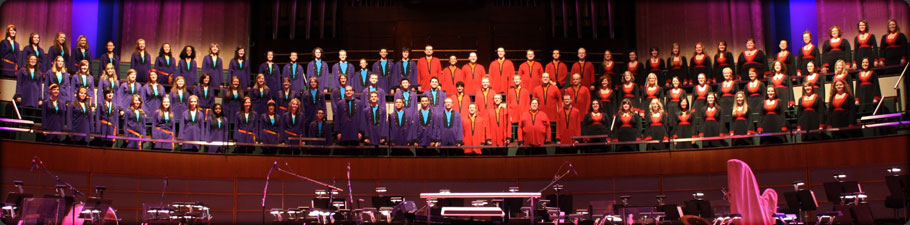
Kokopelli Choir Association
presents
"Stories"
Saturday, Mar 2, 2013

Location: West End Christian Reformed Church 
          10015-149 Street
City:     Edmonton
Event:    Other
Details:  Choir Music
Category: Concerts / Performances
Cost:     Tickets $20 ($15 Students/Seniors, $10 for Children 10 &
          Under), plus applicable service fees.
Tickets:  www.tixonthesquare.ca
Phone:    780.420.1757
Info:     Showtimes: 2 pm and 7 pm
Link:     www.tixonthesquare.ca …


Every spring, Edmonton choral fans circle the date for Kokopelli’s Stories concert. The choirs invariably use the mid-season concert to stretch their musical boundaries; incorporate innovative lighting, video, staging, movement and percussion; and inject the occasional unforgettable bit of whimsy.

Stories centres on the organizations two oldest choirs, Kokopelli and Ã’ran, but two of the younger choirs also get some time on the stage. Kikimasu performs a showcase set at the 2 p.m. performance, with Shumayela singing in the 7 p.m. show.

---------