 |
| Definition: Columnist |ˈkäləmnist| (noun). A blogger or a journalist contributing regularly to a blog or newspaper |

Saturday, October 24, 2015
Weekly Columnists

Musing: Omega 3 Fatty Acid for the Prevention of
Cognitive Decline and Dementia
 |
| Dean Reinke Deans’ Stroke Musing |
Your doctor will need to resolve the differences between this one and all the other research.
- Fish Oil Fails to Stave Off Mental Decline
- Meta-analysis finds no CV benefit of omega-3 fatty acids
- Monkeys That Eat Omega-3 Rich Diet Show More Developed Brain Networks
- Vitamin D, Omega-3 May Help Clear Amyloid Plaques Found in Alzheimer's
- Omega-3 fatty acids and traumatic neurological injury: from neuroprotection to neuroplasticity?
- Protection against brain abnormalities provided by high serum omega-3 polyunsaturated fatty acid content
The abstract to compare these all against;
Omega 3 fatty acid for the prevention of cognitive decline and dementiaSydenham E1, Dangour AD, Lim WS.
Author information
Abstract
BACKGROUND:
Evidence from observational studies suggests that diets high in omega-3 long-chain polyunsaturated fatty acids (PUFA) may protect people from cognitive decline and dementia. The strength of this potential protective effect has recently been tested in randomised controlled trials.
Sunday Stroke Survival: Something Fishy
 |
| Jo Murphey The Murphey Saga |
 Omega-3 or fish oil has long been recommended to reduce blood cholesterol levels. I started on them when my body started seizing up (abdominal and leg cramps) with statins...all of them. It was later found that I could take Zetia, but that isn't a statin at all. So what was the answer to my high cholesterol levels---fish oil. I presently take Lovanza, which is prescription strength Omega 3, and four 100mg capsules of triple omega (over the counter) every day. Plus, I'm eating a Mediterranean/Almost Vegetarian diet.
So for the cost of the prescription, the over the counter omega, and the dietary changes, has there been any change in my bad cholesterol numbers? Very little. Granted, I got closer to the magic 100 mg level on statins, but I felt like crapola. But remember my blog on alternative (Voodoo) medicine? Omega 3 is a dietary supplement according to the FDA. Hmm, it got me looking up what 4 mg of Fish oil was doing to my body. I might mention that I also eat fish three times a week also.
Fish oil is LIKELY SAFE for most people, including pregnant and breast-feeding women, when taken in low doses (3 grams or less per day). There are some safety concerns when fish oil is taken in high doses. Taking more than 3 grams per day might keep blood from clotting and can increase the chance of bleeding.
High doses of fish oil might also reduce the immune system’s activity, reducing the body’s ability to fight infection. This is a special concern for people taking medications to reduce their immune system’s activity (organ transplant patients, for example) and the elderly.
Only take high doses of fish oil while under medical supervision.
Fish oil can cause side effects including belching, bad breath, heartburn, nausea, loose stools, rash, and nosebleeds. Taking fish oil supplements with meals or freezing them can often decrease these side effects.
Caregiver: Second Round of Grief Support
Monday, October 12, 2015
I started another grief support group, this one specifically for "loss of spouse", as the other "general bereavement" group ended last week. Yes, I guess I'm becoming a bit of a grief group groupie, although I think this group might be a bit more helpful, being that everyone in it is dealing with the same type of loss... But I'm very disappointed that the groups only run for six weeks -- because, what are we supposed to do afterwards? Suddenly be OK?? I know I'm not suddenly okay after six weeks...
Each of the groups passed out the same flyers at the beginning and one in particular that talks about "Common Cognitive and Emotional Experiences" of grief, along with 23 bullet points and I hate to say that I am still suffering from about 17 of them...
Including:
 |
| Diane The Pink House On The Corner |
I started another grief support group, this one specifically for "loss of spouse", as the other "general bereavement" group ended last week. Yes, I guess I'm becoming a bit of a grief group groupie, although I think this group might be a bit more helpful, being that everyone in it is dealing with the same type of loss... But I'm very disappointed that the groups only run for six weeks -- because, what are we supposed to do afterwards? Suddenly be OK?? I know I'm not suddenly okay after six weeks...
Each of the groups passed out the same flyers at the beginning and one in particular that talks about "Common Cognitive and Emotional Experiences" of grief, along with 23 bullet points and I hate to say that I am still suffering from about 17 of them...
Including:
"Cocooning", i.e. desire to isolate one's self. And here I am, still, window shades drawn, hiding in the darkened house... I swear, if not for Kona's daily walks and training, or a grief group, I would never leave this house....And also:
- Anxiety
- Loss of Self Esteem
- Moodiness
- Over-sensitivity to words or actions of others (my parents can attest to this one, sorry mom and dad!)
- Loss of zest for living
- Suicidal thoughts
- Dependency on alcohol (will 5 p.m. ever come?)
- Feeling overwhelmed
- Inability to make decisions
- Misplacing things
- Unable to concentrate
- Unable to complete or do tasks
- Exhaustion (both emotionally and physically)
- Fear of rejection
- Hopelessness
- Despair
Jester: Marijuana and Marriage
 |
| Jackie Poff Stroke Survivors Tattler |
For those who haven't heard, Washington State recently passed two laws. They legalized gay marriage and legalized marijuana. The fact that gay marriage and marijuana were legalized on the same day makes perfect Biblical sense. Leviticus 20:13 says: "If a man lies with another man they should be stoned." Apparently we just hadn't interpreted it correctly before!
TED Talks - Sandrine Thuret:
You Can Grow New Brain Cells. Here's How

Can we, as adults, grow new neurons? Neuroscientist Sandrine Thuret says that we can, and she offers research and practical advice on how we can help our brains better perform neurogenesis—improving mood, increasing memory formation and preventing the decline associated with aging along the way.
TED.com Terms of Use
Rick Mercer Report: Rick at the Red Bull Soapbox Race

Rick competes in the 2015 Red Bull Boîte à Savon in Montreal, Quebec.
Standard YouTube License @ Rick Mercer Report
Laid-Back Admin:
Welcome to SSTattler Guest Blogger - Beth Sinfield

 |
| Dr. Beagle C. Cranium Stroke Survivors Tattler |
Welcome to Beth a new Guest Blogger! She is a young lady that comes from United Kingdom of Great Britain and Northern Ireland and, I know, she will sharpen her quill to write more blogs to Stroke Survivors Tattler as well. You can visit her blogger Beth’s Story. Welcome!

Stroke Survivors Tattler
SSTattler Blogger - Bethany Sinfield
 |
| Beth Sinfield Beth’s Story |
- I suffered a brainstem stroke in 2012 at the age of 17.
- It resulted in me having ‘locked-in’ syndrome.
- I had a hole in my heart and I was on the contraceptive pill (women beware!) that caused my stroke.
- I spent 10 months in hospital and I learnt to walk, talk and eat again.
- Three years later, I am now driving and studying my A Levels again at college.
- I raise awareness of young stroke and A&E misdiagnosis.
- I have won a Young Person Of the Year award for my achievements.
- Please look at my site, Beth’s Story.
Daily Comics

| For Better and For Worse Lynn Johnston  Canada Family Events | Dilbert Scott Adams  Dilbert Office Events |
Edmonton Journal Malcolm Mayes 
Politics Views from Canada
| Doonesbury Garry Trudeau  Politics Views from USA |
** I tried to get low or free price at the people http://www.UniversalUclick.com/ for the images for the cartoons. It was too high for Stroke Survivors Tattler i.e. we are not a regular newspaper and our budget is very, very low. Fortunately, you will have to do only 1-click more to see the cartoon image, it is legit and it is free using GoComics.com, Dilbert.com and EdmontonJournal.com.
Saturday, October 17, 2015
Saturday News

Robotics is the branch of mechanical engineering, electrical engineering and computer science that deals with the design, construction, operation, and application of robots, as well as computer systems for their control, sensory feedback, and information processing. These technologies deal with automated machines that can take the place of humans in dangerous environments or manufacturing processes, or resemble humans in appearance, behavior, and/or cognition. Many of today's robots are inspired by nature contributing to the field of bio-inspired robotics. SSTattler: See as well Apr/27/2013 - Lokomat Robotic Therapy and Mar/16/2013 - Powered Exoskeleton. A longer definition comes from Wikipedia.
1. Near Future
- The Most Awesome Robots
2. Finger, Hand and Arm
- Hand of Hope - Robotic arm After Stroke Rehabilitation Exercise
- Robotic Skeleton Aids Stroke Rehab
- After Stroke | Robot Therapy | Post Stroke Arm Recovery
- FINGER Stroke Rehabilitation Robot Demo
- Robots Help Stroke Victims Regain Use of Arms - Hi-tech
- There is Life After Stroke. Using Robotics to Help Rehabilitation
3. Leg and Walking
- Stroke Survivor Learns to Walk Again With Robotic Leg
- Robotics Help Runner Rehabilitate After Stroke
- New Robotics Could Help Stroke Victims Walk Again
4. Miscellaneous but Intriguing...
- Video: Robotics and Virtual Reality Games Improve Recovery for
Stroke Victims
- How a Robot Gave This Stroke Victim New Life
- The BONES Robot for Stroke Rehabilitation Therapy (UCI)
- Rehabilitating Stroke Patients With Stimulation and Robots
by Dr. Matthew Fink
- Eclectic Stuff: Many articles from many Guest Bloggers about Stroke
- 50 Shades of Truth
- Has Stroke Suppressed Your Self-expression? There *is* Hope...
- Peer-Reviewed
- Caregivers & Therapists Learning To Think - Aphasia Speech Therapy
- The Wrong Question
- My Stroke Story
- Delving into Mindfulness
- It is Hurricane Season Again
- A Map of the Brain: Notes on TED Talk Allan Jones of Allen Institute
- Weekly Columnists
- Musing: Effects of Robot-Assisted Therapy on Upper Limb Recovery After Stroke - A Systematic Review
- Stroke Survival Sunday: Warning, Will Robinson!
- Caregiver: Heeling and Healing
- Jester: I Already Knew I was Dumber...
- TED Talks - Cynthia Breazeal: The Rise of Personal Robots
- Rick Mercer Report: Rick Goes Clam Digging & Rick’s Rant
- Laid-Back Admin: No Posts This Week
Saturday News | Future Topic
--------------+------------------------------
Nov/14/2015 | 3D Printing
Nov/07/2015 | Blood Pressure
Oct/31/2015 | Dr. Oliver Wolf Sacks
Oct/24/2015 | Fish Oil (i.e. Omega-3)
Definition: Robotics for Stroke Survivors
Robotics From Wikipedia, the free encyclopedia
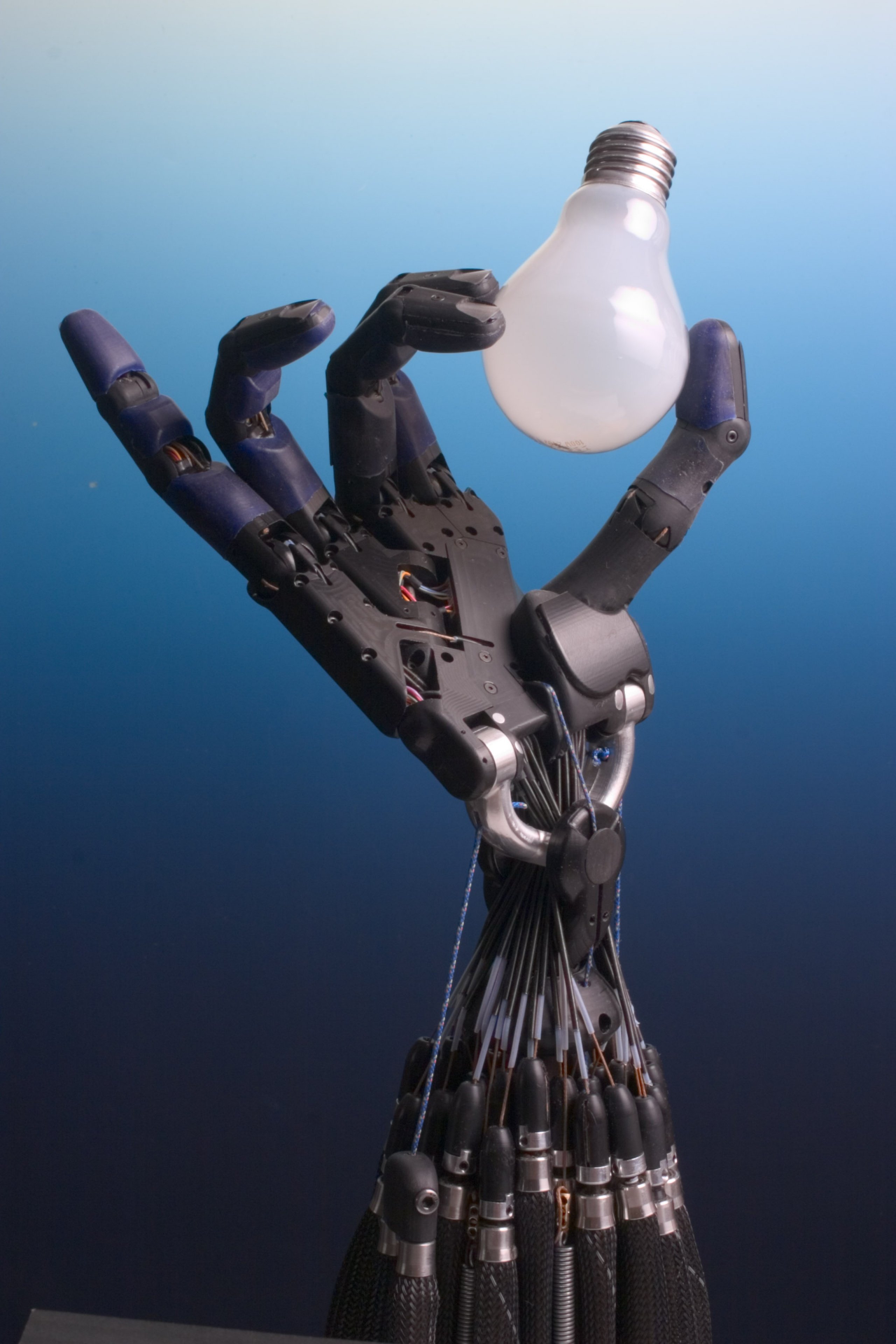 |
| The Shadow robot hand system |
Robotics is the branch of mechanical engineering, electrical engineering and computer science that deals with the design, construction, operation, and application of robots, as well as computer systems for their control, sensory feedback, and information processing.
These technologies deal with automated machines that can take the place of humans in dangerous environments or manufacturing processes, or resemble humans in appearance, behavior, and/or cognition. Many of today's robots are inspired by nature contributing to the field of bio-inspired robotics.
The concept of creating machines that can operate autonomously dates back to classical times, but research into the functionality and potential uses of robots did not grow substantially until the 20th century. Throughout history, it has been frequently assumed that robots will one day be able to mimic human behavior and manage tasks in a human-like fashion. Today, robotics is a rapidly growing field, as technological advances continue; researching, designing, and building new robots serve various practical purposes, whether domestically, commercially, or militarily. Many robots do jobs that are hazardous to people such as defusing bombs, mines and exploring shipwrecks.
Etymology
The word robotics was derived from the word robot, which was introduced to the public by Czech writer Karel Čapek in his play R.U.R. (Rossum's Universal Robots), which was published in 1920. The word robot comes from the Slavic word robota, which means labour. The play begins in a factory that makes artificial people called robots, creatures who can be mistaken for humans – similar to the modern ideas of androids. Karel Čapek himself did not coin the word. He wrote a short letter in reference to an etymology in the Oxford English Dictionary in which he named his brother Josef Čapek as its actual originator.
Video: Robotics for Stroke Survivors
Contents:
- Near Future
- Finger, Hand and Arm
- Leg and Walking
- Miscellaneous but Intriguing...
1. Near Future
The Most Awesome Robots
Published on Jun 5, 2014Will robots take over the world one day in your opinion?
- The Next Generation of NAO Robot
- Honda Asimo (latest version)
- Paul the Drawing Robot
- Boston Dynamics Robots: Wild Cat Robot, Petman Robot...
- Actroid
- Nasa's Curiosity Mars Rover Robot
- Bionic Kangaroo
Standard YouTube License @ AppsTube
Headline Blog: Robotics for Stroke Survivors
 |
| Definition: Blog (noun). Add new material to or regularly update to a blog. (≃1990s: blog shortening of weblog) |
You Never Know What Will Bite You in the Ass Next
 |
| Joyce Hoffman The Tales of a Stroke Patient |
If I had to recall the most dominant memories of my parents, they are these: My mother who was overly plump always talked about the next meal, and my father who had a short fuse always yelled at me when I couldn't solve a math problem. That was pretty much it. But both my parents shared something in common. They never talked to me about death. So as a result, I thought I could live forever.
My friend always says, "You were born to die." I always say, "You were born to live." Who's right? Maybe we both are. I used to daydream that I would be the breakthrough person who be subject to cryogenics intentionally, aka frozen in time, and I would wake up to a planet that seemed more like the Jetsons, a cartoon where everything was in the future like Rosie the Robot and flying saucers. But ever since my stroke, I knew that all of us--even me--have to die. It took me 60 years to realize that.
Many people don't know about long-term health care insurance (LTC), an insurance that kicks in once you're chronically disabled. They have exclusions, of course, and each long-term policy differs. In my case, if I had a stroke (which I did), I need skilled assistance with simple activities such as bathing and eating, so I'm covered. Chronic illnesses or other conditions requiring specific needs on a daily basis over an extended period of time are also covered. The thing about insurance is this: Consider yourself lucky if you don't use it. But that doesn't mean you don't need it. Thinking it won't happen to you, especially if you haven't experienced significant health problems in the past, is foolhardy.
Burning Daylight
 |
| Diana Smith Beyond Reality |
It was so so so Niiiiccccceeee today, I had planned to spend time outside working on my yard. I asked my son if he wanted to paint my planters. Of course none of that was done, or even started. I did take my girl for a long walk. I walked further than we have before. I did not think I could make it back since I was already on max breathing mode and chest tightening. I did make it back, and now I know I can go a little further next time. I just hope my son is willing. I am still scared to do it alone because my dog is off leash. If we met anyone else with a dog even one on a leash it would probably be a disaster. At least on the drive back we passed some people walking some dogs and she did not shake, she just wined. She was so happy just to stick her nose out the window and not be left home alone. We left her alone two days in a row. One day she ate my bread, the next day she ate my sons bread off the table. When I went to the post office this morning she pulled a bag off the table. At least she did not tear it all apart and scatter around.
 We went to the auction last night. They had so much good stuff. Most was so good it went way over my willing to pay price. It also had some stuff no one else wanted. Bottom feeder that I am took it. I did not take all the unwanted, there was a table full that did not sell. I got a shoe shine kit (cool, but not my style) for $2 I took a chance that it won’t sit in my house forever. I bought a huge box of old Christmas stuff, more postcards, more little smalls assorted boxes no one wanted, some enamel pans that will become planters (maybe if I don’t sell them), and my son bought a huge suitcase for $1. So instead of enjoying this nice day, I took pictures while the sun shined. It is easier to take pictures with good lighting. It is still free listing days on ebay so I am trying to list as much as I can.
This postcard is from the 60s. That is Anne Francis with Robby the Robot, from the Sci-Fi movie Forbidden Planet. I had no idea, but after a few minutes searching I do now. I wish I looked like her, but I look more like Robby except not dark at all. I glow in the dark. I need to get back to work. I have grandchildren on the way to plan for. The plan is to get in shape and move my arm and fingers more to hold the new grandbaby by November (when it is due). I also need to save more money, which seems even more impossible than getting in shape.
See the original article:
in
What Kind of Mother Am I?
 |
| Grace Carpenter My Happy Stroke |
I walk to pick up my kids at school most days. It's tricky to walk and have a conversation at the same time for me, so I go very slowly and lean on my cane at lot. But on the weekend, I try to squeeze in a walk alone. That way, I can concentrate completely on my gait: am I walking evenly? Can I push myself to walk faster? Am I remembering to swing my right arm?
But even on weekends, sometimes the only way I can get a walk is to have my seven-year-old daughter tagging along. She chatters on, making me wish that my walking could be more automatic, so that I could have a real conversation with her. But instead, I'm rather stern: please don't walk right beside me, I say, because there isn't room for me, my cane, and you; please don't walk right in front of me, I say, so I won't trip.
A few weeks ago she accompanied me, and I strongly suggested that she walk behind me on the narrow sidewalk, so I could concentrate. So she did, but she still kept a running commentary.
"Oh Mommy," I heard her voice, " you're not using your cane much! Good job, Mommy!"
A few steps later, she commented,
"Mommy, you're walking almost normally!" Then she observed a little bit more.
"Actually, Mommy, you walk a little like a robot."
Almost normal mother. Robot mother. Watched mother.
See the original article:
in
Needed Stroke Care Delivered via Robot
 |
| Jeff Porter Stroke of Faith |
This is Stroke Awareness Month, and one issue is the need for stroke care offered to all who need it, no matter where. However, specially trained neurologists are, sadly, not everywhere. One way to combat that challenge is from Washington State.
Robot helper allows for real-time communication to save stroke victims:
Hospitals in outlying areas, such as Ocean Beach Hospital, do not have a neurologist on staff who could make an assessment within this critical window, and that's where the telestroke robot comes in.
The robot allows neurologists to beam in live to the emergency department to perform real-time examinations and evaluations of stroke victims. With the remote-controlled robot, equipped with cameras and microphones, consulting doctors can review charts, patient records, diagnostic images such as CAT scans and talk directly to ED physicians, the patient and the patient's family.
"Basically, it's just like having the neurologist right in the room," said Valerie Mays, Providence's telestroke program coordinator.
See the original article:
in
Eclectic Stuff
 |
| Definition: Eclectic (noun). A person who derives ideas, style, or taste from a broad and diverse range of sources |
50 Shades of Truth
 |
| Sas Freeman |
The refreshing truth, even if it isn’t what we want to hear, we have to admit that the truth is always best. Having been unwell really, by that I mean more than usual, for just over twelve months now and showing signs of deteriorating further, my cardiologist brought my appointment forward by two months. Friday was the new date, I went along with Nick and feeling as I have of late I didn’t really identify anything any different. Once my blood pressure had been taken a couple of times, the usual conversation out of ear shot, I was told to lie down and not move. The ECG machine would be brought to me. You can imagine at that point I was praying silently not to be kept in. All the staff were so lovely, I only wish they were reading this, to thank them once again.
 |
| photo |
Once inside, we both sat down having been greeted individually. This is where things were explained at length, thoroughly and honestly. Refreshingly honest that we both left after about an hour quite shell shocked. Initially we were both quite quiet, yes ME quiet! I didn’t ask Nick directly about his immediate thoughts. He has since told me his understanding is exactly as mine, but mine was a mixture of admiration for his time and honesty, coupled with it really is now ‘over to me’ whether I continue to go downhill, and my health deteriorates continually until?? Or I damn well step in and try harder. This bit came as a bit of a shock to me, someone who has continually tried, even been told to stop for the time being as I am making things worse, now I have the green card to get started again. Yes I will feel ill, yes it has to be small chunks twice a day, sleep rest in between but medically they cannot help me anymore they can’t do anything else for me, regarding my heart. I have ill health, this is what happens to my blood pressure and my body, my only way forward now is to build up some muscle, and see if my body with the help of muscle can somehow step in and help to work with all this medication and stabilise things. The ball really is in my court.
Has Stroke Suppressed Your Self-expression?
There *is* Hope . . .
 |
| Pamela Hsieh StrokedUP |
A year after the stroke, when I was 20, I ventured out to Florence for a year of study abroad. Since I was freshly out from under the watchful eyes of my parents and beloved medical practitioners, I was in a place where I desperately needed to be: independent, yet supported. In a foreign land living with several roommates in an apartment, where I’d learn the basics of living on my own.
I was really open with my flatmates about my physical condition, since I knew that I would need their support with certain activities, like tying my shoes or learning to prepare food for the first time. Or, because we were on foot all the time, simply slowing down their pace so I could keep up.

One day, I was walking around town, window shopping. To my surprise and delight, I saw that legwarmers had come into style.
Holy. Moly.
YESSSS.
I was ecstatic!
Peer-Reviewed
 |
| Amy Shissler MyCerebellarStrokeRecovery |
This makes me so sad. Figure out stuff for yourself because no one will do it for you. No one figured out anything for me and I’ve learned to only depend on myself. Evidence-based medicine sure as hell doesn’t mean what it used to, if it in fact ever meant anything. Once again my heart aches for humanity. Thanks, Dean, for finding this. And for finding the most research on stroke that exists anywhere in the world. And the internet.
Editor In Chief Of World’s Best Known Medical Journal: Half Of All The Literature Is False
Well shit, now more than ever we need stroke survivors directing and running the strategy for solving all the problems in stroke.
http://www.healthfreedoms.org/editor-in-chief-of-worlds-best-known-medical-journal-half-of-all-the-literature-is-false/
In the past few years more professionals have come forward to share a truth that, for many people, proves difficult to swallow. One such authority is Dr. Richard Horton, the current editor-in-chief of the Lancet – considered to be one of the most well-respected peer-reviewed medical journals in the world.
Dr. Horton recently published a statement declaring that a lot of published research is in fact unreliable at best, if not completely false.
“The case against science is straightforward: much of the scientific literature, perhaps half, may simply be untrue. Afflicted by studies with small sample sizes, tiny effects, invalid exploratory analyses, and flagrant conflicts of interest, together with an obsession for pursuing fashionable trends of dubious importance, science has taken a turn towards darkness.” (source) This is quite disturbing, given the fact that all of these studies (which are industry sponsored) are used to develop drugs/vaccines to supposedly help people, train medical staff, educate medical students and more.
Caregivers & Therapists Learning To Think - Aphasia Speech Therapy
 |
| Mark A. Ittleman The Teaching of Talking |
 We are teaching graduate students in speech language pathology and working with their clients who have aphasia. It has been a real pleasure and challenge to work with students and caregivers, while teaching them how to stimulate speech and language. Their professor invited us to California to pursue student training and research to compare the results of the Teaching of Talking Approach to Conventional Speech Therapy.
This is an interesting experience for us, being at a major University and teaching graduate students and caregivers, simultaneously, in speech language therapy the fundamental principals and methods to stimulate speech and language without photos, pictures, flash cards, apps, or homework sheets. They are learning The Teaching of Talking Method which is a way to talk in a conversation while simultaneously improving the speaking of those with aphasia. (The skills that took a whole career of over 40 years to master.)
One of the first things we have been teaching the students is how to:
I. Observe
How to initially in the evaluative process get away from the Standardized Tests they are so fearful of, and enter into a conversation with the person who has difficulty talking. They are learning how to develop rapport, since the first principal is not only to observe, but also to engage the person and keep in mind that they are becoming our next best friend.
You heard me right! Best friends talk and joke with each other, and tell one another interesting tidbits of what has been learned and experienced in living. And it does not matter if the conversation is at a single word, two word, or even phrases or sentence levels. While conversing and finding out about the other person, the therapist or caregiver learns to observe speaking, and listens to the processes involved in talking while obtaining recordings of the language spoken that can then be compared later with other recordings that often show considerable increase in the number of words spoken as well as improved grammatical, phonological and syntactical abilities.
II. The ability to Stop, Look, and Listen
The Wrong Question
 |
| Peter G. Levine Stronger After Stroke |
"What is the single most important thing you should know about stroke rehab treatments?"
That's easy: Your asking the wrong question.
If you are talking about rehabilitation treatments you are talking clinical stuff. You are talking a clinic and a clinician- usually a therapist. And they are great but they are not enough during two time periods:

2. Once your discharged from therapy.
Let's consider why clinical stuff "every day" is not enough. How much therapy might you get? An hour-- two-- three? Recovery is a full time job during the first few months after stroke and it is the first few months after stroke that you're still seeing therapists. So even when therapists are there, there almost always not there enough.
OK, now lets take "Once your discharged from therapy." Discharged from therapy is in and of itself the very definition of not enough therapy, because you've been discharged. Discharged like a bullet from a gun, off you go! So once you are discharged you are definitely not getting enough clinical stuff.
So maybe the question ("What is the single most important thing you should know about stroke rehab treatments?") is wrong. What if instead the question was "What is the single most important thing you should know about stroke recovery options?"
Isn't that freeing? You are no longer under the rules of managed care because managed care does not care if you try, on your own, to take on your recovery using whatever options you can find. You can spend as much time as you want. And even if recovery options are an adjunct to rehabilitation treatments, they expand the opportunities for recovery.
So, "What is the single most important thing you should know about stroke recovery options?"
Sweat equity. That's it. The more you put in, the more you make your brain uncomfortable and force it to change, the more repetitions, the more focus- the more recovery.
See the original article:
in
My Stroke Story
 |
| Beth Sinfield Beth's Story |
Imagine waking up, not being able to move a single muscle? Well that's what it was like on Septemmber 16th 2012. Earlier that morning, around 1am, I had woken with an almighty migraine. I attempted to drink some water but instead it just dribbled out of my mouth, I couldn't swallow at all. Panic set in and I tried walking to my parents bedroom next to mine. I stumbled and nearly collapsed, my legs didn't work anymore. My dad came in and asked what was wrong but my words jumbled inside my head and stuck at the back of my throat- nothing would come out.
My mum called an 'out of hours' doctor and he came and took my blood pressure and blood sugar- everything was fine but seeing my condition and ambulance was called and I was taken to A&E. By now I was incapable of walking and talking, not even my hand would move properly to write down that I wasn't drunk or had taken drugs that night.
A&E was awful. No one knew what was wrong with me. My parents watched helplessly as the mystery illness told hold of my body further. I slipped in and out of consciousness, my hearing becoming more muffled.
And then everything went white.
I woke in a strange little room. I tried scratching my face but my hand didn't move. Nothing moved. My breathing was shallow and my hearing sounded distant, and echoed, like I was underwater. I was suffocating in this shell of a body.
It was 5am.
Then I was taken to Addenbrooks' Hospital and there I received an MRI confirming the worst. I'd had a stroke. Not just any stroke. A huge brain stem stroke. I was lucky to even be alive.
I was now 'locked-in'; a condition where not a single muscle moves. My eyes rolled around in my head and my hearing was still muffled; what was happening?! This is unreal, it's a dream. Things like this don't happen to me. I'm not meant to be here.
See the original article:
in
Delving into Mindfulness
 |
| Leslie Living After Stroke |
 I’ve always believed that meditation and mindfulness are extremely useful tools for finding peace in a crazy world. I’ve randomly practiced both. In other words, I’ve practiced half-assed, without any type of commitment. Honestly, I’ve only turned to it during my most desperate moments. In rehab, I repeatedly listened to Bernie Siegel’s Guided Healing Meditations.
I’ve decided to make a commitment to learning more about both meditation and mindfulness. I want to make it a permanent part of my life, not just when I’m beyond low.
They’ve pulled me through the nightmares so I can only imagine what regular practice can do for me, maybe prevent the nightmares?
People who regularly practice both appear more grounded, peaceful, and all around happier. I want to be like them.
When the student is ready, the teacher will appear.
Maybe? 31 days of free training sounds like the teacher appearing to me.
For the past 9 days, I’ve been participating in The Mindfulness Summit. Every day for the month of October, a new speaker provides mindfulness training.
I’m really looking forward to Day 14: Mindfulness for Pain & Chronic Suffering.
This is running from October 1- 31st, 2015. If you have a minute, check it out – it’s free. So far, I’m loving it!
After you check it out, come back & let’s compare notes!
See the original article:
in
It is Hurricane Season Again
 |
| Rebecca Dutton Home After a Stroke |
September was beautiful but my thoughts go to 2011 and 2012 when New Jersey was hit by Hurricanes Irene and Sandy. Here is my consolidated list of bolded To-Do items just in case.
Shop. Put gas in my car and get cash because gas pumps and ATM machines do not work without electricity. I have three flashlights and a lantern, but never remember how old the batteries are. Buy seven D batteries before they all gone. I cannot walk in the dark so if my flashlight batteries die I have to crawl. Aiming a flashlight at a task is difficult so I need a lantern.

Prep Home. Charge my cell phone. Charge my iPod so I will have a radio to get the news. Put new batteries in flashlights and lantern. Fill empty containers with water and place them in my bathtub so I can flush my toilet in case the water is cut off. Run the dishwasher and do laundry while I still have electricity. Put garbage cans in the shed so the wind will not blow them away.
If I Need to Evacuate. Pack a rolling suitcase with medicine, soap, a small towel, clothes, toothpaste, and toothbrush. Put my flash drive, checkbook, safety deposit box key, and contact information for my home owners insurance in my purse. Pack stamps, return labels, envelopes, and business addresses so I can pay bills by mail (no Internet). Bring a blanket to the shelter. A blanket takes up half my suitcase so pack carefully. I can carry a pillow under my hemiplegic arm, but a blanket that keeps sliding is too much for this arm to handle.

See the original article:
in
A Map of the Brain:
Notes on TED Talk Allan Jones of Allen Institute
 |
| Bill Yates Brain Posts |
 Here are my notes on the above TED where Allen Jones CEO of the Allen Brain Institute reviews what type of research procedures are used on their human brain back brains.
A Map of the Brain: My Notes
Humans have long been fascinated by the human brain
We now have a transformation in brain mapping for various brain structures
* Rear brain contains cerebellum for posture, balance
* Mid-brain temporal lobe controls language
* Frontal cortex key in thought and decision making
Historically, brain staining aids in understanding brain microstructure distribution
Neuron distribution is linked to brain function
Genes control brain proteins and neurons
We want to know what genes out of 25,000 candidates are turned on in the brain
We find human brains to study after death
* 20 to 60 year olds
* No psychiatric or drug abuse history
* Males oversampled due to higher rates of accidental death
Our process for brain study
* Magnetic resonance imaging (MR)
* Diffustion tensor imaging (DTI)
* Brain slices for RNA purification
* Brain slices for gene activation reference map
1000 samples taken from each brain with 50,000 datapoints per brain=1,000,000 datapoints per brain
Data made publicly available to scientists around the world
We map where genes are turned on in specific brain regions
What have we learned?
* CNS drugs like fluoxetine (Prozac) modulate serotonin gene function
* We can scan brain for drug effects for new drug development
What makes us individuals is important but we are 99% genetically the same.
Follow the author on Twitter WRY999.
Photo of sunrise in St. Peterburg, FL from the authors files.
TED.com Terms of Use
See the original article:
in
Weekly Columnists
|
| Definition: Columnist |ˈkäləmnist| (noun). A blogger or a journalist contributing regularly to a blog or newspaper |
Musing: Effects of Robot-Assisted Therapy on Upper Limb
Recovery After Stroke - A Systematic Review
|
| Dean Reinke Deans’ Stroke Musing |
My god, this was written in 2007. Where is the written protocol explaining exactly how this should be used for your recovery? Demand an answer from your doctor. More failures from our stroke organizations that should be doing something as simple as monitoring research and applying it to help survivors - Effects of Robot-Assisted Therapy on Upper Limb Recovery After Stroke: A Systematic Review.
- Gert Kwakkel, PhD Department Rehabilitation Medicine and Research Institute MOVE, VU University Medical Center Amsterdam, The Netherlands, Department Rehabilitation Medicine, Rudolf Magnus Institute of NeuroScience, University Medical Center Utrecht, The Netherlands, g.kwakkel@vumc.nl
- Boudewijn J. Kollen, PhD Research Bureau, Isala Klinieken Zwolle, The Netherlands
- Hermano I. Krebs, PhD Mechanical Engineering Department, Massachusetts Institute of Technology, Cambridge, Massachusetts, Department of Neurology and Neuroscience, Burke Institute of Medical Research, Weill Medical College, Cornell University, White Plains, New York, Department of Neurology, University of Maryland, School of Medicine, Baltimore, Maryland
ABSTRACT
Objective. The aim of the study was to present a systematic review of studies that investigate the effects of robot-assisted therapy on motor and functional recovery in patients with stroke.
Methods. A database of articles published up to October 2006 was compiled using the following Medline key words: cerebral vascular accident, cerebral vascular disorders, stroke, paresis, hemiplegia, upper extremity, arm, and robot. References listed in relevant publications were also screened. Studies that satisfied the following selection criteria were included: (1) patients were diagnosed with cerebral vascular accident; (2) effects of robot-assisted therapy for the upper limb were investigated; (3) the outcome was measured in terms of motor and/or functional recovery of the upper paretic limb; and (4) the study was a randomized clinical trial (RCT). For each outcome measure, the estimated effect size (ES) and the summary effect size (SES) expressed in standard deviation units (SDU) were calculated for motor recovery and functional ability (activities of daily living [ADLs]) using fixed and random effect models. Ten studies, involving 218 patients, were included in the synthesis. Their methodological quality ranged from 4 to 8 on a (maximum) 10-point scale.
Results. Meta-analysis showed a nonsignificant heterogeneous SES in terms of upper limb motor recovery. Sensitivity analysis of studies involving only shoulder-elbow robotics subsequently demonstrated a significant homogeneous SES for motor recovery of the upper paretic limb. No significant SES was observed for functional ability (ADL).
Conclusion. As a result of marked heterogeneity in studies between distal and proximal arm robotics, no overall significant effect in favor of robot-assisted therapy was found in the present meta-analysis. However, subsequent sensitivity analysis showed a significant improvement in upper limb motor function after stroke for upper arm robotics. No significant improvement was found in ADL function. However, the administered ADL scales in the reviewed studies fail to adequately reflect recovery of the paretic upper limb, whereas valid instruments that measure outcome of dexterity of the paretic arm and hand are mostly absent in selected studies. Future research into the effects of robot-assisted therapy should therefore distinguish between upper and lower robotics arm training and concentrate on kinematical analysis to differentiate between genuine upper limb motor recovery and functional recovery due to compensation strategies by proximal control of the trunk and upper limb.
See the original article:
in
Sunday Stroke Survival: Warning, Will Robinson!
|
| Jo Murphey The Murphey Saga |
 Past science fiction is now science fact. The title is from the old Science fiction show Lost in Space. I used to love that old robot. Now looking back, it's so corny! Robot don't resemble that robot at all. Especially where robotic devices to help stroke survivors are concerned.
 There are "robotic" devices on the low end of the scale like the Bioness devices that can replace an AFO for foot drop after a stroke and the one to retrain the hand and wrist. To more elaborate robotic devices used in physical therapy departments for stroke survivors. Unfortunately, not mine. It is often stated that the more reps you do retrains the undamaged parts of your brain to take over for the damaged part. It's called by some fancy names like neuroplasticity or building new neuronal pathways. While I understand the process, to do the required number of reps will take years to recover. While the exact number of reps it takes is open to conjecture, let's just say an enormous of awake hours. But if they could be done while sleeping hours too, it would shorten the time if the damaged neurons would just stay quiets. Of course they won't. My clonus goes into overdrive with the Bioness AFO device.
Caregiver: Heeling and Healing
|
| Diane The Pink House On The Corner |
So, Kona and I are two sessions into our training and we have both been working hard together. The first lesson was all about "heeling" -- which as you know is walking on the leash without pulling me to heck and back --
I still remember when I was handed Kona's leash at the rescue and was told, by the former owner, "I hope you don't intend to walk her, as she is a beast on a leash."
And I thought, oh boy....
And she was, truthfully, "a beast on a leash". Yanking me from hell to high water and back. And at 91 lbs., this was not very fun for me. And that was the big reason to hire a trainer, as you know, I love my daily dog walks and have been doing them for years with Boomer and it's really the BIG reason to have a dog, at least for me.
Both of us, Kona and me, have plenty of learning to do. I must admit that I am a bit rusty on my training techniques -- I mean, it has been a long time since I trained a dog and I am a bit spoiled by 14 years of Boomer's good behavior.
So I had to relearn old things and am learning some new things in the process. I also had to get some new equipment, including a "martingale" collar (which I never heard of before) and I am now a true believer of.
And I really had to learn to watch the tone of my voice and be consistent with both the tone and the words I use with her. For example:
Subscribe to:
Posts (Atom)