Saturday, November 07, 2015

That Is the Question

Marcelle Greene
Up Stroke
Saturday, May 28, 2011

[Q]: How does a non-smoking, non-drinking, exercising, healthy-eating, low-stress mid-lifer have a stroke? 

Doctors [A]: Dissection. The carotid artery that carries blood to my brain developed a split in its interior wall. A clot formed and a piece of that broke off and blocked a vessel in my motor strip.

Me [A]: In short, a corroded carotid.

[Q]: Why did I have a dissection? 

Doctors [A]: Twisted arteries. Neck stress from yoga and chiropractic. Fluctuating blood pressure.

Friends and Strangers [A]: To learn a life lesson. To find my path.

Me [A]: I have gone over and over things I did that may have led to the stroke. In yoga class the night before, I turned my head while in shoulder stand. A few days before that, I self-administered a neck adjustment that emitted a loud crack. Just months before that I was showing off for my three-year-old nephew by doing a headstand, and he toppled me like a tower of blocks. I’ve also pondered what I needed to learn that took something this drastic to get my attention: Patience. Compassion. Balance.

No matter what I think, or what I'm told, I always come back to one truth: None of the answers can change what happened. And so there is only one question that really matters.

How do I go forward from here?


See the original article:
in

Purpose

Barb Polan
Barb's Recovery
12th July 2015

In view of the recent decisions of a handful ofstroke-surviving bloggers to either stop or take a hiatus from blogging, I've been re-assessing my purpose here.

In the beginning (6 weeks post-stroke), I intended to have daily entries - a diary of sorts - about my progress. Back then, I had frequent posts about baby steps as I completed them: I documented when I first straightened my forefinger and when I wiggled my thumb. Entries became rarer, though, as the steps became a teenager's: when I first engaged my hamstring muscles, I wrote from a different perspective - not just where I got, but how I got there ... 2.5 million attempts to use my hamstring.

As I progressed, my topics became more philosophical - about my way of viewing these trials. These entries were intended to both encourage survivors and help those around us understand what was going through our heads and hearts while we were going through recovery.

Once I complied enough information in the form of blog entries to weave into a cohesive narrative about my journey, I put it all together in my book, Stroke After Stroke: A Rower's Pilgrimage, for sale on Amazon as both an e-book and a printed volume. If you know me or read my blog and have not yet purchased a copy, please do; it will be the most inexpensive thing you buy today.

After publishing the book, I've posted just occasionally, certainly not documenting every step forward. I refuse to let go, though.

Confessions of a Brained Blogger

Tim Seefeldt
Brain Food Cafe for the Mind
Posted April 12, 2015

Shortly after tapping out last week’s blog offering, I started to work on the next piece. I poured out my heart and my soul. It was great stuff. At least it was good stuff. But nobody but me will ever know for sure.

That’s because it’s gone.

Early Sunday morning after I warmed up my aging laptop to start putting the finishing touches on, my words were gone. They’d vanished into thin air.

A few colorful word combinations were followed by another search. But there was nothing.

This happened to me once way back in the ‘90s when I was an Edmonton Sun reporter. I was about 15 minutes from deadline. And I was working on the lead story. A few very choice words were hurled at me. Sun editors back then weren’t the warm and fuzzy nurturing types.

I spent five minutes trying to retrieve and coax my piece from wherever it lay trapped in the beat up work processor. Then I spent the next nine re-writing it from scratch. I’m pretty sure that the final offering was better than the first.

Harkening back to that experience, I first decided to re-trace my original blog steps. A few minutes into this, I decided to change gears and address the elephant at the laptop.

Being a rookie brain buzzed blogger is coming with some unique problems. Problems which I’ve looked for some help with, but mostly which I’ve been fumbling and stumbling along with on my own, trying to find solutions.

More News on Blood Pressure and Stroke

Jeff Porter
Stroke of Faith
Thursday, May 29, 2014

High blood pressure is a well-known stroke risk factor.

Now, it's important for patients whose blood pressure moves around between doctor visits should seriously explore blood pressure control. A recent report links variable blood pressure to stroke and other risk:

▶ When comparing the highest versus the lowest levels of between-visit variability in systolic blood pressure readings, there were greater risks of coronary heart disease, stroke, hospitalization for heart failure, and all-cause death through a maximum of 5.7 years of follow-up, according to Paul Muntner, PhD, of the University of Alabama at Birmingham (UAB) School of Public Health.

▶ The findings were consistent across various subgroups, including in both patients who were and were not at their blood pressure goals, he reported at the American Society of Hypertension meeting here.

▶ "The key thing is that blood pressure variability has been known about for a long time, but it's just been ignored as a challenge to properly measuring blood pressure," Muntner told MedPage Today. "And I think data over the past 5 years similar to these have begun to accumulate to suggest that it has prognostic importance."


See the original artticle:
in

Tiny Part of My History

Diana Smith
Beyond Reality
October 26, 2011

This post started as a reply to a comment, since it was getting so long I decided to write as my daily post. It gets tough to come up with topics, especially if I don’t know which way I want my blog to go.

About the picture of the cook stove in yesterday’s blog…..I wish that was my stove, but it was in a Museum…..it was blocked off, so I could not even get close to open the doors.  I have looked at them online, but I don’t even have a place to put one now…..I have moved in with my mother, temporarily, while my house is going through foreclosure. I am just starting to be able to maneuver a vacuum.  I mostly get my own breakfast and lunch, and I can cook now that I take steps without my cane, freeing my right hand  to carry stuff.  When my son is done with his school year, next summer, I plan on getting an apartment for a few years.  Meanwhile, I hope my left arm recovers enough so I can do almost anything.  I need to do this, even if it means learning new adaptive measures.

old school-when you walked
barefoot seven miles
in a blizzard
During March 2011 I was  on a mini-vacation, in North Carolina, when I had my stroke.  I was sleeping at the hotel in Chapel Hill, I woke up in the middle of the night with what I call an anxiety or panic attack. I woke up my boyfriend and told him I thought I was dying.  I could not calm down. Once he had me calmer, I noticed my left arm was a little bit numb.  I thought I must have been sleeping on it, I always sleep on one side or another.  I got up and walked to the bathroom, at that time I was walking normal.  I decided to take a bath, so I would be ready for early the next morning, we were to take off to visit Myrtle Beach.  When I tried to get out of the tub I noticed it seemed harder to move.  I really did not think anything was wrong at this point, I thought I was tired. We had walked all over the previous day, and I spent the rest of the day working out in the hotel gym, swimming, and in the hot tub. I got dressed. While walking to go back to sleep my knee kept giving out.  I also noticed my arm felt number, even though I could still move it. This worried me only slightly, but never had I suspected a stroke.  I also thought it could not be a heart attack, since I had no pain.  I had read that heart attacks are different in women, I told my boyfriend something was wrong with me.  He called 911 right away, he was what I thought overly cautious.  By the time the paramedics came, I was convinced something was wrong, my arm was still numb, and my knee kept giving out. They insisted on taking me out on a stretcher, I thought I could walk down to the ambulance.  That was how clueless I was at the time.  Once they took my blood pressure, and said it was 280, I knew something was seriously wrong. I don’t remember what the bottom number was.  I still did not think it was a stroke until I could not move my left arm or leg at all. The paralysis arrived about the same time as I arrived to the hospital.

The Amazing Banana

Tuesday, August 25, 2009

Doctors - Home Remedy If you want a quick fix for flagging energy levels there's no better snack than a banana.

Containing three natural sugars - sucrose, fructose and glucose - combined with fiber a banana gives an instant, sustained and substantial boost of energy. Research has proven that just two bananas provide enough energy for a strenuous 90-minute workout. No wonder the banana is the number one fruit with the world's leading athletes. But energy isn't the only way a banana can help us keep fit. It can also help overcome or prevent a substantial number of illnesses and conditions making it a must to add to our daily diet.

Depression: According to a recent survey undertaken by MIND amongst people suffering from depression, many felt much better after eating a banana. This is because bananas contain tryptophan, a type of protein that the body converts into serotonin known to make you relax, improve your mood and generally make you feel happier.

PMS: Forget the pills - eat a banana. The vitamin B6 it contains regulates blood glucose levels, which can affect your mood.

Anemia: High in iron, bananas can stimulate the production of haemoglobin in the blood and so helps in cases of anemia.

Blood Pressure: This unique tropical fruit is extremely high in potassium yet low in salt making it the perfect to beat blood pressure. So much so, the US Food and Drug Administration has just allowed the banana industry to make official claims for the fruit's ability to reduce the risk of blood pressure and stroke.

50 Shades of Truth

Sas Freeman
October 5, 2015

The refreshing truth, even if it isn’t what we want to hear, we have to admit that the truth is always best. Having been unwell really, by that I mean more than usual, for just over twelve months now and showing signs of deteriorating further, my cardiologist brought my appointment forward by two months. Friday was the new date, I went along with Nick and feeling as I have of late I didn’t really identify anything any different. Once my blood pressure had been taken a couple of times, the usual conversation out of ear shot, I was told to lie down and not move. The ECG machine would be brought to me. You can imagine at that point I was praying silently not to be kept in. All the staff were so lovely, I only wish they were reading this, to thank them once again.

photo
I was asked if I would be alright to manage to walk next door with help, to see the cardiologist or if I required more assistance, truly most kind. me  being me, determined to show all was well and I would be off home in a few minutes, declined all help politely. Also in all honesty I didn’t feel anywhere near as unwell as I had when out with a friend in Bromyard this week, or even at her home on Monday. I was quite surprised but also flattered at their fussing.

Once inside, we both sat down having been greeted individually. This is where things were explained at length, thoroughly and honestly. Refreshingly honest that we both left after about an hour quite shell shocked. Initially we were both quite quiet, yes ME quiet! I didn’t ask Nick directly about his immediate thoughts. He has since told me his understanding is exactly as mine, but mine was a mixture of admiration for his time and honesty, coupled with it really is now ‘over to me’ whether I continue to go downhill, and my health deteriorates continually until?? Or I damn well step in and try harder. This bit came as a bit of a shock to me, someone who has continually tried, even been told to stop for the time being as I am making things worse, now I have the green card to get started again. Yes I will feel ill, yes it has to be small chunks twice a day, sleep rest in between but medically they cannot help me anymore they can’t do anything else for me, regarding my heart. I have ill health, this is what happens to my blood pressure and my body, my only way forward now is to build up some muscle, and see if my body with the help of muscle can somehow step in and help to work with all this medication and stabilise things. The ball really is in my court.

Stroke Prevention

Rebecca Dutton
Home After a Stroke
July 15, 2013

I had a second stroke two years after my first one.  My hemiplegic leg acquired central pain and lost the ability to distinguish between hot and cold.  I don't want to see what a third stroke will take away from me or try to find the fortitude to go through rehab a third time.  So I was glad to find a cheap way to reduce my blood pressure that doesn't have any negative side effects.

A year ago I stopped drinking diet Pepsi and started drinking iced tea.  My blood thinner (baby aspirin) irritates my stomach so eliminating acidic sodas made me feel better.  I brewed my own tea, but got progressively more irritated as I kept seeing tea stains on my counter every day.  The lid on my container leaks every time I pour tea because the rubber seal in the lid is twisted (see arrows in photo).  I have to take the rubber seal out to clean the yucky tea stains.  I don't have the two good hands it takes to put even tension on the rubber as I put it back in the lid.  If I were still married this irritation would disappear.  Problems like this make me ache for 30 seconds of "Honey Do time."

My initial response to seeing tea stains on my counter was to switch to water.  I didn't feel as well, but thought it was my imagination until I read Dean's post on the benefit of tea (www.theheart.org/). A study with 176,437 subjects found that tea significantly reduced blood pressure and heart rate.  This research gave me the incentive to make iced tea again.  This data doesn't prove that lowering blood pressure with tea will prevent another stroke, but I can't afford to wait for more research.

I heat water in a coffee pot on the stove until the water is simmering. After steeping I transfer the tea bags to a small dipping sauce bowl I found at Pier 1 Imports.  I don't want to put a hot pot in my refrigerator so I cool it with a fan.  Placing the pot on a burner grate from my stove speeds up the cooling process because airs gets under and around the pot. My coffee pot lid has a gap for pouring that lets the flavor evaporate from my green tea with blueberry (Lipton).  So I put a strip of plastic wrap under the lid.  To see how I cut plastic wrap with one hand click here.


See the original article:
in

It's World Stroke Day!

Beth Sinfield
Beth's Story
Thursday, 29 October 2015

So it's World Stroke Day today and I wanted to write a blog post on the many aspects of stroke itself. World Stroke Day (i'll call it WSD) is a day to raise important awareness of stroke and to help prevent it further.
WSD was devised in 2006 and since then has highlighted the rates of stroke worldwide, has raised awareness and has called for better support for stroke survivors and carers.

Firstly, I'll share with you some key statistics about stroke:

Stroke occurs approximately 152,000 times a year in the UK; that is one every 3 minutes 27 seconds.

There are around 1.2 million stroke survivors in the UK.

Stroke is the fourth single largest cause of death in the UK and second in the world.

By the age of 75, 1 in 5 women and 1 in 6 men will have a stroke.  

Stroke kills twice as many women as breast cancer and more men than prostate and testicular cancer combined a year. 

Stroke is the largest cause of complex disability – half of all stroke survivors have a disability. 

For every cancer patient living in the UK, £241 is spent each year on medical research, compared with just £48 a year for every stroke patient. 

Santa Baby

Grace Carpenter
My Happy Stroke
Monday, December 20, 2010

Even though I wasn't in a high-risk group for stroke -- I was healthy, walked a lot, normal blood pressure, comparatively young -- I'm very aware now of risks of stroke in other people. Whenever I see someone very overweight, I worry for them. I want to tell them, "don't kid around! You don't want to go through what I've been through."

I'm probably overreacting. A few nights ago we were watching TV. Whenever I saw another rotund Santa in an ad, I thought: there's a stroke waiting to happen.


See the original article:
in

Do We Know the Locked in Syndrome Prognosis
      in the 1st Weeks Weeks After the Illness?

September 28, 2014

The brain stem controls all basic activities of the central nervous system: consciousness, blood pressure, and breathing. So after a brainstem stroke some patients will be formerly diagnosed with Locked In Syndrome. This doesn’t necessarily mean a death sentence for the individual which results in the fatal pneumonia, like the poor chap in depicted the film – The Diving Bell & Butterfly.

Over time, these symptoms could result in being mild to moderate and short to long term. I believe it is possible to positively influence the future patient outcome and prognosis, especially if therapeutic therapy is offered early in ITU (as opposed to only passive therapy), the health professionals remain open-minded about the improvement possibilities early on, the loved-ones are proactive and informed, but most importantly the patient is physically able to try to concentrate cognitively to work hard on improving.

If you don’t believe me why don’t you read this…

‘Hi Kate!

I’m approaching you on behalf of my boyfriend, or husband to be actually. Hope you have time to read my message!


The Big Event: The Stroke (10/11/2009)

Steven H. Cornelius
Music and Stroke
Posted on February 3, 2012

A young 57 years old, I was in apparently perfect health. Twenty-five years of actively practicing martial arts had kept my flexibility and coordination skills high. I went to the gym regularly and walked two to three miles daily. The Saturday fall afternoon had been lovely. I spent it in-line skating through the Newton suburbs with my dogs.

That night, I went to bed with an ache at the base of the right side of my skull behind the jaw. I took some aspirin, but gave it no more thought. I awoke around 3 a.m. needing to use the bathroom, but couldn’t sit up. I felt a relaxed disorientation, and decided I was experiencing some sort of sleep paralysis.

“Weird,” I thought, so I decided to wait a few moments and try again. Instead I fell back asleep. That happened a few more times. Around 5:30 a.m., I really had to go. So I decided to get up, whatever it took.

It wasn’t easy. Sitting up and swinging my legs to the floor took multiple attempts. My struggle awakened Sharan, my wife, who asked me if there was anything wrong. Standing up, I mumbled that I was fine, but that my leg was asleep. Then I lurched across the bedroom to the hallway door.

At that time we lived in a walk-up apartment. The bedroom was on the third floor; the bathroom was on the second.

My leg refused to wake up. So, hanging on the railing, I somehow negotiated the stairs and made it to the bathroom.

The Chances of Getting a Second Stroke,
      aka Who Me? Worry?

Joyce Hoffman
The Tales of a Stroke Patient
Mar 12, 2015

You probably don't know James Wilson, but the folks at Lighthouse Baptist Church do. In 2000, the Pastor wrote a sermon called "Who Me? Worry?" that has absolutely no connection to the gap-toothed, poster boy of MAD Magazine, Alfred E. Neuman, who said sort of the same thing. Alfred substituted "what" for "who." But I digress.

Anyway, in the sermon, Pastor Wilson took Matthew's words in the New Testament (chapter 6, verse 34) and brought them up to date:

Therefore do not be anxious for tomorrow; for tomorrow will care for itself. Each day has enough trouble of its own.

His sermon was about how much we worry about real things, like children worrying about death, and adults worrying about leaving their children too early when death knocks on their door.

In my world, a second stroke was the real thing. After almost six years since my stroke which happened April 8, 2009, my top worry was about getting a second stroke. Of course, I Googled it, and I found the following article reported by HealthDay in 2005:
"People who have had a minor stroke have a 43 percent risk of another, potentially fatal stroke within 10 years, Dutch researchers report."

Eclectic Stuff

Definition: Eclectic (noun). A person who derives ideas, style, or taste from a broad and diverse range of sources

Routines after Stroke are Crucial

Leslie
Living After Stroke

Daily Planning 

I’ve always been a general planner, mapping out what I want to accomplish for the year, month, week or day. I’d be very flexible with my plans. Not anymore. Since the stroke, I have to create detailed plans and routines in order to accomplish anything.

I need them to remember and to create the proper mindset to complete the tasks. I have a routine (order of steps) for every task.

Interrupted Routines


When I’m sidetracked from the next task, it doesn’t get done. Whether it’s a task in my daily routine or a step in a task, it’s rescheduled or forgotten, usually forgotten.

I plan the littlest things like eating breakfast & lunch; otherwise I forget, can’t decide what I want, or just don’t feel like preparing it. I even have timeframes. If I forget to do a morning task or was sidetracked, it waits till the next day, even if I have time available.

Even in the shower I have a routine. Wash & shave armpits, shave calves, wash body (I have a routine for order of body parts washed too), wash face, wash hair, comb conditioner through hair, rinse, grab towel & exit to start post-shower routine. If I do one-step out-of-order, all the steps between the two I did are forgotten until the next time.

Out of the Ordinary


10 Things That Work Against Survivors.

Peter G. Levine
Stonger After Stroke
Thursday, October 29, 2015

1. Fault: survivors, caregivers. Most stroke survivors don't get to the hospital nearly soon enough. A lot of stroke

survivors, as they are having the stroke, feel overwhelmed with  fatigue. So they go to sleep. And this delays getting to the hospital. Many other symptoms of stroke are ignored, or passed off as completely separate issues.

2. Fault: MDs. Once in the hospital stroke is often misdiagnosed. For instance: I cannot tell you how many young survivors who have told me that, once they got to the hospital all anyone asked them about was their drug use. Over and over again. Sometime that's a germane; you want to know about potential meds interactions. But often the MD misdiagnosed the stroke as a potential affect of illegal drugs.

3. Fault: managed care. Survivors are often rushed from the hospital without the clinicians involved being able to take the time to figure out what the next best step is. How rushed? After stroke it is not uncommon for the survivor to be discharged from the hospital within a few days (2-3)! The mean length of hospital stay for stroke survivors in the US? 5.2 days. In the Netherlands its 25 days!  

4. Fault: managed care, clinicians. Survivors are often sent from hospital to sub optimal situation. And where survivors are sent next will impact not only recovery, but also is predictive of how much longer they'll live. Ref1 ... Ref2.

50 Shades of Special People and New Faces

Sas Freeman
October 27, 2015

This weekend thanks to the power of Twitter, the workings of my book and the energy and hard work of two very special people Nick Clarke and John Lee, I travelled to Stockport and attended an Autumn Ball where I met many more fabulous people.

Ball
Where to begin? Firstly, Nick is my friend I’ve met through Twitter, and has been now for I suppose almost twelve months. We chat very regularly yet had no idea when or if we would ever meet up. Both being stroke survivors, still being harboured by fatigue, living miles apart and me not being able to drive.

Nick and his friend John have set up their own charity ‘Stroke information’,
www.strokeinformation.co.uk which you can google or simply go to their website. These guys have not only conquered their own battles to do with stroke but they have raised thousands of pounds for stroke. They have also made it possible for the people donating to their organization, and or attending their balls, to know exactly how that money helps survivors and their families, where it is going.This is what makes it more important and real for people to understand. This Saturday the money raised was for an aspect of stroke which is not so well known by everyone, Locked in syndrome.

Prior to his stroke, Nick was a footballer for and played for Stockport County , not your prime candidate like many of us for stroke. This is why like me, he feels so passionate about raising yet greater awareness, alongside helping people and their families whose lives have sadly been touched by stroke.

Weekly Columnists

Definition: Columnist |ˈkäləmnist| (noun). A blogger or a journalist contributing regularly to a blog or newspaper

Musing: Whole Food Versus Supplement: Comparing the
      Clinical Evidence of Tomato Intake and Lycopene
      Supplementation on Cardiovascular Risk Factors

Dean Reinke
Deans' Stroke Musing
Friday, October 2, 2015

Lycopene is very important to us in stroke risk reduction even if your doctor hasn't added it to your non-existant stroke diet protocol. Lycopene in tomatoes reduces stroke risk by more than 50% - Whole Food Versus Supplement: Comparing the Clinical Evidence of Tomato Intake and Lycopene Supplementation on Cardiovascular Risk Factors.

Advances in Nutrition: An International Review Journal, 09/29/2014 BurtonFreeman BM, et al. –

In this study, authors want to compare the clinical evidence of tomato intake and lycopene supplementation on cardiovascular risk factors. With the exception of blood pressure management where lycopene supplementation was favored, tomato intake provided more favorable results on cardiovascular risk endpoints than did lycopene supplementation. Indeed, future research that is well designed, clinically focused, mechanistically revealing, and relevant to human intake will undoubtedly add to the growing body of knowledge unveiling the promise of tomatoes and/or lycopene supplementation as an integral component of a heart–healthy diet.
  • Cardiovascular disease (CVD) is a major contributor to morbidity and mortality in the United States and worldwide.
  • A link between diet and CVD is well established, with dietary modification a foundational component of CVD prevention and management.
  • With the discovery of bioactive components beyond the essential nutrients of foods, a new era of nutritional, medical, botanical, physiologic, and analytical sciences has unfolded.
  • The ability to identify, isolate, purify, and deliver single components has expanded the dietary supplement business and health opportunity for consumers.
  • Lycopene is an example of a food component that has attracted attention from scientists as well as food, agriculture, and dietary supplement industries.
  • A major question, however, is whether delivering lycopene through a supplement source is as effective as or more effective than consuming lycopene through whole food sources, specifically the tomato, which is the richest source of lycopene in the Western diet.
  • In this review, authors examined clinical trials comparing the efficacy of lycopene supplements with tomato products on intermediate CVD risk factors including oxidative stress, inflammation, endothelial function, blood pressure, and lipid metabolism.
  • Overall, the present review highlights the need for more targeted research; however, at present, the available clinical research supports consuming tomato–based foods as a first–line approach to cardiovascular health.


See the original article:
in

Sunday Stroke Survival: Blood Pressure Issues

Jo Murphey
The Murphey Saga
Sunday, November 1, 2015

I know you've heard the saying of too much of anything is bad. I always talk about balance. Too low or slow is bad. Too high or rapid is bad. The same thing is true with your blood pressure. Did you know that high blood pressure is not only from bad habits like too much salt and over eating? My four-month old grandson has high blood pressure too!

The only reason the pediatrician can find for this is a strong family history for this problem. Needless to say, everyone is watching him carefully. High blood pressure is one of the leading risk factors for stroke and heart disease. He also has those things in his genetic mixed soup too which isn't a good thing. The genetic markers of family health issues is one thing I wish I could change about the legacy I passed down to my children and future generations. Like his brother's diabetes at age 4 years old. But we can't change our families.

High blood pressure was one of the risk factors that I gained from birth, but it was only a tendency. My strokes were caused by blood clots breaking free from my damaged heart. Coupled with thinning and hardening of my arteries, also a dual family history trait, didn't help. But I look at this precious infant just discovering the world aroumd him and curse genetics.

Caregiver: Bob As Motivator -- From The Other Side

Diane
The Pink House On The Corner
Saturday, October 24, 2015

So, the other afternoon, on Bob's stroke anniversary, I got a telephone call from my dear friend in Oklahoma. She immediately tells me that she's busy, can't talk long, but she has a message for me from Bob.

And I'm thinking, Huh?

Then she proceeds to tell me that she was trying to work and Bob kept interrupting her thoughts. He told her that Diane was miserable and she needed to call me because I had to do some things for him, and this would help me feel better.

And I'm thinking, oh-kay....

So, she tells me that Bob says I need to "start making our house a home" and there are some boxes (which I'd forgot about) with things we'd collected that "need to be displayed" and I need to open these boxes and put these things on display.

And also, he tells her, there are things that need hung on the walls. Like pictures, artwork, etc.

And it's time to make this house "our house" and fill it with "our things" and make it a sort of "Bob and Diane museum"...

Jester: I Got My Concealed Gun Permit Yesterday...


Jackie Poff
Stroke Survivors Tattler
And went over to the local gun shop to get a small 9mm for Home protection.

When I was ready to pay for the gun and bullets, the cashier said, "Strip down, facing me.

Making a mental note to complain to the NRA about gun control wackos, I did just as she had instructed.

When her hysterical screaming finally subsided, I found out she was referring to how I should place my credit card in the card reader!

TED Talks - Richard Weller:
      Could the Sun be Good for Your Heart?

Published on Jan 17, 2013

Our bodies get Vitamin D from the sun, but as dermatologist Richard Weller suggests, sunlight may confer another surprising benefit too. New research by his team shows that nitric oxide, a chemical transmitter stored in huge reserves in the skin, can be released by UV light, to great benefit for blood pressure and the cardiovascular system. What does it mean? Well, it might begin to explain why Scots get sick more than Australians ...


Standard YouTube License @ TED

Rick Mercer Report: Rick Goes Cable Wakeboarding

Published on Oct 28, 2015

Rick learns how to wakeboard with Mickey and Pete at What Wake Park in Bala, ON.


Standard YouTube License @ Rick Mercer Report

Friday, November 06, 2015

Daily Comics


For Better and For Worse
Lynn Johnston

Canada Family Events
Dilbert
Scott Adams

Dilbert Office Events

Edmonton Journal
Malcolm Mayes
Politics Views from Canada

Doonesbury
Garry Trudeau

Politics Views from USA


** I tried to get low or free price at the people http://www.UniversalUclick.com/ for the images for the cartoons. It was too high for Stroke Survivors Tattler i.e. we are not a regular newspaper and our budget is very, very low. Fortunately, you will have to do only 1-click more to see the cartoon image, it is legit and it is free using GoComics.comDilbert.com and EdmontonJournal.com.

---------

Saturday, October 31, 2015

Saturday News


Contents of This Week Saturday News ▶︎ October 31 / 2015
Oliver Wolf Sacks, CBE, FRCP (9 July 1933 – 30 August 2015) was a British neurologist and author who spent his professional life in the United States. He felt that the brain was the "most incredible thing in the universe" and therefore important to study. He became widely known for writing best-selling case histories about his patients disorders, with some of his books adapted for film and stage. A longer definition comes from Wikipedia.
          - Oliver Sacks (1933 – 2015) on Using Imagination to See
          - A Brain That Can't Hear Music
          - Oliver Sacks Discusses New Topics in Neurology
          - Oliver Sacks on Medicine and Humanism
          - Oliver Sacks on Manipulating the Brain
          - Oliver Sacks on Charles Darwin
          - Oliver Sacks on Writing
          - Oliver Sacks and How the iPod Changes Us
          - Oliver Sacks on Hallucinations
          - Oliver Sacks Has Questions about the Brain
          - Oliver Sacks on the Left and Right Brain
          - Oliver Sacks on Medical Research
    Saturday News | Future Topic
    --------------+------------------------------------- 

    Nov/28/2015   | 
    Pediatric Stroke
    Nov/21/2015   | 
    Tie Two-End Shoelaces with One-Hand?
    Nov/14/2015   | 
    3D Printing
    Nov/07/2015   | 
    Blood Pressure

    Definition: Dr. Oliver Wolf Sacks

    Oliver Sacks From Wikipedia, the free encyclopedia


    SSTattler: "Sacks was the author of numerous best-selling books, mostly collections of case studies of people with neurological disorders.” You will have to read books from Sacks,... some are very good, very interesting, and partly about “stroke”. Try, for example, he wrote "The Man Who Mistook His Wife for a Hat” and published in 1985. He died August 31, 2015.


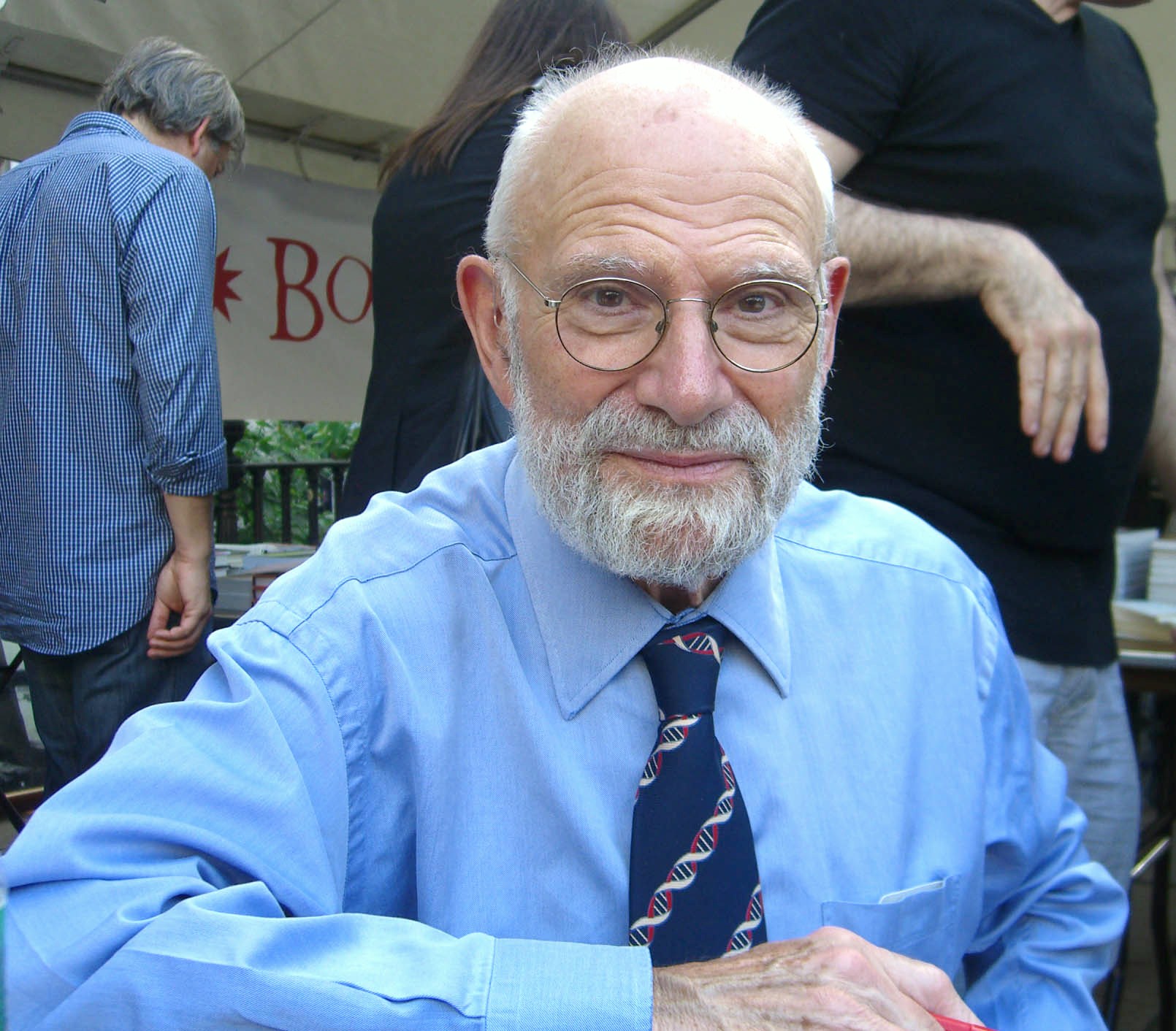
    Oliver Wolf Sacks - Physician, Professor, Author
    at the 2009 Brooklyn Book Festival
    Oliver Wolf Sacks, CBE, FRCP (9 July 1933 – 30 August 2015) was a British neurologist and author who spent his professional life in the United States. He felt that the brain was the "most incredible thing in the universe" and therefore important to study. He became widely known for writing best-selling case histories about his patients' disorders, with some of his books adapted for film and stage.

    After studying at The Queen's College, Oxford, where he received his medical degrees in 1960, he moved to the U.S. and completed his residency in neurology at Mount Zion Hospital in San Francisco. He relocated to New York in 1965, where he became professor of neurology at New York University School of Medicine. Between 2007 and 2012, he was professor of neurology and psychiatry at Columbia University, where he also held the position of "Columbia Artist", which recognized his contributions to art and science. He was also a faculty member at Yeshiva University's Albert Einstein College of Medicine, and a visiting professor at the University of Warwick.

    Sacks was the author of numerous best-selling books, mostly collections of case studies of people with neurological disorders. His writings have been featured in a wider range of media than any other contemporary medical author; the The New York Times called him a "poet laureate of contemporary medicine". His books included a wealth of narrative detail about his experiences with patients, and how they coped with their conditions, often illuminating how the normal brain deals with perception, memory and individuality.

    Awakenings (1973), an autobiographical account of his efforts to help people with encephalitis lethargica regain proper neurological function, was adapted into the Academy Award-nominated film in 1990, starring Robin Williams and Robert De Niro. He and his book Musicophilia: Tales of Music and the Brain were the subject of "Musical Minds", an episode of the PBS series Nova. In 2008 Sacks was awarded a CBE for services to literature during the Queen's Birthday Honours.

    Early Life


    Video: Dr. Oliver Wolf Sacks

    SSTattler
    1. There is at least a thousand YouTubes about Oliver Sacks. I took a sub-subset of Big Think on YouTube below. 
    2. See his site - Oliver Sacks, M.D. 
    3. Look at SSTattler with Face Blindness(Prosopagnosia) and Oliver Sacks: Musicophilia-Strokes, Language and Music.


    Oliver Sacks (1933 – 2015) on Using Imagination to See


    by BIG THINK EDITORS

    Oliver Wolf Sacks (1933 – 2015), a British neurologist and writer, was professor of neurology at New York University School of Medicine and professor of neurology and psychiatry at Columbia University. He also held the position of "Columbia Artist," which recognized his contributions to art and science. Sacks was diagnosed with terminal metastatic liver cancer in January 2015. He died on 30 August 2015 in his home in Manhattan at the age of 82 from the disease.


    The New York Times said of his passing this morning:
    "Describing his patients’ struggles and sometimes uncanny gifts, Dr. Sacks helped introduce syndromes like Tourette’s or Asperger’s to a general audience. But he illuminated their characters as much as their conditions; he humanized and demystified them. 
    In his emphasis on case histories, Dr. Sacks modeled himself after a questing breed of 19th-century physicians, who well understood how little they and their peers knew about the workings of the human animal and who saw medical science as a vast, largely uncharted wilderness to be tamed."


    A Brain That Can't Hear Music

    Published on Apr 23, 2012

    Oliver Sacks discusses some bizarre cases from his most recent book "Musicophilia: Tales of Music and the Brain."

    Standard YouTube License @ Big Think


    Headline Blog: Dr. Oliver Wolf Sacks

    Definition: Blog (noun). Add new material to or regularly update to a blog. (≃1990s: blog shortening of weblog)

    Oliver Sacks – An Inspiration to All,
          Especially Those of Us With Sizzled Noggin!

    Tim Seefeldt
    Brain Food Cafe for the Mind
    Posted August 31, 2015

    I was sad – at first – when I saw the news Sunday night that Oliver Sacks had passed away. The writer and neurologist died following a battle with cancer at age 82.

    But when my frown on this news turned quickly into a smile, I realized that this was a man who really lived and that no passing like his can spend much time on the gloom before being overwhelmed by the joy and healing he provided so, so many. Both through his words and science

    I never got to meet Oliver Sacks. For that I’m sad. But I did correspond with him once through his assistant and a note that he sent me that I’ll always treasure. Not long after my stroke, as I was struggling to learn to read and write again, I stumbled on to a BBC piece featuring some of his cases. One was about the Canadian crime writer, Howard Engel, whose words had been taken from him following a stroke.

    It was the first time I’d heard of anybody with stroke damage remotely like my own. And it was my first time seeing Oliver Sacks through the broader lenses of his amazing work.

    I connected with Engle and Sacks within days of seeing the piece. And I started to devour their books with this new lens.

    There are loads of docs out there and likely many more writers. I can’t think of many whose work has touched so many people so profoundly. One of Oliver Sacks’ careers would have been a huge blessing to the world. How awesome and inspiring it is that his life was so profound and unselfish serving as both a writer and a neurologist!

    -30-


    See the original article:
    in

    A Nursing Home Mini-Series:
          Seeing Things That Aren't There, aka Hallucinations

    Joyce Hoffman
    The Tales of a Stroke Patient
    Aug 19, 2014

    Maggy was a fall risk, never knowing when she would pass out, and Beatrice, who fell in her kitchen, had an IV bag attached to her arm because she was dehydrated. They were relegated to their rooms for all activities, including therapy. And Cassey was, at last, home. So I had to find a new "eating" table, the most popular activity in the nursing home.

    I chose to sit with Tillie because no one else wanted to. Tillie was always seeing things. She was 92 years old and she talked about the cats she saw so clearly on her feet, in the garden, through the plants. But there were no cats to be seen. She had a stroke 12 years ago, had macular degeneration, had a recent fall, and she was hallucinating. She was healthy otherwise, knowing that people rejected her but not knowing why.

    During breakfast, she said, "Of course, the mother cat looked after her offspring. She was tawny in color and searching for food the kittens could eat." And she described the kittens, one being all white and one being striped. And she had a vision of dogs playing in the courtyard of our nursing home--one a blonde cocker spaniel, the other a tan and black beagle.

    So I decided to do some research on seeing things that weren't there.