Showing posts with label ▷ Oct-27-2012. Show all posts

Saturday, October 27, 2012

Saturdays News - Functional Electrical Stimulation (fixing Drop Foot)


Definition: Functional Electrical Stimulation (fixing Drop Foot) 

       from Wikipedia, the Free Encyclopedia


Functional electrical stimulation (FES) is a technique that uses electrical currents to activate nerves innervating extremities affected by paralysis resulting from spinal cord injury (SCI), head injury, stroke and other neurological disorders. FES is primarily used to restore function in people with disabilities. It is sometimes referred to as Neuromuscular electrical stimulation (NMES).
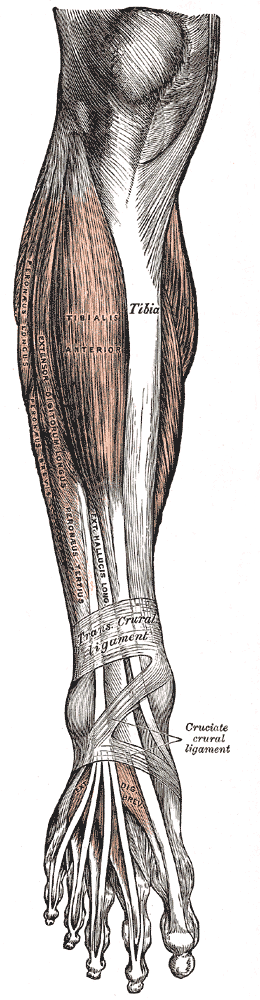
FES was initially referred to as Functional Electrotherapy by Liberson, and it wasn't until 1967 that the term Functional Electrical Stimulation was coined by Moe and Post, and used in a patent entitled, "Electrical stimulation of muscle deprived of nervous control with a view of providing muscular contraction and producing a functionally useful moment". Offner's patent described a system used to treat foot drop.

The first commercially available FES devices treated foot drop by stimulating the peroneal nerve during gait. In this case, a switch, located in the heel end of a user's shoe, would activate a stimulator worn by the user.

Common Applications


Spinal Cord Injury

Injuries to the spinal cord interfere with electrical signals between the brain and the muscles, resulting in paralysis below the level of injury. Restoration of limb function as well as regulation of organ function are the main application of FES, although FES is also used for treatment of pain, pressure, sore prevention, etc.

Some examples of FES applications involve the use of Neuroprostheses that allow people with paraplegia to walk, stand, restore hand grasp function in people with quadriplegia, or restore bowel and bladder function.


Stroke

FES is commonly used in foot drop neuroprosthetic devices.

In the acute stage of stroke recovery, the use of cyclic electrical stimulation has been seen to increase the isometric strength of wrist extensors. In order to increase strength of wrist extensors, there must be a degree of motor function at the wrist spared following the stroke and have significant hemiplegia.

Patients who will elicit benefits of cyclic electrical stimulation of the wrist extensors must be highly motivated to follow through with treatment, After 8 weeks of electrical stimulation, an increase in grip strength can be apparent. Many scales, which assess the level of disability of the upper extremities following a stroke, use grip strength as a common item. Therefore, increasing strength of wrist extensors will decrease the level of upper extremity disability.

Patients with hemiplegia following a stroke commonly experience shoulder pain and subluxation; both of which will interfere with the rehabilitation process. Functional electrical stimulation has been found to be effective for the management of pain and reduction of shoulder subluxation, as well as accelerating the degree and rate of motor recovery. Furthermore, the benefits of FES are maintained over time; research has demonstrated that the benefits are maintained for at least 24 months.

See the full article Functional Electrical Stimulation from Wikipedia, the Free Encyclopedia.


SSTattler will show the following 1) Bioness and 2) Walkaide. See many more devices in the last week article: 
     "Article: Dean - Hanger Completes Enrollment Of Walkaide Instride Clinical Trial".

Intro to Bioness Foot Drop System (Drop Foot)

http://www.bioness.com - Intro to L300 Foot Drop System.

This system helps people with foot drop (drop foot) caused by damage to Central Nervous System (stroke, MS, brain injury, spinal cord injury).


L300 Foot Drop System - Healthcare Community Testimonials

http://www.bioness.com - L300 Foot Drop System - Healthcare Community Testimonials.

This system helps people with foot drop (drop foot) caused by damage to Central Nervous System (stroke, MS, brain injury, spinal cord injury).


Bioness L300

The NESS L300 is an advanced foot drop system designed to use mild stimulation to lift your foot to help you walk more safely and easily. If the NESS L300 is right for you, it may be easier to walk on flat ground, up and down stairs, as well as on uneven surfaces. This light-weight device is designed to fit just below your knee and to be put on and taken off with one hand. Use of the NESS L300 may eliminate the need to wear a rigid, heavy orthosis.


Bioness L300 Foot Drop System Making A Difference - Video 4

http://www.Bioness.com - Bioness NESS L300 Making A Difference - comparison of walking with stimulation vs. no stimulation.


Bioness L300 Foot Drop Commerical - 60 second

http://www.bioness.com - Now there is a way to regain your freedom and independence by helping you walk with greater speed, stability and confidence.1 The award-winning L300 Foot Drop System is designed to help people with certain neurological conditions walk more naturally, with increased speed and improved balance.

The L300 Foot Drop System Lifts the Foot and Helps People Living with Multiple Sclerosis (MS), Stroke, Brain Injury, and Spinal Cord Injury.


WalkAide treats Foot Drop using Myo-Orthotics Technology

WalkAide is a medical device that, after more than a decade in development, has received marketing clearance from the FDA for improving walking ability of people suffering from Foot Drop. Foot Drop is a condition caused by weakness or paralysis of the muscles involved in lifting the front part of the foot, which causes a person to drag the toe of the shoe on the ground or slap the foot on the floor.

Invented by a team of researchers at The University of Alberta, WalkAide simulates the typical nerve-to-muscle signals in the leg and foot, effectively lifting the toes at the appropriate time. The resulting movement is a smoother, more natural and safer stepping motion, and faster walking for longer distances with less fatigue. In fact, many people who try WalkAide experience immediate and substantial improvement in their walking ability, which increases their mobility, functionality, and overall independence.


The New WalkAide System: Advanced Functional Electrical Stimulation (FES) for Treatment of Foot Drop

The New WalkAide System is a sophisticated functional electrical stimulation (FES) device for the treatment of foot drop caused by upper motor neuron injury, Such as Multiple Sclerosis (MS), Stroke (CVA), Incomplete Spinal Cord Injury, Cerebral Palsy (CP), and Traumatic Brain Injury (TBI).

Utilizing a patented tilt sensor technology, the WalkAide stimulates the appropriate nerves in the leg causing the foot to lift at the right time during the walking cycle, prompting a more natural, efficient, and safe walking pattern, with or without footwear.


Davy: Regaining Independence & Overcoming Foot Drop with WalkAide after Stroke

Davy and his wife, Elaine, share his inspiring story of recovery after a Stroke and how he was able to regain his mobility and independence with the help of the WalkAide system and overcome foot drop.


Julia Fox Garrison Share Her Experience With the Walkaide

Julia Fox Garrison shares her inspiring story of surviving a massive stroke and regaining her mobility with the help of the WalkAide


WalkAide Comparison - Strokes

This video shows initial trials with the WalkAide System on a patient who has endured multiple strokes. The WalkAide System leverages functional electrical stimulation to help correct foot drop. Foot drop is a condition caused by weakness or paralysis of the muscles involved in lifting the front part of the foot, which causes a person to drag the toe of the shoe on the ground or slap the foot on the floor. Foot drop (also called drop foot) can result from peroneal nerve palsy or from damage to the central nervous system such as stroke, spinal cord injury, traumatic brain injury, cerebral palsy and multiple sclerosis. For more information, visit http://www.walkaide.com

Saturdays Comics - Oct/27/2012


For Better and For Worse
Lynn Johnston / 2007-05-15
"Let's put an 'M' in front of it."

Dilbert
Scott Adams / 2012-10-24
"I took the liberty of making a death certificate for you"

Garfield
Jim Davis / 2012-10-25
"Odie is climbing a tree. THUD !!"
Betty
Delainey & Rasmussen / 2012-10-26
"... and I'd like a cover for it."
For Better and For Worse" is a serious topic of stroke but with a very nice cartoons. It is all about Grandpa Jim had a stroke and 88 further cartoon "strips" that happened to Grandpa Jim. (See as well  the author Lynn Johnston).
** I tried to get low or free price at the people http://www.UniversalUclick.com/ for the images for the cartoons. It was too high for Stroke Survivors Tattler i.e. we are not a regular newspaper and our budget is very low. Fortunately, you will have to do only 1-click more to see the cartoon image, it is legit and it is free using GoComics.com and Dilbert.com.
*** Changed from "Pickles" to "Betty" -- "Betty" is a excellent cartoon and Gary Delainey & Gerry Rasmussen are authors/artists/cartoon-strips and they live in Edmonton.

Saturday - Eclectic Stuff & Articles - Oct/27/2012

Definition:Eclectic(noun) a person who derives ideas, style, or taste from a broad and diverse range of sources.

Article: SRAE - 2012 Annual General Meeting for Stroke Recovery Association of Edmonton

The Stroke Recovery Association of Edmonton 
welcomes you to our...
2012 Annual General Meeting

Please come whether you are a long-time or new member to
help us start another wonderful year.
Following the AGM, we will be hosting a
Halloween Party with a variety of fun activities
to celebrate this spooky season so please come dressed up if
you'd like.


Monday, October 29th, 2012
AGM begins at 7:00pm and the party will begin after the meeting.
Networks Activity Centre
#214 Bonnie Doon Mall
(Entrance across from the old Zellers)
Call Networks Activity Centre  for details at (780) 474-3363

Article: Ralph - Where Your Charitable Donations Go?

Ralph - SSTattler
Did you ever wonder about where your charitable donations go or what a charitable association does?

In Canada:


You can find a significant amount of information on the Canada Revenue Agency Website.  They have a new graph feature that visually shows you how much money is raised, from where,  and  where the organization spends their dollars:


In United States America:


If you are in the United States,  Charity Navigator will give you an even  better breakdown of charitable fundraising and where your charitable dollars are spent.

Charity Navigator Rates the Charities.

How Do We Rate Charities?

We rate charities by evaluating two broad areas of performance; their Financial Health and their Accountability & Transparency. Our ratings show givers how efficiently we believe a charity will use their support today, how well it has sustained its programs and services over time and their level of commitment to being accountable and transparent. In the not-too-distant future, we plan to also rate charities’ reporting of their results. We provide these ratings so that givers can make intelligent giving decisions, and so that the philanthropic community can more effectively monitor itself.

Eclectic: Nina - Travel

Futuristic Air Travel / Library of Congress

By Nina Mitchell from Mindpop 

Monday, 22 October 2012

At the airport, they want to X-ray you with newfangled machines to prove you are not a terrorist. I can’t lift my right arm up high enough for these machines. This causes a commotion among the travellers behind me, as airport staff have to run around turning on the old metal  detector. At least the titanium in my head from brain surgery doesn’t set the metal detectors. That would be even more complicated.

© 2012 by Nina Mitchell. The material in this article is protected by copyright and may not be copied or published or otherwise distributed without the Author’s permission. All Rights Reserved.

Article: Dean - FES: A Review of 50 Years of Research

Surface Electrical Stimulation Technology for Stroke Rehabilitation: 
A Review of 50 Years of Research

Dean's Stroke Musing
You'll have to ask your doctor, therapist  or stroke association to explain this to you. estim to you. -- Dean's Stroke Musing.

Abstract original from ingentaConnect.

Abstract:

Stroke is a disabling global health-care problem, and rehabilitation is a major part of patient care. Functional electrical stimulation (FES) refers to application of controlled electrical impulses to stimulate peripheral nerves innervating paralyzed or weak muscles to improve the impaired motor function. The present paper is an update on FES for stroke rehabilitation and a critical review of the first 50 years of FES-related research. In this paper, we first trace the basic design of a FES system for foot drop correction and provide an update on different feedback methodologies. Then we summarize the literature on advances in the technology and evaluate findings obtained from clinical trials. We made a pooled analysis of four clinical trials, involving 101 participants, comparing FES therapy with no intervention or conventional physiotherapy. Our results show significant improvements in walking speed (weighted mean difference: 0.17 m/s, 95% confidence interval: 0.06 to 0.28), cadence (weighted mean difference: 0.18 steps/sec, 95% confidence interval: 0.04 to 0.31), stride length (weighted mean difference: 13.75 cm, 95% confidence interval: 3.64 to 23.85), and functional ability measured by Fugl-Meyer scores (weighted mean difference: 0.08, 95% confidence interval: 0.03 to 0.12). FES group also had improvements compared to control group in two other outcomes, i.e., lower physiological cost index and higher step length, but the pooled effect was not statistically significant. Finally, we propose a conceptual framework and offer recommendations for optimizing the FES therapy for various research and clinical applications. Overall, our findings, and those of similar studies suggest that FES has a favorable effect on gait and motor recovery in stroke patients with foot drop. The possible barriers for implementation, clinical implications and the importance of future research in these directions are highlighted.

Full paper here (and it is free).

Dean -- Someone should be able to now take each type of FES for foot drop and compare them to see which is best. Your therapist should be up-to-date on everyone of these and be able to compare them to an AFO or the many other possibilities (look here).

Eclectic: Jackie - Profound One-Liners

    Jackie - SSTattler
  • It's not whether you win or lose, but how you place the blame.
  • You are not drunk and if you can lie on the floor without holding on.
  • We have enough "youth". How about a fountain of "smart"?
  • The original point and click interface was a Smith & Wesson.
  • A Fool and his money can throw one heck of a party.
  • When blondes have more fun, do they know it?
  • Five days a week my body is a temple. The other two it's an amusement park.
  • Learn from your parents' mistakes, use birth control.
  • Money isn't everything, but it sure keeps the kids in touch.
  • Don't Drink and Drive. You might hit a bump and spill something.
  • If at first you don't succeed skydiving is not for you
  • Reality is only an illusion that occurs due to a lack of alcohol.
  • We are born naked, wet and hungry. Then things get worse.
  • Red meat is not bad for you. Fuzzy green meat is bad for you.
  • Ninety-nine percent of all lawyers give the rest a bad name.
  • Xerox and Wurlitzer will merge to produce reproductive organs.
  • Artificial intelligence is no match for natural stupidity.
  • The latest survey shows that three out of four people make up 75% of the population.
  • You know why a banana is like a politician? He comes in and first he is green, then he turns yellow and then he's rotten.

Eclectic: Diane - Two Year Stroke Anniversary

Diane - The Pink House OTC
Two years ago, tonight, our world fell apart.

The two years since have been utterly brutal, exhausting, frustrating, enlightening, and, yes, sometimes absolutely amazing.

Yet, I have often wondered, these past two years, why Bob's recovery has been so slow. I have wondered why he is "behind the pack". Why nearly every other stroke survivor I meet is doing remarkably better than Bob. Why he has never "hit" one of those established stroke recovery timelines.
  • Why he still cannot walk. Or even stand.
  • Why he still has no movement in that right arm or hand or shoulder.
  • Why he still cannot control bowel or bladder.
  • Why he still cannot speak well.
  • Or swallow.
  • Or read well.
  • Or write.
  • Or so many other things.

I have wondered what we were doing wrong, if we weren't working hard enough, or if it was because he was so long hospitalized at first and "started late" on therapy. I wondered if we "missed the window" that all those therapists mentioned. I wondered if it was just that "every stroke is different" as the doctors always say. Or if we just had bad luck, bad therapists, bad doctors ...

But I wonder no longer about these things ...

Recently, I had an enlightening conversation with our new attorney, who had just finished perusing 1500 pages of medical records. It seems, that two years ago, tonight, a nurse entered Bob's ICU room at about 10 p.m. and recorded, in her notes, that this patient has "right side hemiplegia".*

And each subsequent nurse, who entered his room, made the same notation on the chart.

And this went on for 11 hours.

Yet no one thought to summon a doctor.

 Until 9:00 a.m. when I arrived and said, "Something is wrong with my husband!"

And the nurse said, "Isn't he always like that?"

A statement which never made sense to me---- until now.

In fact, it all makes sense now. I mean, 11 hours? I never knew how long it had been that his brain was cut off from oxygen, but never thought, um, 11 hours. My god.

In fact, the true wonder is this: he somehow survived. My Bob is still with me. He is alive and home and I love him with all my heart.

Today I celebrate that fact.

_____
*"hemiplegia" is the medical term for paralysis on one side of the body

See the article Two Year Stroke Anniversary in The Pink House On The Corner.

Eclectic: Monty - Look at that happening ...

Monty - SSTattler


Look at that happening 
in Sabadella, near Barcelona, Spain
6:00 pm / 19 May 2012


(SSTattler: It was published 6/July so I re-published Oct/27 -- you have to listen 
                   (and maybe again, again, ...))

Eclectic: Marcelle - The One-Handed Cook

Marcelle - Up Stroke
Part of getting back into life after my stroke was to gradually resume the household duties that had fallen onto my husband and friends during my first months home. One of the scariest tasks for me was getting back into the kitchen. The kitchen is full of sharp and hot things. Packages demand to be opened and resealed. It is a domain of  the two-handed.

But I couldn't continue to ask friends and family to drop off home-cooked meals. And after my fifth tray of enchiladas, I googled "one-handed cooking utensils" and hit a jackpot of products for the disabled chef.

I was reluctant to spend money on adaptive devices in the beginning because I was sure my complete recovery was right around the corner. Two-and-a-half years post-stroke and still very limited with my left hand, I recognize that the corner is at the end of an extremely long block.

My other excuse for not wanting adaptive equipment was that forcing myself to use standard tools would be therapeutic. But my first failed attempt to use a regular can opener convinced me that I ought to buy the One-Touch Can Opener. I was very skeptical that it would work as advertised — but the thing is magic!

My second concession was to purchase a Single-Handed Cutting Board. This item is more practical than magic. I've stabbed myself carelessly on the upright nails, and the suction cups that hold it in place are so strong that when you pull up the board after slicing tomatoes, the tomato juice and seeds splash all over the place. But I do not know any other way to slice and spread bread with only one hand. Watch my demo below. Bon Appetit!


See the original article The One-Handed Cook in Up Stroke.

Copyright Marcelle Greene. Contents may not be used without permission. 

Eclectic: SSTattler - The Memorandum Preview

John - SSTattler
University of Alberta Studio Theatre: 
The Memorandum Preview 

(Halloween!)


Wednesday OCT 31, 2012, 7:30 – 10:30PM
Location Timms Centre for the Arts 
               (87 Avenue & 112 Street)
City / Town Edmonton
Event Venue University of Alberta
Description Office politics are skewered in
               this smart, sexy satire!
Event Category Theatre
Cost           $5.00
Where to purchase tickets -- The Timms Centre Box Office is open 
               for ticket sales in person 11:00am to 2:00pm 
               during weeks productions are running. Walk-up 
               tickets are available at the Box Office 1 hour 
               prior to show time.
Single Tickets  Are also available at TIX on the Square 
               (9930 102 Avenue Northwest or online at 
               www.tixonthesquare.ca)
Contact Phone 780.492.2495
Contact Email uofastudiotheatre@gmail.com
Link          www.drama.ualberta.ca


The Memorandum

by Vaclav Havel
Translation by Vera Blackwell
Guest Director: Trevor Schmidt

Inside one large, nameless organization, the Managing Director tries to decipher an important memorandum written in a new, completely incomprehensible language that has been created to streamline office communications.

The Translation Department cannot translate the memo without a permit and the Department of Authentication refuses to authorize a permit without a translation.

Inspired by Havel’s experiences with Communist bureaucracy in Czechoslovakia, the office politics skewered in this smart, sexy satire are all too familiar for today’s audiences grappling to find meaning in the absurd doublespeak of corporate re-organization where workers are no longer laid-off but positions are disrupted.

“I think theatre should always be somewhat suspect.” Vaclav Havel:
Vaclav Havel (1936 –2011).  Czech playwright, essayist, poet, dissident and politician. Last president of Czechoslovakia (1989–1992) and first president of the Czech Republic (1993–2003)
Havel received many awards and accolades, including the United States Presidential Medal of Freedom, the Gandhi Peace Prize, the Philadelphia Liberty Medal, the Order of Canada, the freedom medal of the Four Freedoms Award, and the Ambassador of Conscience Award.

Other Plays:

  • The Garden Party
  • The Increased Difficulty of Concentration
  • Audience

Productions of The Memorandum

Began writing the play in 1960 and it was rewritten several times that decade. Originally produced at Prague's Theatre of the Balustrade in 1965, the play made its American debut in 1968 at the Public Theatre in New York, winning an Obie Award for best foreign play. After 1968, Havel’s plays were banned in Czechoslovakia. The first London production of The Memorandum was in 1977.

Eclectic: Jackie - Should I Really Join Facebook?

Jackie - SSTattler
(Jackie: Read it all the way through! It's a good laugh! and really quite true! A good laugh for people in the over 50 group !!) 

When I bought my iPhone, I thought about the 30-year business I ran with 1800 employees, all without a mobile phone that plays music, takes videos, pictures and communicates with Facebook and Twitter. I signed up under duress for Twitter and Facebook, so my seven kids, their spouses, 13 grand kids and 2 great grand kids could  communicate with me in the modern way. I figured I could handle something as simple as Twitter with only 140 characters of space.

That was before one of my grandkids hooked me up for Tweeter, Tweetree, Twhirl, Twitterfon, Tweetie and Twittererific Tweetdeck, Twitpix and something that sends every message to my cell phone and every other program within the texting World.

My phone was beeping every three minutes with the details of everything except the bowel movements of my entire next generation ...   I am not ready to live like this. I now keep my iPhone in the garage in my golf bag.

The kids bought me a GPS for my last birthday because they say I get lost every now and then going over to the supermarket or library. I keep that in a box under my tool bench with the Blue tooth [it's red] phone I am supposed to use when I drive. I used it once when I was standing in line at Coles talking to my wife and everyone within 50 meters was glaring at me. I had taken out my hearing aid to use it, and I was talking little loud!

I mean the GPS looked pretty smart on my dash board, but the lady inside that gadget was the most annoying, rudest person I had run into in a long time. Every 10 minutes, she would sarcastically say, "Re-calc-u-lating." You would think that she could be nicer. It was like she could barely tolerate me. She would let go with a deep sigh and then tell me to make a U-turn when possible. Then if I made a right turn instead, well, it was not a good relationship ...

When I get really lost now, I call my wife and tell her the name of the cross roads and while she is starting to develop the same tone as Gypsy, the GPS lady, at least she loves me.

To be perfectly frank, I am still trying to learn how to use the cordless phones in our house. We have had them for 4 years, but I still haven't figured out how I can lose three phones all at once and have to run around digging under chair cushions and checking bathrooms and the dirty laundry baskets when the phone rings.

The world is just getting too complex for me. They even mess me up every time I go to the supermarkets. You would think they could make a decision themselves, but this sudden "Paper or Plastic?" every time I check out just leaves me confused. I bought some of those cloth reusable bags to avoid looking stupid, but I never remember to take them with me.

Now when they ask me, "Paper or Plastic?" I just say, "Doesn't matter to me. I am bi-sacksual." Then it's their turn to stare at me with a blank look. I was recently asked if I tweet. I answered, No, but I do fart a lot."

P.S. I know some of you are not over 50. I sent it to you to allow you to forward it to those who are.

Senior citizens don't need any more gadgets. The TV remote and the garage door remote are about all we can handle.

Article: Sharon - Suggestions for Beginning New Relationships

Sharon - SSTattler
After a stroke, many relationships don’t survive. That doesn’t mean that stroke survivor don’t want a relationship.  Judy and Mike are excellent example of a couple who met and married after stroke. Not  only that, they are good friends with Judy’s first husband.

Judy was just over 30 at the time of her stroke.  After months in rehab, she came home to find out that her husband was more interested in someone else than her.  So despite the difficulty she had  speaking, she asked him to leave.  Coping with children and house on her own was not easy, but she did. A couple of years later, she decided she wanted a new relationship. She decided the best way  to meet people was to go to singles events.  She met a lot of different men, many were not her type and many were not interested in her.  Judy said that some thought that because she was disabled that they would “rule the house.”  Despite meeting a lot of toads and not many princes, she persisted.  Then she met Mike. Mike had a family of his own and he too was caring for his family.  They had many interests in common. They dated and then married.  Bringing two teenage families together was not easy for either Mike or Judy, but together they managed. The family thrived.  Mike supported Judy to get her driver’s licence.  Judy supported Mike in the raising of his children.  Together they have weathered many storms including other health challenges like hip and knee surgery, cancer, and heart attack.

Judy met Mike at singles events. Are there other ways to meet potential marriage partners?  If you have a good (or not so good) story about meeting a new partner or a new friend, can you tell us about it?  Your story may help other people to start a new relationship or find a new friend.

Article: Sharon - Keeping the Brain Active

Sharon - SSTattler
On the stroke lists, many people are looking for ways to keep their brain active and maybe even improve memory, word finding, and some of the quickness they had when they were younger or before their stroke. Brain training promises that users will improve on certain brain skills and many studies demonstrate that young children and adults and even middle aged adults benefit from computerized brain training. Based on these results, can we assume it works for older adults or people with stroke?

According to two recent reviews (Buitenweg et al. 2012, Kueider et al., 2011) older adults may benefit too.  While Buitenweg’s review reported modest results, Kueider found fairly significant effects of cognitive training for adults over 55.   Older adults did not need to be technologically savvy in order to successfully complete or benefit from training. Overall, their review demonstrated that video games are at least comparable to more traditional, paper-and-pencil cognitive training approaches and online  or computerized training is better than traditional approaches.  Computerized training is an effective, less labor intensive alternative.

Buitenweg et al. (2012) believe that brain retraining should include these elements: (1) novelty, (2) focusing on skills like decision-making and memory strategy training, and (3) tailoring the training adaptively to the level and progress of the individual.

A study with of online brain training for people with  Multiple Sclerosis using a program from Neuropsychonline demonstrated significant  improvements in memory and other cognitive skills. As well, the group increased in their use of compensatory strategies. The authors conclude that the MAPSS-MS intervention was useful,  feasible, and well-accepted by participants.

In an advocacy statement, the Brain Injury Association of America (2006) charged that based on the evidence even at that time, people with brain injuries should be offered cognitive rehabilitation:

The fact that research questions remain about cognitive rehabilitation and that techniques are constantly being improved should not be an excuse to withhold payer support for treatment. Individuals with brain injury must have access to cognitive rehabilitation that is of sufficient scope, duration and intensity and is available as cognitive skills and related problems change over time. Availability, accessibility and ease of movement among services in systems of care for persons with brain injury must be improved.

You can try these online training programs without a prescription. With most brain re-training, the more you play the more you gain.

Online Cognitive Training Programs:

References:

  • Buitenweg et al, Brain Training in Progress: a Review of Trainability in Health Senior, Frontiers in Human Neuroscience, 21 June 2012.
  • Kueider AM et al., (2012) Computerized Cognitive Training with Older Adults: A Systematic Review. PLoS ONE 7(7): e40588.
  • Stuifbergen et al., (2012) A Randomized Controlled Trial Of A Cognitive Rehabilitation Intervention For Persons With Multiple Sclerosis. Clinical Rehabilitation, 26(10),  882 –893.

---------