Showing posts with label ▷ 2015 Apr 25. Show all posts

Saturday, April 25, 2015

Saturdays News


Contents of This Week Saturday News April 25th, 2015:

      Assistive technology is an umbrella term that includes assistive, adaptive, and rehabilitative devices for people with disabilities and also includes the process used in selecting, locating, and using them. Assistive technology promotes greater independence by enabling people to perform tasks that they were formerly unable to accomplish, or had great difficulty accomplishing, by providing enhancements to, or changing methods of interacting with, the technology needed to accomplish such tasks. A longer definition comes from Wikipedia.
          -- Assistive Technology and the Workplace
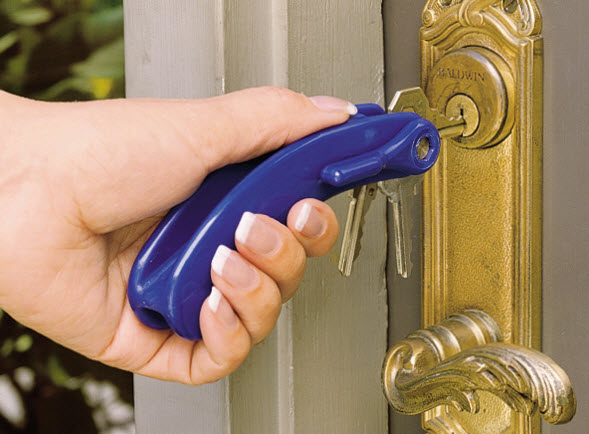
          -- Low-Tech Assistive Devices (Daily Living Aids)
          -- Assistive Technology: Opening Doors to Independence
          -- An ARC Interview About Assistive Technology
          -- See Dragon NaturallySpeaking 13 in Action
          -- Dragon NaturallySpeaking - The Best Homework Helper
          -- What is Assistive Technology (A.T.)
          -- BBC Look North - EvoAssist
          -- RSLSteeper: Home Control App
          -- Understanding Assistive Technology: Simply Said
          -- The Case Against Assistive Technology
      Saturday NewsFuture Topic
      May/02/2015
      2015 Neuro Film Festival
      May/09/2015
      Treadmill Desk
      May/16/2015
      Receptive Aphasia (or Wernicke or Fluent...)
      May/23/2015
      Falls in Older Adults in Stroke!

      Definition: Assistive Technology

      Assistive Technology From Wikipedia,
               the free encyclopedia


      Key Turner
      Assistive technology is an umbrella term that includes assistive, adaptive, and rehabilitative devices for people with disabilities and also includes the process used in selecting, locating, and using them. Assistive technology promotes greater independence by enabling people to perform tasks that they were formerly unable to accomplish, or had great difficulty accomplishing, by providing enhancements to, or changing methods of interacting with, the technology needed to accomplish such tasks.

      Assistive Technology and Adaptive Technology


      The term adaptive technology is often used as the synonym for assistive technology, however, they are different terms. Assistive technology refers to "any item, piece of equipment, or product system, whether acquired commercially, modified, or customized, that is used to increase, maintain, or improve functional capabilities of individuals with disabilities", while adaptive technology covers items that are specifically designed for persons with disabilities and would seldom be used by non-disabled persons. In other words, "assistive technology is any object or system that increases or maintains the capabilities of people with disabilities," while adaptive technology is "any object or system that is specifically designed for the purpose of increasing or maintaining the capabilities of people with disabilities." Consequently, adaptive technology is a subset of assistive technology. Adaptive technology often refers specifically to electronic and information technology access.

      Mobility Impairment and Wheelchairs


      Video: Assistive Technology

      Assistive Technology and the Workplace

      Published on Feb 4, 2014

      Available with closed captions using the QuickTime Player. Select "Show Closed Caption" in the view toolbar.


      Standard YouTube License @ NationalMSSociety


      Headline Blogging: Assistive Technology

      Definition: Blogging (verb). Add new material to or regularly update a blog. (Origin 1990s: blog shortening of weblog)

      Feeling Normal


      Robin
      Rocky Mountain Stroke Survivor
      Posted on August 23, 2013

      SSTattler: Nice recumbent (aka tadpole or trike)...

      I meant to write about Stroke Camp first and this experience at Stroke Camp second, but you’re getting it out of order. It took me over a week to recover from camp and just as I was feeling myself again, we all got sick. So here we are weeks out without any posts. Maybe I’ll write my next one on how long it takes to bounce back from illnesses or vacations…

      Ever since my stroke, I have lived in a continual carnival.

      Because my stroke is cerebellar, I am constantly playing games of coordination, speed, dexterity to just get through normal activities. Reaching for something and picking it up is as challenging as one of those arcade games with the arm that you use to pick up a stuffed animal and drop it down a chute.

      As I complete each task, I walk to the next along rigged paths that sway, rock, and jolt unexpectedly.  The only place to sit down to rest is on the tilt-a-whirl.  To eat lunch, I sit at a table that jiggles constantly.  As my food bounces around, I have to reach out to catch each french fry…the fries jiggle around in the basket that is jiggling around its area on the table as my arm is being jiggled by the bouncing and shifting of my seat.

      One of the rides, the “Bike Ride,” involves riding on something like the spinning teacups (only appropriately themed) and then being given a bike.  I am put on a path that is constantly moving; it wiggles and swoops, suddenly jolts left or right or up or down.  It is positioned in a tunnel that is constantly rotating a few days clockwise or counterclockwise in little jerks.  Now ride!  At the end of an exhausting day at the carnival, instead of going home to my quiet, still bed, I lie down on the tilt-a-whirl and try to sleep.

      Problem Solving

      Grace Carpenter
      My Happy Stroke
      Thursday, July 24, 2014

      I'm a tall person, and I think of myself as fairly resourceful too, so I'm always surprised when I can't figure out how to get something from our high kitchen cabinets now.  It was never a problem before the stroke.

      Obviously it's harder physically now. But I think there's something else going on. Maybe mild cognitive impairment? Or learned helplessness? Or mind-body connections that are still being forged? Maybe all three.

      For instance, the other day I wanted to make a smoothie. But our immersion blender was in the back of the top shelf of the cabinet, just out of reach. Usually, I just ask my husband or my children (who can climb up onto the counter) to get something I need. But I was alone, and after a few failed attempts to reach with my good arm, I was about to give up on the smoothie idea. Then I spotted the container of cooking utensils on the counter. I picked out a big cooking spoon, reached up, and gently dragged the immersion blender right up the the edge of the shelf. From there, I could grab it. When the kids got home, we shared a blueberry smoothie.

      I was pleased that I figured out how to get what I needed. But later, I thought: wow, it took me more than four years (and a cooking spoon) to solve this problem.


      See the original article:
      in

      Memory Aids Have to Be in My Face

      Rebecca Dutton
      Home After a Stroke
      September 13, 2011

      When I forgot to pick up a friend who has a brain injury I felt guilty.  She blamed herself because she thought she had remembered the wrong date.  This painful experience taught me that memory aids have to be in my face.  I can repeatedly ignore a stack of reminders sitting in an out of the way place.  I use classic memory aids in some unusual ways.

      The current month sits on my kitchen table where I eat breakfast.  I used to highlight important events, but the page of bright colors was distracting by the end of the month.  Now I use 2 colored tabs to mark important dates and move the tabs when the events are over.  I fold the page for each month in half and put future months in the napkin holder on the right.  Every piece of paper is stuffed in it's respective month.  The arrow is pointing to a month that has a postcard from my dentist reminding me to make an appointment.  I got that postcard six weeks ago.  If I had put the postcard on my kitchen counter who knows where it would be now.  I also tear a page from an amusing day-to-day calendar before I start to eat which tells me what the current date is.  Remembering can be fun.  Breakfast = funny joke = date.

      Our New Approach To Communication Meets The Challenge!!!

      Gary Gray
      PEI Stroke Recovery
      Thursday, October 16, 2014

      A guest post by:  Nicole Caron, the Social Media Manager at Voiceitt.

      Nicole Caron
      Voiceitt is an Israeli-based technology startup whose mission is to create innovative solutions that helps aid the lives of people with disabilities. The fundamental goal of VoiceItt is to foster independence and social inclusion for the disabled and improve their quality of life. Voiceitt is currently developing Talkitt, an innovative speech technology which is able to recognize unintelligible language and translate it into understandable speech. Ultimately, Talkitt is giving individuals with speech impairments their voice back!

      Until now, the approach taken by developers of assistive technology for people with speech disabilities has completely bypassed voice, opting to use other modes of communication including communication boards that replace speech with symbols and images, head-tracking, eye-tracking, and switches. There are no products on the market today that allow people with speech disabilities to communicate using the most natural means, their voice. This is the gap Talkitt is trying to fill.

      New AFO

      Barb Polan
      Barb's Recovery
      Posted 29th September 2011

      My PT is intent on getting me a new, smaller, less objectionable AFO because I don't wear mine now - except on uneven surfaces: lawn, beach, cobbles and deep gravel. So much for spontaneity - although that's long-gone in my life anyway. My PT went on today about how I'm going to "break" my ankle as a result of never wearing my brace; most therapists have said "sprain," but Mary pulled out the big guns and said "break" and "which is the last thing you want to do." She's right about that, but I am REALLY careful. She thinks I'm going to step on a rock on the sidewalk, on something someone has left on the floor or step wrong on a curb... and then ... snap! I am as diligent, though, as an 80-year-old walking on ice, afraid to fall and break her hip. I inspect the ground/floor/sidewalk and the angle of my foot/ankle before each step. I'm not supposed to, but I walk looking down at my feet, not straight ahead.

      At my PT appointment next week, she has a brace specialist coming in to hear me out about the problems with my current brace and to suggest an acceptable alternative.

      Cane Craft for Kids

      Marcelle Greene
      Up Stroke
      Tuesday, November 15, 2011

      I often receive compliments on my hand-decorated cane to which I reply, "Isn't it great? My nieces did it!" After coming home from the hospital, I wanted to prove to my nieces and myself that we could still have fun; so I arranged a play date to decorate my cane. We chose to shop for materials together at a craft store, but the 3-D paint and self-adhesive gems also can be purchased online.


      To make your own personalized cane, you will need:
        ▶   (1) plain cane
        ▶   (1 set) 3-D paint suitable for metal/wood
        ▶   (1 package) self-adhesive gems
        ▶   (1-2) children
      The paint squeezes directly from the bottle meaning no messy brushes to clean afterward. It comes in a variety of colors including neon and glow-in-the-dark. The gems come in all sorts of shapes and colors. We picked some sparkly dragonflies and butterflies.

      If you have more than one kid – let one of them do the top half, and one the bottom. Be sure to tell them to stay away from the handle and the tip.

      I forgot to allow time for my cane to dry and had to rush off to a doctor's appointment, which created a drip effect in some places. Plan on letting your cane set for at least a couple hours before using it.

      Besides being reminded of my nieces every time I receive a compliment, I never have people mistaking my cane for theirs in the rehab gym. My colorful cane has been a great way to cheer up this otherwise dreary accessory to my disability.

      Happy decorating!


      See the original article:
      in

      Gaining Your Footing

      Pamela Hsieh
      Rehab Revolution
      23 February 2011

      When I was first discharged from inpatient hospitalization to the DayRehab outpatient program, the physical therapists had me fitted for an ankle-foot orthotic (AFO). The AFO is a common partial solution to leg weakness and improper gait — essentially, it is a device built to prevent what’s called foot drop (keeping your foot at a constant ninety degrees with the rest of your leg) and makes up for ankle weakness or potential twisting.

      I was instructed to wear it at all times, which essentially restricted me to wearing gym shoes every single day no matter where I went. This posed a number of superficial and aesthetic issues for me, a young girl to whom fashion was an important means of self-expression.

      Generally, I’m not the type of person who ever wears gym shoes outside of a gym. And I like to wear skirts. I’m short, so I don’t own many skirts that go past the knees. So the entire question of wearing an AFO indefinitely was something my ego would not stand for.

      In 2004 (my injury was in ’03), while living in Italy, I discovered a solution to my inability to wear skirts: legwarmers. I was overjoyed! (More on that later.) But I was still stuck in gym shoes day after day, which admittedly helped me to gain speed and strength in my walking for the year I lived there without a car (having to walk virtually everywhere).

      Technology, Aphasia and Stroke Survivors

      Jeff Porter
      Stroke of Faith
      Tuesday, August 24, 2010

      Back in the spring and summer of 1998, I spent a lot of time rebuilding my speaking and writing abilities. One of the effects of my stroke, I learned, was something called aphasia, an impairment of language which occurs when someone suffers injury to the language areas of the brain.

      Often, as in my case, this accompanies a stroke.

      In addition to speech therapy, I spent quite a bit of time playing on a child's education toy called the GeoSafari, originally bought for our daughters to use. The toy helped me get my words/grammar back in order, or at least to an acceptable degree. We actually sold the GeoSafari at a yard sale not long ago and thought about those days as it left with an eager parent.

      But from the United Kingdom comes the news that with fancier technology these days, we might harness video game technology to help stroke survivors improve communication skills:
      • Motion sensing technologies, such as the Nintendo Wii Remote, could be used in the rehabilitation of people with aphasia - a language impairment, commonly caused by a stroke, that affects around 250,000 people in the UK. ...
      • "Gesture tracking and recognition technologies are becoming a ubiquitous part of new computing and gaming environments, ranging from Apple's touch-screen iPad through the hand-held Nintendo Wii Remote to Microsoft's forthcoming Kinect for the Xbox 360, which will track users' movements without the need for a handheld controller," says Stephanie Wilson, Senior Lecturer in HCID at City University London. "Whilst popular in gaming, we will evaluate the suitability of such technologies in aphasia rehabilitation."
      We've already seen articles about how theWii Fit can help the physical consequences of a stroke. Now, perhaps similar technology can help conquer other issues. Aphasia was the most frustrating part of my recovery. Here's hoping that technology will ease some of that frustration.


      See the original article:
      in

      The Invaluable Hearing Aids, aka Me? Wrong? You Betcha!

      Joyce Hoffman
      The Tales of a Stroke Patient
      Nov 24, 2013

      In June, 2001, when I started a new job at Jefferson University Hospital in Philadelphia, I was a Technical Trainer and Compliance Administrator, all by myself, for close to 15,000 people. The compliance system we had consisted of reading a set of compliance regulations, like Fire Procedures, Hazardous Materials, and Safety in the Workplace, and answering a series of questions about what they read.

      As soon as July rolled around in '01, a high level meeting took place with the CEO, CIO, President of the Health System, and other muckety-muck types.  I was furtively taking notes because it was my responsibility and I didn't want to miss anything, but I missed half of the discussion and didn't even know it. I felt an arm in my ribs.

      Can an IPhone or Other Smartphone Save Your Life?

      Bill (William) Yates
      Brain Post
      Posted 21st June 2010

      I enjoyed a recently posted TED talk that has some neuroscience implication. I will summarize a TED MED presentation by David Pogue. The talk was titled "Can the iPhone Save Your Life?". The presentation was presented live in October of 2009 but just recently became available on the website.
      Standard YouTube License @ TEDMED

      Stroke Support Group

      Andrea
      A Year of Living In My Head
      Sunday, January 22, 2012

      Traveled to Seattle yesterday for a Stroke Survivors Support Group.  I think I am too close to the stroke for a group setting... it may be my mood but the meeting opened my fear door wide to hear endless stories of multiple stroke episodes by so many people. I am not far enough away from it all not to have that nagging feeling of having another stroke at any time.  My rational thought says: you are on meds, you eat totally different, you have no stress (other than the ominous threat tumor and stroke), the perfect storm of hormones and whatever that created this mystery is no longer.  But my insane side says: I could keel over at any moment. So a group of great people saying my worst nightmare was not helpful.

      I was the youngest one in there, and upon entering was asked if I was a caregiver.  I said I had a stroke, which pretty much stopped inquiry.   If you were in my spinning head, aware of my "drop things" left hand and slightly stumbling left foot trying to find words to string together out of nothingness you would be able to understand.  But I guess from outward appearances, I look like a caregiver.

      This all being said it was a fantastic group.  The spirit in the room was so supportive and positive, and it was a joy to have other people understand having a stroke without the hushed tones and serious faces.  Everyone there got it, and there was room for finding your words, or word, and dropping your cane and being allowed the time to pick it up.  Where having a stroke was treated as normal -a part of life- and being dealt with by spirited individuals. That is not quite the word I am looking for... but folks with hutzpah.  Energy for recovery, research, communication, stick-with-it-ness.


      See the original article:
      in

      $39 Total. Because Recovery Should not Cost
               an Arm and a Leg.

      Peter G. Levine
      Stronger After Stroke
      Saturday, April 11, 2015

      You're supposed to do repetitive practice. But how are you supposed to repeat a movement when you can't move?

      The ArmTran can help. It turns small amounts of strength into large movements!

      Developed by Pete Levine
      Click for more info!


      See the original article:
      in

      Canes

      Amy Shissler
      My Cerebellar Stroke Recovery
      October 30, 2012

      Did you ever see the show House?  Well my friend Vicki, she’s an occupational therapist, said she has some therapist friends that won’t watch that show because House uses his cane on the wrong side.  I think that’s funny.  I saw this commercial recently for some cane and the commercial showed a guy using the cane on the wrong side.  If you’re trying to sell a product, use it correctly in the commercial.  I used a cane for a while after my stroke – and hated every second of it.  For long-term users of assistive devices you just have to embrace it and learn not to hate it.  Luckily, I don’t have to use a cane anymore.

      Here’s how to use a cane correctly……

      You hold the cane on the OPPOSITE side of the weaker side.  In my case, my right side is all goofy so I held my cane with my LEFT hand.  The purpose of a cane is to increase your base of support which improves your balance so that you don’t fall.  So at the same time you take a step forward with the BAD leg, the cane, held with the opposite hand, should be advanced forward simultaneously.  When I walked with a cane, I would move the cane forward with my left hand AT THE SAME TIME as when I took a step forward with my right leg.


      See the original article:
      in

      Eclectic Stuff

      Definition: Eclectic(noun) a person who derives ideas, style, or taste from a broad and diverse range of sources.

      Confessions of a Brained Blogger

      Tim Seefeldt
      Brain Food Cafe for the Mind
      Posted April 12, 2015

      Shortly after tapping out last week’s blog offering, I started to work on the next piece. I poured out my heart and my soul. It was great stuff. At least it was good stuff. But nobody but me will ever know for sure.

      That’s because it’s gone.

      Early Sunday morning after I warmed up my aging laptop to start putting the finishing touches on, my words were gone. They’d vanished into thin air.

      A few colorful word combinations were followed by another search. But there was nothing.

      This happened to me once way back in the ‘90s when I was an Edmonton Sun reporter. I was about 15 minutes from deadline. And I was working on the lead story. A few very choice words were hurled at me. Sun editors back then weren’t the warm and fuzzy nurturing types.

      I spent five minutes trying to retrieve and coax my piece from wherever it lay trapped in the beat up work processor. Then I spent the next nine re-writing it from scratch. I’m pretty sure that the final offering was better than the first.

      Harkening back to that experience, I first decided to re-trace my original blog steps. A few minutes into this, I decided to change gears and address the elephant at the laptop.

      Weddings and Learning to Help Your Loved One/Client Speak

      Mark A. Ittleman
      The Teaching of Talking
      April 19th / 2015

      We are leaving Houston for Florida to attend my daughters’ wedding and some time to get "recharged."

      I have been burning the candle at both ends doing my best to launch a video program that will help thousands of people throughout the country and the entire globe speak or talk again.

      We want this to be a perfect launch of the Teaching of Talking Training Course.

      I’ve been getting expert help "tweaking" the Teaching of Talking Training Course so that you will be able to help your loved one engage in conversation, rather than wishing or “hoping” he or she would.

      We will give you a great course to help your loved one or client speak within a conversational framework.  There just is not a better course  like the Teaching of Talking, and caregivers and therapists have been looking for something that would help them do that for years.  The Teaching of Talking is simple, and you will find that your loved one or client may be so much more capable of speaking than you ever imagined.