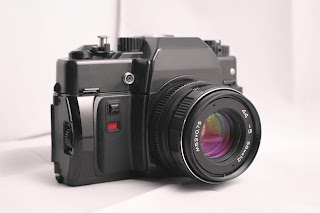
- Headline - GoPro
- Eclectic - Many articles from many Guest Bloggers about Stroke
- A Great Camera for Stroke Survivors
- [vlog] Mission Statement
- Think You Might Have AF? There's an app for That
- FAQ (from Rocky Mountain Stroke Survivor)
- Brain Bricolage
- This is for Women Only: It's About Bras
- Patience & Arriving at a Compromise
- Cramps
- Top 3 Exercises For Foot Drop
- Therapy: Words of Wisdom
- Post-TIA Brain Scans Might Yield Vital Information
- What About Bob? Speech Therapy for Aphasia in Baby Steps
- Who is Getting High in Europe (and Where)?
- Weekly Columnists
- Sunday Stroke Survival: All I Want for Christmas...
- Jackie The Jester: Frosty the Snowman...
- TED Talks - Jose Miguel Sokoloff: How We Used Christmas Lights to Fight a War
- Rick Mercer Report: Special Olympics Training
- Laid-Back Administration: New Guest Blogger - Sas Freeman
- Daily Comics: FB Or FW, Dilbert, Mayes, Doonesbury
Showing posts with label ▷ 2014 Dec 20. Show all posts
Saturday, December 20, 2014
Saturday News
Definition: GoPro
GoPro From Wikipedia, the free encyclopedia
| Website: www.gopro.com |
SSTattler: Perfect for stroke survivors. Use a) one-hand or b) even zero-hand or c) your head d) any other part of your body or e) ... etc etc etc !! See lots of examples in ▷ Rick Mercer Report - many many on his head, 1 up to 4 GoPro (that I can see) on the various vehicles, the front of his ski’s, ...
The company is based in San Mateo, California.
History
The company was founded by Nick Woodman in 2002. Woodman started the company following a 2002 surf trip to Australia in which he was hoping to capture quality action photos of his surfing but could not because amateur photographers could not get close enough or obtain quality equipment at accessible prices. His desire for a camera system that could capture the professional angles inspired the 'GoPro' name.
Woodman initially raised money for his company by selling bead and shell belts for under US $20 out of his VW van and, later, fashionable camera straps.
Video: GoPro
SSTattler:
Cecil and Mallory Johnson snorkel with a group of majestic humpback whales off the coast of Newfoundland, Canada.
Shot 100% on the HERO3+® camera.
Standard YouTube License @ GoPro
- I picked 15 YouTubes from Jan/’14 to Jun/’14 (thousands more in GoPro/YouTube),
- They're possible to make the GoPro/YouTube with disability stroke (and most others, say 90%, do not).
- I think GoPro is perfect mounted on a helmet or mounted on an ‘cycle e.g. Tadpole (recumbent ‘ cycle) and especially a gift for Xmas (hint, hint,...)!
GoPro: Snorkeling With Humpback Whales
Published on Nov 15, 2014Cecil and Mallory Johnson snorkel with a group of majestic humpback whales off the coast of Newfoundland, Canada.
Shot 100% on the HERO3+® camera.
Standard YouTube License @ GoPro
The Best of 2014 Stroke Survivors Tattler
by Dr. Beagle C. Cranium
Merry Christmas
for the
Great Guest Bloggers on SSTattler:
The Best of 2014: Stroke Survivors Tattler
- Introduction
- Best of Saturday News with YouTube & Vimeo
- Best of Comics
- Best of Eclectic Stuff with Guest Bloggers
- Best of TEDTalks - Technology, Entertainment and Design
- Best of Tadpole Update - Spokes Fighting Strokes
- Best of Rick Mercer Report - Intelligence, humorous, politics
Introduction
Today is near to Christmas and most people like Christmas -- it is a very beautiful holiday. Christians have Christmas, Jews have Hanukkah, people of African descent have Kwanzaa, others celebrate the Solstice, Buddhists remember the five precepts... but all people giving gifts, kindness, love, peace to all mankind.
It is time to reflect what happened to the this year especially what happened to Stroke Survivors Tattler site.
Eclectic Stuff
A Great Camera for Stroke Survivors
![]() |
| Rebecca Dutton Home After a Stroke |
(1) I knew I would have trouble holding the camera still with one hand so I wouldn't get blurry photos. Cannon has several cameras with Image Stabilization which corrects for movement that occurs when I press down on the shutter button. (2) Instead of buying on-line, I went to a store so I could play with several different cameras. Going through sub-menus to choose different focus options was difficult with one hand. My Cannon Power Shot A1100 model has a round dial on top of the camera that I can turn to different settings. I turn the dial so the arrow is pointing to the small icon I want and I'm done.
(3) I had to learn to use three fingers of my sound hand to hold the camera while the index finger of the same hand pushes the shutter button. (4) Using my sound left hand creates another problem. Shutter buttons are always on the right so sometimes I get a photo with a finger partially covering the lens (see bottom right corner of photo). I'm saved by viewing a photo and reshooting if needed. (5) Impaired standing balance forces me to look at my surroundings to stay vertical. Holding the camera at arm's length to look at the LCD monitor instead of holding the camera to my face to look through the viewfinder solves this problem. Anti-depressants don't just come in the form of a pill.
See the original article:
in
[vlog] Mission Statement
![]() |
| Pamela Hsieh Rehab Revolution |
On Wednesday of last week, one of my favorite leaders in the world of business and entrepreneurship, Marie Forleo, announced a YouTube video contest for free tuition to her RHH B-School program coming up shortly. I’ve been dreaming of attending B-School for as long as I’ve known about it (two years?), so of course I decided instantly to jump on this opportunity.
![]() |
| Not my camera, FYI . . . but a nice one nonetheless. |
The video for the contest is due in two and a half hours, and I only slept about that much last night(!), but fortunately, I’m ahead of the game and am uploading it to YouTube as I write this(!!!).
Think You Might Have AF? There's an app for That
![]() |
| Dean Reinke Deans’ Stroke Musing |
Only to be done with your doctors consent - Think You Might Have AF? There's an app for That.
Innovative researchers have developed a smartphone-based application that allows patients to detect an irregular pulse caused by atrial fibrillation [1]. Two algorithms developed for the application that analyzed signals using an iPhone 4S successfully distinguished atrial fibrillation from sinus rhythm, report investigators.
"A number of patients who are referred to us have pretty symptomatic atrial fibrillation," said lead investigator Dr David McManus (University of Massachusetts Medical School, Worchester, MA). "So they are highly motivated to keep track of their episodes. We traditionally order Holter monitors and event monitors to capture the coming-and-going episodes of atrial fibrillation. I thought there was a potential role to leverage the fact that everybody has a smartphone and to use that as a means to do a sort of physiological assay of the patient."
The results of the study are published online December 7, 2012 in Heart Rhythm.
App Uses Camera and Flash to Measure Chaos in Pulse
To heartwire, McManus explained that patients often wear Holter and event monitors for up to 30 days in order to capture an atrial-fibrillation event, but some of the paroxysmal events are so infrequent that physicians might not even bother with the monitors. A phone-based rhythm-assessment tool would have positive implications for accessibility, allowing patients to record their pulse while the event is occurring to determine whether they are in fact having an episode of atrial fibrillation.
FAQ (from Rocky Mountain Stroke Survivor)
![]() |
| Robin Rocky Mountain Stroke Survivor |
Where do you live? I live in Colorado, south of Denver. I love Colorado and am so glad I get to do my stroke recovery here!
How old are you? Aren’t you too young to have a stroke? I was 31 years old when I had my strokes. They were due to a Vertebral Artery Dissection (VAD), a tear in my right vertebral artery, which then sent clots into my cerebellum.
Is that a mini-stroke? Well, technically there is no such thing as a mini stroke. Usually people are referring to a TIA (transient ischemic attack). By definition a TIA has symptoms that resolve in 24 hours. My symptoms are ongoing. My strokes were small and thankfully only affected my balance, coordination, and energy level (and occasionally names and word finding). But as my sister said, when you’re talking about something as important as the brain, if you didn’t have a massive stroke yourself, you’re not allowed to brush off mine as “small.” :-)
Are you really a doctor? Yes. I’m a family physician and I have continued to practice medicine after my stroke, just in a different setting that suites me better now. NOTHING on this website is medical advice. I’m just writing about my own personal experiences.
I messaged you but I haven’t heard back… I’m sorry, that’s entirely possible. I’m trying to juggle work and home just like most moms and am constantly dropping balls. Please don’t take it personally. I usually don’t reply to my mom either. More distant family have to check with people who live close by to find out if I’m still alive.
See the original article:
in
Brain Bricolage
![]() |
| Steven H. Cornelius Music and Stroke |
Neuroscientist Paul Bach-y-Rita is a leading scholar in the field of brain neuroplasticity. One of his inventions is a device that feeds information about physical orientation through the tongue, thereby accomplishing the balancing work normally done by the inner ear’s vestibular apparatus. Bach-y-Rita also invented a machine that allows blind individuals to “see” though camera information delivered tactilely through electrodes attached to the subject’s back.
Many brain areas naturally perform multiple sensory functions. Touch and vision seem to share brain space, for example. Latent polysensory capabilities can be enhanced and developed through focused practice.
For me, this brings to mind the ideas of French anthropologist Claude Levi-Strauss who in The Savage Mind provided the example of a “bricoleur” putting available tools to unexpected uses in the face of new and unfolding exigencies.
Brains are natural bricoleurs, which means that when it comes to stroke recovery, a great many things are in reach.
See the original article:
in
This is for Women Only: It's About Bras
![]() |
| Barb Polan Barb’s Recovery |
This morning, I stumbled on a "stroke comic book" blog, which, of course, attracted my attention. Written by a woman who had a stroke 4 years ago at the age of 26, the entries, which were all amusing, were thought-provoking too. Each was accompanied by an illustration / photo. For example, in one, a beautiful woman with a large rack and an arm missing from the elbow to the hand, was wearing lingerie and staring at the camera. The caption read something along the lines of, "Look at my eyes, yes, my eyes."
In another entry, she posted a photo of a woman in an old-fashioned full-length bra, along with the question: "How do you put on a bra one-handed? Comments, please."
Among the dozen answers, including one from a man, was one from a stroke survivor I know from online. Her answer was that the day she could put on a bra two-handed would be a milestone [or would let her know she has recovered or something along those lines.]
My response, of course, was to declare to myself," I'm wearing a bra today."
Like many acts now, the decision was easy, but the implementation more challenging than I expected.
Patience & Arriving at a Compromise
| Sas Freeman |
As you are already aware I have been unwell now for some time and having difficulty bouncing back. Having used all the normal methods & practices through my recovery, I will admit to being frustrated at still feeling unwell and to me so pathetic.
I was not able to get out of bed and attempting a couple of steps was too much for my body as the condition did not allow my heart to function properly. Okay, I get that bit but what I couldn’t quite accept was that I’ve been doing all the right things, taking everything that’s prescribed, sleeping for England, eating little and often and above all holding onto my positivity yet still nothing was improving.
| Kevin the Whippet |
I decided enough was enough; this had to end as I had to recover the real me. I got dressed and made my way downstairs bearing in mind it was midday by now. I had decided to decorate the Christmas tree, everything was put out for me, how could it be difficult? I had put a couple of baubles onto it and I was light headed, the pain became much worse and to breathe was agony. As I sat down my body was totally exhausted!! You can imagine how pathetic I felt at this stage looking at the tree reminding me I hadn’t managed that simple task. A few days were like this, the tree gradually looking a little more decorated. What I didn’t realise that I was actually my own worst enemy.
Cramps
![]() |
| Amy Shissler My Cerebellar Stroke Recovery |
Someone the other day was doing some exercises and his quadriceps muscle got a really bad cramp in it. So here’s what I did. I had him do this exercise.
I thought that might help because the exercise is to work out the quads. So using and contracting the muscle would then force it to relax when the exercise is over which would relieve the cramp. It helped. But disclaimer: don’t take my advice, I have brain damage and probably don’t know what I’m talking about.
See the original article:
in
Top 3 Exercises For Foot Drop
![]() |
| Ramon Florendo Life after a "STROKE" |
From http://famouspt.com/ "Famous" Physical Therapists, Bob Schrupp and Brad Heineck, illustrate 3 of the best exercises to improve foot drop, or "foot drag".
CONTACT US! Send us your video requests or suggestions or product samples that you would like us to try out and make a video review on. FamousPTs@Gmail.com
Standard YouTube License @ physicaltherapyvideo
See the original article:
in
Therapy: Words of Wisdom
![]() |
| Diane The Pink House On The Corner |
This past week at therapy, Bob enjoyed a 45 minute, deep-tissue neck massage with a massage therapist...At his regular session, they continue to work on "small movements" that need to be developed before plunging into standing and walking. These include learning to scoot forward in the chair:
and leaning back into the wheelchair to "open the neural pathways" through his chest, abdomen and butt.
Some other words of wisdom from this new stroke rehab therapist:
1. When trying to move a muscle -- DO NOT look at it! Instead look away, and VISUALIZE the movement flowing smoothly in your imagination. This will help the brain make a better "reconnection" to that muscle.
2. To move the foot, tap the muscles (with your fingers) on top of the thigh. To move the hand, tap the muscles in the bicep and forearm.
3. The body follows the eyes! So look up! Not down. When you look down, all your muscles slump downward. When you look up, you open the energy flow between brain and body. Keep your eyes on the horizon.
4. It all starts with the butt. Once you wake up your butt, everything else will follow and wake up! So squeeze those butt cheeks and do it throughout the day, as often as you can.
See the original article:
in
Post-TIA Brain Scans Might Yield Vital Information
![]() |
| Jeff Porter Stroke of Faith |
Nobody likes to hear bad news - but sometimes, bad news might save a life.
Many people have transient ischemic attacks, or mini-strokes, before a larger stroke occurs. Now, imaging after a mini-stroke can help map a plan of treatment and, potentially, preventing a more serious stroke.
You can read here about how brain scans yield clues to future stroke risk:
- Brain scans taken shortly after a mild stroke can help identify patients at risk of suffering another stroke within three months, a new study suggests.
- The study included more than 2,000 people who had CT scans of the brain within 24 hours of suffering a mild, non-disabling stroke or a transient ischemic attack, which are sometimes called "mini-strokes." Of those patients, 40 percent had brain damage due to a lack of sufficient blood flow (ischemia).
- Compared to people who didn't have an interruption in blood flow to part of their brains, the risk of another stroke within 90 days was almost three times higher in those with new brain damage due to poor blood circulation (acute ischemia), according to the researchers.
- But the researchers of this latest study - including Dr. Jeffrey J. Perry of the University of Ottawa in Canada - say that all patients who have a mild stroke should receive a CT scan, given how the brain images can predict when patients will be at highest risk of a subsequent stroke.
See the original article:
in
What About Bob?
Speech Therapy for Aphasia in Baby Steps
December 15, 2014
I met Bob when working at a famous outpatient clinic in Houston, Texas, TIRR Kirby Glen. Bob’s wife brought him there from a community about an hour and a half drive for speech evaluation and therapy.
Bob had a severe apraxia and expressive aphasia, and his wife had to do almost all the interpreting for him since few could understand what he was saying. His apraxia was so bad that many words were unintelligible. Each time I tried to comprehend what he was saying, he would attempt to say it over again, numerous times. His wife thought since I was a speech language pathologist, I would be able to understand what he was saying, but for the life of me I could not.
His speech was so indistinguishable that his wife had to interrupt the conversation and tell me what he had said. She was familiar with the context of the situation that Bob was mentioning.
Bob had an intense desire to communicate. We started seeing him 3 times a week and then 5 times a week. His brother in law would bring him every day for therapy and both Bob and his brother in law were trained to decrease Bob’s speech rate, and improve his articulation. Then we stimulated sentences which included those words he had previous difficulty with, and we would converse about food, restaurants, going out to eat, cooking, money, and all the things Bob liked to do.
What About Bob? A Determined Soul
I met Bob when working at a famous outpatient clinic in Houston, Texas, TIRR Kirby Glen. Bob’s wife brought him there from a community about an hour and a half drive for speech evaluation and therapy.
His speech was so indistinguishable that his wife had to interrupt the conversation and tell me what he had said. She was familiar with the context of the situation that Bob was mentioning.
Bob had an intense desire to communicate. We started seeing him 3 times a week and then 5 times a week. His brother in law would bring him every day for therapy and both Bob and his brother in law were trained to decrease Bob’s speech rate, and improve his articulation. Then we stimulated sentences which included those words he had previous difficulty with, and we would converse about food, restaurants, going out to eat, cooking, money, and all the things Bob liked to do.
Who is Getting High in Europe (and Where)?
![]() |
| Bill Yates Brain Posts |
My research training is in psychiatric epidemiology.Alcohol and drug dependence have been two of my topic areas of research.
So I found a recent novel study of the epidemiology of illicit drug use in Europe intriguing.
Typical methods of looking for the prevalence of drug use in populations are direct diagnostic interviews and studies of emergency room attendees or autopsy cases with medical complications of drug use.
However, Christopher Ort from Switzerland along with a host of European colleagues took an interesting approach to studying illicit drug use in European populations.
They conducted population wastewater illicit drug concentration analyses using liquid chromatography. They examined changes in illicit drug concentrations over time and across a number of cities and regions in Europe.
This approach is slightly messy (pun intended) but logically follows a reasonable argument: high illicit drug concentrations in waste water reflects high drug use in the population producing the waste.
Sunday Stroke Survival: All I Want for Christmas...
Sunday, December 14, 2014
Actually, there are a lot of things I want for Christmas, but I ain't gonna get 'em. I realize this because I'm the caregiver in this house. You might call me Santa Incognito also because I do all the shopping and budgeting too. There is barely enough cash for groceries, house payments, utilities, and the occasional splurge for Mickey D's each month without borrowing from Peter to pay Paul. Drugs and doctor bills eat up the remainder of what would have been disposable income.
What I've been hankering for is a video camera. I started a YouTube channel years ago when I was making book trailers for myself and others. It has been gathering dust since my stroke. Being single (functional) handed takes a lot of time just doing what needs to be done. It's also a lot of trial and error on my part. What I wouldn't have given for someone to show me how to do in the beginning. It might have saved me some gray hairs. Whom am I kidding? I EARNED each and every one the hard way.
![]() |
| Jo Murphey The Murphey Saga |
Actually, there are a lot of things I want for Christmas, but I ain't gonna get 'em. I realize this because I'm the caregiver in this house. You might call me Santa Incognito also because I do all the shopping and budgeting too. There is barely enough cash for groceries, house payments, utilities, and the occasional splurge for Mickey D's each month without borrowing from Peter to pay Paul. Drugs and doctor bills eat up the remainder of what would have been disposable income.What I've been hankering for is a video camera. I started a YouTube channel years ago when I was making book trailers for myself and others. It has been gathering dust since my stroke. Being single (functional) handed takes a lot of time just doing what needs to be done. It's also a lot of trial and error on my part. What I wouldn't have given for someone to show me how to do in the beginning. It might have saved me some gray hairs. Whom am I kidding? I EARNED each and every one the hard way.
Subscribe to:
Posts (Atom)