Showing posts with label ▷ 2013 Jun 29. Show all posts

Saturday, June 29, 2013

Lacunar Stroke


Lacunar Stroke From Wikipedia, the free encyclopedia.
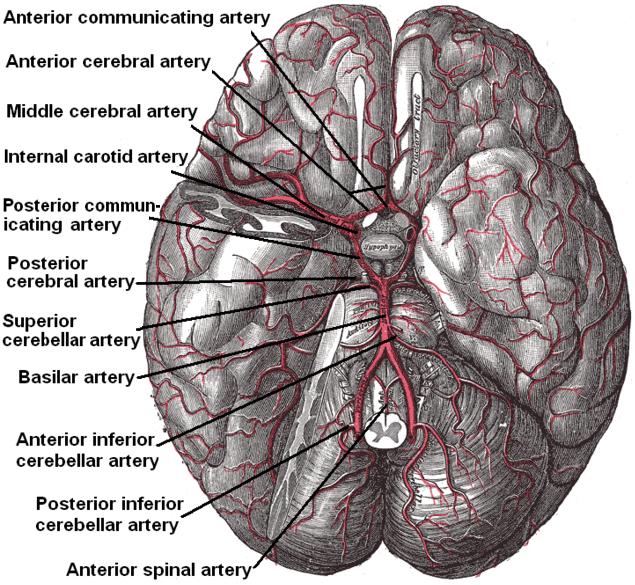

Lacunar stroke or lacunar infarct (LACI) is a type of stroke that results from occlusion of one of the penetrating arteries that provides blood to the brain's deep structures. Patients who present with symptoms of a lacunar stroke, but who have not yet had diagnostic imaging performed may be described as suffering from Lacunar Stroke Syndrome (LACS).

Lacunar Stroke - Arteries Beneath Brain

Much of the current knowledge of lacunar strokes comes from C. M. Fisher's cadaver dissections of post-mortem stroke patients. He observed "lacunes" (Latin for 'lake') of empty fluid left in the deep brain structures after occlusion of 200-800 μm penetrating arteries and connected them with 5 classic syndromes. These syndromes are still noted today, though lacunar infarcts are diagnosed based on clinical judgment and radiologic imaging.

Epidemiology


It is estimated that lacunar infarcts account for 25% of all ischemic strokes, with an annual incidence of approximately 15 per 100,000 people. They may be more frequent in men and in people of African, Mexican, and Hong Kong Chinese descent.

Pathophysiology


Lacunes are caused by occlusion of a single deep penetrating artery that arises directly from the constituents of the Circle of Willis, cerebellar arteries, and basilar artery. The corresponding lesions occur in the deep nuclei of the brain (37% putamen, 14% thalamus, and 10% caudate) as well as the pons (16%) or the posterior limb of the internal capsule (10%). They occur less commonly in the deep cerebral white matter, the anterior limb of the internal capsule, and the cerebellum.

The two proposed mechanisms are microatheroma and lipohyalinosis. At the beginning, lipohyalinosis was thought to be the main small vessel pathology, but microatheroma now is thought to be the most common mechanism of arterial occlusion (or stenosis). Occasionally, atheroma in the parent artery blocks the orifice of the penetrating artery (luminal atheroma), or atheroma involves the origin of the penetrating artery (junctional atheroma). Alternatively, hypoperfusion is believed to be the mechanism when there is stenosis of the penetrating artery. When no evidence of small vessel disease is found on histologic examination, an embolic cause is assumed, either artery-to-artery embolism or cardioembolism. In one recent series, 25% of patients with clinical radiologically defined lacunes had a potential cardiac cause for their strokes.

Advanced age, chronic hypertension, smoking and diabetes mellitus are risk factors. It is unclear whether there is an association with alcohol consumption, elevated cholesterol, or history of prior stroke. Lacunar strokes may result from carotid artery pathology or microemboli from the heart as in atrial fibrillation. Patients often recover well, but if there is enough white matter disease from lacunar pathology, one can see a subcortical dementia such as Binswanger disease.

Silent Lacunar Infarction


A Silent lacunar infarction (SLI) is one type of silent stroke which usually shows no identifiable outward symptoms thus the term "silent". Individuals who suffer a SLI are often completely unaware they have suffered a stroke. This type of stroke often causes lesions in the surrounding brain tissue that are visibly detected via neuroimaging techniques such as MRI and computerized axial tomography (CT scan). Silent strokes, including silent lacunar infarctions, have been shown to be much more common than previously thought, with an estimated prevalence rate of eleven million per year in the United States. Approximately 10% of these silent strokes are silent lacunar infarctions. While dubbed "silent" due to the immediate lack of classic stroke symptoms, SLIs can cause damage to the surrounding brain tissue (lesions) and can affect various aspects of a persons mood, personality, and cognitive functioning. A SLI or any type of silent stroke places an individual at greater risk for future major stroke.

Treatment & Prognosis


Typically, tissue plasminogen activator may be administered within three hours of stroke onset if the patient is without contraindications (i.e. a bleeding diathesis such as recent major surgery or cancer with brain metastases). High dose aspirin can be given within 48 hours. For long term prevention of recurrence, medical regimens are typically aimed towards correcting the underlying risk factors for lacunar infarcts such as hypertension, diabetes mellitus and cigarette smoking. Blood thinners such as heparin and warfarin have shown no benefit over aspirin with regards to five year survival.

Patients who suffer lacunar strokes have a greater chance of surviving beyond thirty days (96%) than those with other types of stroke (85%), and better survival beyond a year (87% versus 65-70%). Between 70% and 80% are functionally independent at 1 year, compared with fewer than 50% otherwise.

Physiotherapy interventions are used in the rehabilitation of lacunar stroke. A physiotherapy program will improve joint range of motion of the paretic limb using passive range of motion exercises. When increases in activity are tolerated, and stability improvements are made, patients will progress from rolling to side-lying, to standing (with progressions to prone, quadruped, bridging, long-sitting and kneeling for example) and learn to transfer safely (from their bed to a chair or from a wheel chair to a car for example). Assistance and ambulation aids are used as required as the patient begins walking and lessened as function increases. Furthermore, splints and braces can be used to support limbs and joints to prevent complications such as contractures and spasticity. The rehabilitation healthcare team should also educate the patient and their family on common stroke symptoms and how to manage an onset of stroke. Continuing follow-up with a physician is essential so that the physician may monitor medication dosage and risk factors.

See the full article:
      Lacunar Stroke from Wikipedia. 


UW Medicine - Small Artery Stroke (Lacunar)

Providers

Kyra J. Becker, M.D. , Claire J. Creutzfeldt, M.D. , Vicki L. Johnson, D.N.P., MHSEd, A.R.N.P. , Sandeep P. Khot, M.D. , David L. Tirschwell, M.D., M.Sc. , Jonathan Richard Weinstein, M.D.

Overview


Small artery strokes are also ischemic strokes. These strokes are also called lacunar strokes. They are caused by blockage of one of the small arteries that branch off of the larger arteries. These small arteries penetrate deep into the brain, and can cause any of the symptoms of ischemic stroke. This type of stroke tends to have a better outcome, because the blockage of a smaller artery usually leads to a smaller amount of brain damage.

Once a small artery stroke has occurred, steps should be taken to help prevent further strokes.


See the full article Small Artery Stroke (Lacunar)


Brainstreams Strokes 

      - Ischemic, Hemorrhagic and Lacunar (3:07 - 4:10)


Strokes: Learn to distinguish between the different types of strokes including ischemic, hemorrhagic and lacunar. You can also learn about mini strokes or transient ischemic attacks (TIAs).


Standard YouTube License @ Brainstreams.ca Video Story Centre


Anatomy for Emergency Medicine #10 The Internal Capsule

from Andy Neill PLUS 1 year ago

There's a lot of common pathology in the internal capsule, both infarcts and bleeds. This covers the location and function and vascular supply of this area. Also distinguishes between a lacune, a lacunar infarct and a lacunar stroke. Life changing i know...

Emergency medicine doctor in Ireland. Doing a series of videos of anatomy specific to emergency medicine. External Links: http://emergencymedicineireland.com.


Anatomy for Emergency Medicine #10 The Internal Capsule from Andy Neill on Vimeo.


BRAIN MRI Multiple Lacunar Infarcts

Published on Apr 19, 2013

Results:

MRI examination has been carried out head pieces axial, sagittal and coronal with T 1 WI and T 2 WI, slice thickness 10 mm without contrast Gd.DTPA with the following results:

  • Lacuner lesions appear hypo intense on T1 and T2 in hiperintens the bilateral frontal lobes (12-14 pot slice axial, coronal slice 3-6 pots) and the left parietal lobe (12-14 pot slice axial, coronal slice pot 13-15).
  • Sulci - sulci, fissures Sylvii, Cisterna basal, normal ambient Cisterna.
  • Sistema ventricle within normal limits.
  • Does not seem midline shift.
  • Gray-white matter differentiation of normal.
  • Normal brainstem and cerebellum.
  • Cerebellopontine angle well, did not seem masses.
  • Hypophyse not visible mass.
  • Looks maxillaries sinus mucosal thickening in the left, and the left concha hyperthropy.
  • Sinus spenoidalis, ethmoidalis, maxillary and frontal dextra not seem perselubungan. Mastoid air cells in the normal range, does not seem perselubungan.
  • Bulbus oculi, m right-left rectus bulbi lateromedial normal, no lesion / mass in the region and ekstraconal intraconal. N. optici within normal limits.

Impression: 

Multiple lacunar infarcts in bilateral frontal lobe and the left parietal lobe Sinusitis maxillaries the left with the left concha hyperthropi.

Standard YouTube License @ Umar Said


Lakshmi Neuro Center - Gait Training

A 60 year old man presented about 5 months after a left lacunar stroke. He had difficulty walking with a tendency to fall repeatedly. On examination, he had a circumdected gait with significant instability.

He was put on a gait training programme. The focus was initially on teaching flexion at the hip and knee. The patient improved with appropriate therapy. After 6 weeks, he was able to walk with minimal support. He was also walking independently with a cane.


Standard YouTube License @ lakshmineurocentre


Francis Jones from Australia -  Lacunar Infarction

Uploaded on Dec 7, 2011

SSTattler: Poor video and questionable stem cell. You can read it for your own discretion.

In 2007, Francis was diagnosed with a lacunar infarction. There was skin damage and pigmentation on the lower limbs and he had a hemiplegic gait. The left side of his body had lost some movement and increased in tension. Only one month after Stem Cell Treatment, Francis has improved movement in his left arm. He can bend the elbow joint by himself and has a reduction in tension along his left side. He looks forward to further improvements over the following 6 months.


Standard YouTube License @ WSCMCindonesia


SSTattler: Lacunar Stroke Rehab - We will include total YouTube Part 1 through Part 5 and the Summary. Part 1, Part 5, Summary is the most important and Part 2,3,4 you can view them if you want to.

Lacunar Stroke Rehab Week 6 Part 1 of 5
       Part 1 Includes an Intro and Leg Exercises.

Uploaded on Jun 7, 2010

Jack Schwenderman: Six weeks after suffering a Lacunar Infarction that left my entire right side paralyzed. Demonstration of progress made and current rehab exercises.


Standard YouTube License @ Jack Schwenderman


Lacunar Stroke Rehab Week 6 Part 2 of 5
       Part 2 Includes More Leg Exercises.

Uploaded on Jun 7, 2010


Standard YouTube License @ Jack Schwenderman


Lacunar Stroke Rehab Week 6 Part 3 of 5
       Part 3 Includes Arm and Hand Exercises.

Uploaded on Jun 7, 2010


Standard YouTube License @ Jack Schwenderman


Lacunar Stroke Rehab Week 6 Part 4 of 5
       Part 4 Includes More Arm and Hand Exercises.

Uploaded on Jun 7, 2010


Standard YouTube License @ Jack Schwenderman


Lacunar Stroke Rehab Week 6 Part 5 of 5
       Part 5 Includes Stairs, Walking, and Wrap-Up.

Uploaded on Jun 7, 2010


Standard YouTube License @ Jack Schwenderman


Summary: Lacunar Stroke Rehab Week 16

Uploaded on Dec 26, 2011

Some Comments (see all of them by Jack Schwenderman Videos) : 

infark1 How about your condition now, I also have infarct in march 2012 with left paralysed in my left body arm and leg but now, my condition like your condition 16 weeks. are you already full recovery now, you already walk normally iasn't it?

Jack Schwenderman I will never be as good as before the stroke but I am doing fine. I am back at work fulltime (software engineer) and I can walk acouple miles. I have quite a limp and I use a Bioness L300 to assist with my foot drop. My hand is also not what it used to be. My finger flexer muscles overpower the extensors so I get Botox injections every 3 months. When the Botox kicks in my hand is fully open and pretty relaxed.

The strength is fairly week, but I can grasp and hold things. I can zip zippers and slice tomatoes, but not flip coins. My left is getting really good, so overall its not a bad way to come out of something so horrific. Thank you for asking!! I wish you all the best in your recovery. It takes time. Never give up.

Loretta Cannon I wanted to know if you have feeling in your right side at all? I had a left hemisphere stroke and I can not feel anything on my right side but I have pain in the left side of my leg when I walk.it always feels like it is cramping and I have to lean on something for a min.I think you are doing a great job and thank you for doing this.

Jack Schwenderman I do have feeling on my week side. It's a little off from normal, a bit numb-like, but not bad at all. At first I had no feeling on the right side but within the first 2 months it started to come back. I now can tell how much weight I have on each leg. My foot gets very cold at times due to less movement in the toes. My stroke happened in April 2010. Improvements for me have been slow but steady. I have had major setbacks caused by cold, damp winter weather. The lesson is to keep at it.


Standard YouTube License @ Jack Schwenderman

Saturday Comics


For Better and For Worse
Lynn Johnston - 2008-06-07

"I think Jim need a rest now April"
Dilbert
Scott Adams - 2013-06-23

"If anyone gets past you, you're fired !"

Garfield
Jim Davis - 2013-06-26

"Beware of the vicious big honking dog!"

Betty
Delainey & Rasmussen - 2013-06-26

"Shorty has 4 daughters. He is premature gray..."


*For Better and For Worse" is a serious topic of stroke but with a very nice cartoons. It is all about Grandpa Jim had a stroke and 88 further cartoon "strips" that happened to Grandpa Jim. (See as well 
 the author Lynn Johnston).
** I tried to get low or free price at the people http://www.UniversalUclick.com/ for the images for the cartoons. It was too high for Stroke Survivors Tattler i.e. we are not a regular newspaper and our budget is very low. Fortunately, you will have to do only 1-click more to see the cartoon image, it is legit and it is free using GoComics.com and Dilbert.com.
*** Changed from "Pickles" to "Betty" -- "Betty" is a excellent cartoon and Gary Delainey & Gerry Rasmussen are authors/artists/cartoon-strips and they live in Edmonton.

Eclectic Stuff & Articles

Definition: Eclectic(noun) a person who derives ideas, style, or taste from a broad and diverse range of sources.


Summer Break !

John C. Anderson
Stroke Survivors Tattler
Please Note: 
SSTattler has 1 week to go and then it is 
Summer Break !! 

During July and August I will be completely lazy but:
  • Comics will still be published specially FBorFW (grandpa Jim had a stroke),
  • Jo Murphey - Sunday Stroke Survivor will continue through this summer and publish in SSTattler,
  • Jackie and Monty supplies SSTattler video/jokes/etc... and I special like it then I will publish it, otherwise, not,
  • Last summer my personal topic is a) Higgs Boson (excellent) and b) Oscar Pistorius  (recently very bad - still is in the court); this summer my topic is reading String Theory for Dummies etc - maybe I will give you a synopsis if you want it,
  • Various SSTattler Authors have a specially article I will publish it,
  • The summer date publish SSTattler is sometime during the week, not necessarily on Saturday morning,
  • I will ponder about the future on SSTattler via Wikipedia / YouTube / Vimeo / Article / Eclectic: 
    • they are good or not for stroke survivors,
    • probably I will change the format (because nearly two years are a bit boring at least!)

Look at ... ▶ Weekly Index:
     Saturday News| Topic  (Future - To Be Done.)
     -------------+----------------------------------------
===> Jul-Aug/2013 | Summer Break (articles ordered by date)
   ...

Cheers / John C. Anderson
SSTattler11@gmail.com

A Mysterious Cause of Young Strokes

Rebecca Dutton
Home After a Stroke
October 25, 2011

Clinicians are concerned about the increased number of strokes in young adults.  Researchers are investigating silent strokes that don't produce recognizable stroke symptoms, but significantly raise the risk for a visible stroke.  Silent strokes are caused by small blood vessel disease.  Unlike clots that interrupt blood flow in large arteries, small blood vessels are plugged up by cholesterol.

Cholesterol creates plaque inside blood vessels.  Plaque has a soft core of dead white blood cells that have engulfed oxidized LDL (the bad cholesterol) and a hard surface that is calcified and stiff.  As plaque grows it narrows a small blood vessel until no blood gets through and a tiny bit of the brain dies.  These small lesions show up as pinpoints of light on an MRI scan.  When enough pinpoints of damaged brain get close to each other they join to form a bigger lesion that causes a visible stroke.

Doctors initially told me "we don't know why you had a stroke."  A year after my stroke I asked for a copy of a follow-up MRI report and learned that there were a dozen tiny lesions in my sub-cortical white matter.  When small blood vessel disease produces a stroke in sub-cortical areas like the brain stem it's called a lacunar stroke (lacuna = lake).  Now I cringe every time I see young children holding a french fry in their little fists.  High cholesterol is not a trivial issue because stroke is the number one cause of physical disability in adults.

Surgeons get an adrenalin rush when they open someone's skull to repair an aneurysm, but surgeons can't get into small blood vessels.  For now controlling blood pressure and taking cholesterol lowering drugs (statins) are the only ways to prevent strokes in small blood vessels.  If I had been able to tolerate the first statin I tried I wouldn't have wasted five years trying different drugs to lower my cholesterol.  When I had my first colonoscopy a gastroenterologist told me about Miralax powder that counteracts the severe constipation statins cause.  Unlike laxatives that gradually lose their ability to stimulate the gut, Miralax powder pulls water into the intestines.  Miralax is so effective I take it in teaspoonfuls instead of the capfuls recommended by the manufacturer.  Preventing strokes is as boring as watching paint dry --- until disaster strikes.

1 comment:

Lori November 10, 2011 said... Thank you for sharing this!!

See the original article:
      A Mysterious Cause of Young Strokes
      from Home After a Stroke 

The FAST Campaign Isn't Working

Rebecca Dutton
Home After a Stroke
June 25, 2013

The American Stroke Association (ASA) and the National Stroke Association (NSA) try to get people who are having a stroke to the emergency room quickly with their FAST campaign.  FAST stands for face (sagging on one side), arm (weakness in one arm), speech (impaired), and time lost is brain lost.  However, these are warning signs for strokes that affect the front of the brain. The ASA estimates that 25% of strokes cut off the blood supply to the back of the brain where vision, balance, and coordination  are controlled.  One type of a stroke that affects the back of the brain is a lacunar stroke.  A lacunar stroke is caused by small blood vessels in the brainstem that get clogged by cholesterol.  The brainstem includes the bridge to the cerebellum that controls balance and coordination.  A second type of stroke that affects the back of the brain is a brainstem cavernous angioma.  An angioma is a cluster of abnormally dilated blood vessels that begin to bleed.  A third type of stroke that affects the back of the brain is stenosis of the vertebral artery.  This artery runs up the inside of the neck vertebrae and provides blood for the brainstem.  When stenosis narrows the vertebral artery people are more vulnerable to having a stroke when a chiropractor bends their neck.  Think of a kink in a garden hose that stops the water from flowing.

The scary part about poor vision, balance, and coordination is that medical personnel ignore them as signs of a stroke.  I went immediately to the emergency room with a sudden onset of impaired balance but a neurologist wasn't called for several hours.  I had a second sudden onset of poor balance two years later.  A neurologist said this was probably caused by an ear infection.  He agreed that I had another lacunar stroke when I told him I lost the ability to distinguish between hot and cold in my hemiplegic leg and acquired double vision that was confirmed by an optometrist.

Both stroke associations need to promote the Five Sudden, Severe Symptoms outlined by Dr. Lynden, director of the stroke program at Cedars-Sinai Medical Center in Los Angeles. The five symptoms are: 1) sudden trouble seeing on one side, 2) sudden severe dizziness, loss of balance, difficulty walking, or incoordination, 3) sudden severe headache with no known cause, 4) sudden numbness or weakness of the face, arm, or leg on one side of the body, and 5) sudden confusion, trouble speaking, or trouble understanding.  What makes these warning signs of a stroke is that they are sudden or severe or both.  The ASA and NSA need to step up and serve the entire stroke community.

See the original article:
      The FAST Campaign Isn't Working
      from Home After a Stroke

Protecting White Matter from Stroke Injury

Dean Reinke
Deans' Stroke Musing
Sunday, January 6, 2013

This is something that needs more research if we are ever to objectively identify damage here and its resultant impacts. 26 pages at the link and 2 great diagrams in Protecting White Matter from Stroke Injury.

White matter (WM) exclusively contains axons and their glial cell partners including astrocytes, oligodendrocytes (myelinating and non-myelinating) and microglia. WM comprises about half of the forebrain volume of humans, a three to four-fold increase over rodents, the animals most used for neuroscience research.
1, 2 -- The low relative volume of WM in rodents led to neglect of this specialized brain area in studies of stroke pathophysiology and under-appreciation of the clinical importance of WM that has slowed progress to effective therapy. 
3 -- WM axons interconnect distant regions of the CNS and are metabolically independent of their cell bodies with regard to energy metabolism. Hence, proper propagation of electrical signals through WM axons demands a continuous supply of energy along their entire length and focal disruption of blood supply may compromise the viability of the whole axon. Yet, WM receives disproportionally less circulation than gray matter (GM) and is highly vulnerable to reduced blood supply exemplified by the frequency of pure WM strokes called lacunes’ or ‘lacunar infarcts’  
4 -- which can accumulate, sometimes silently, and produce vascular dementia. 
5 -- Damage of WM is a major cause of functional disability in cerebrovascular disease and the majority of ischemic strokes involve both WM and GM.2,  
6 -- Early animal studies indicate that WM can be damaged by even brief focal ischemia.7 Thus, after 30 min of arterial occlusion massive swelling of oligodendrocytes and astrocytes occurs, and about 3 hours later most oligodendrocytes die. These changes precede by several hours the appearance of necrotic neurons in ischemic regions. 
7 -- Other pathological changes in ischemic WM include segmental swelling of myelinated axons and the formation of spaces or vacuoles between the myelin sheath and axolemma (Figure 1). 
7, 8 -- These observations confirm that WM is vulnerable to ischemia and that this insult damages oligodendrocytes, myelin and axons in a manner that can proceed independently from neuronal perikaryal injury. In fact, up to 25% of ischemic strokes in humans are of the lacunar variety and are confined to WM areas such as the internal capsule. The clinical importance of WM ischemic injury increases as the most susceptible population, the elderly, constitutes a larger and larger fraction of world population. Some types of dementia may actually represent a chronic and stealthy form of ischemia exclusive to WM.
Stroke, therefore, produces disability not only as a result of dysfunction of neurons and synapses, but also by primary or secondary damage to WM axons and glia. This review summarizes current knowledge of the molecular mechanisms of ischemic injury to WM and discusses its translational implications for the treatment of stroke (Table 1).

See the original article:
      Protecting White Matter from Stroke Injury
      from Deans' Stroke Musing ?query= lacunar (about 10 hits)
      and   Deans' Stroke Musing

Preparing for Foot Surgery

Diane
The Pink House On The Corner
Sunday, June 23, 2013

On Thursday, we saw an orthopaedic foot/ankle surgeon. This doctor is located in the big "professional office building" next to the charity hospital where Bob gets his financial aid. Before seeing the doctor, an assistant came into the room and told us that Bob needed an x-ray. I figured they would be sending us to the hospital's imaging department next door and was surprised when the assistant had me wheel Bob down the corridor to a little room in their office suite.

There was only one x-ray technician there, pretty much running the whole show. She kept putting Bob's foot up on the x-ray plate and as soon as she went back (behind the curtain) to zap a picture, Bob's foot would move. Now this is Bob's "unaffected" foot and he used to be able to move it well, but since the dystonia in that foot and leg, he cannot seem to control it. Anyway, finally, she called me in and asked if I could hold his foot still so she could take some pictures of it.

To do this, she had me put on a lead "coat" or "tunic" or whatever-you-call-it. It wasn't just an apron. This thing was cut like a hospital gown (open in the back) with a belt and it covered me neck to knees. I tell you, it weighed about 50 tons. And it was bulky. I felt like an iron-clad walrus wearing that thing. And I couldn't get the belt to hook. I mean, I kept hooking the buckle together and it kept coming apart. So this lead walrus-coat was sliding off me every time I moved.

She had me crouching on the floor, in a very cramped space, trying to hold Bob's ankle to keep his foot still, all the while this stupid, heavier-than-hell lead coat was sliding off my shoulders and slipping toward the floor.  Add to that my getting-old-here knees, which do not always cooperate when I am crouching/squatting/trying to crab walk around Bob's wheelchair and especially, trying to get up from that position with 50 tons of lead holding me down.  But I did manage to hold Bob's foot still for the first picture.

The second picture, she wanted me to lean over Bob and sort of hold his ankle on the side. Now this position was near impossible with that darned lead coat, which kept falling off onto Bob. Finally, I thought, this is really stupid because Bob is sitting right there NOT wearing a lead coat, so why do I have to wear this stupid thing? So I took the darned thing off. The x-ray tech didn't say a word. And we got the other two pictures taken.

So, add that to my ever-growing job description: "assistant x-ray tech"! ha!

After the x-rays, we talked with the surgeon, who looked at Bob's foot and agreed with the new neurologist that his curled toes are caused by dystonia. So that makes three doctors on board with the dystonia diagnosis. And to think it took over a year and countless other doctors who looked at Bob's foot and agreed with the old neurologist that it was "neuropathy" and there was "nothing you can do" about it.  Sometimes, I swear, these doctors are all just yes-men, nodding their heads and agreeing with whatever another doctor has said.

Anyway, this surgeon said he can fix Bob's toes. He will make a couple of incisions on Bob's calf and cut the tendon which will release the toes. Unfortunately, the big toe and the one next to it are "too far gone" so he will then cut the "knuckle" out of those toes and fuse the bone together with some kind of splint and a screw. Yikes.

But he did say this was a fairly simple surgery and it would be done as "outpatient" surgery and they usually do not have to put the patient to sleep, just numb the area. He said that Bob would lose his ability to "move" those toes, but right now he can't move them anyway, because they are all curled up. And the benefit would be that Bob would be able to stand on that foot again, so we could go back to rehab and back to the parallel bars and pretty much start all over. Not to mention, once it all heals up, the pain should go away. Which will be a huge relief for Bob.

Surgery is scheduled for July 8th. However, before then, the surgeon wants a "medical clearance for surgery" which means getting in with the primary care doc (which is next to nearly impossible) and having a bunch of blood tests, chest x-ray, urinalysis, etc, done. And of course, he wants to take Bob off the warfarin --- so I'll be messing around with lovenox shots again. And all that has to be scheduled and figured out and completed in the next two weeks. Plus we have Botox scheduled for July 2nd!

Looks like it's going to be a couple of busy weeks.

3 comments:

Jenn June 23, 2013 said...
Make sure to eat your Wheaties! 
Boldly go forth!!
Hang in there!!!
What doesn't kill us makes us stronger!!!!
A day without sunshine is like, you know, night!!!!!
If the facts don't fit the theory, change the facts!!!!!!

Yes, this is a lot of nonsense. And don't ya detest all those exclamation marks? LOL Laugh, I say! Laugh!!! Oy.

DebbieL June 23, 2013 said... Well, glad to hear you are an x-ray tech, too! I am very accomplished at that too now. So glad to hear that the surgery is supposed to be fairly simple. Gosh, wish I would have found your doctor before we had the surgery last summer to amputate Kaj's toes. Maybe it would have worked for him. But giving you lots of healing love! It will be a busy few weeks! But isn't it always! :)

J.L. Murphey June 23, 2013 said... Diane, At least he is not losing his toes! He'll need them for balance. The good news is you shouldn't have to fight for rehab after the surgery... it's expected.

As far as taking the knuckle out and fusing the bone... I've had that done before with a thumb and a couple of fingers. Yes there is loss of motion, but they also behave like normal afterwards within the new range of motion. Plus there is no pain after it heals.

Hold onto your panties. It's going to be a bust couple of weeks. Bob may just be able to walk with his hemi after all. Remember to have faith, rest, and breathe.

See the original article:
      Preparing for Foot Surgery
      from The Pink House On The Corner

Sunday Stroke Survival ~ Time, Energy, and Talent

Jo Murphey
The Murphey Saga
Sunday, June 23, 2013

A year in retrospect and focusing forward...

Last year at this time, three steps was exhausting and had to take a nap afterwards. I was unable to walk, barely able to stand, learning how to speak, finding proper words, and wanted to sleep all the time, but I couldn't because my physical terrorists made me move...not to mention crying nonstop.

Today, I can do most of what I need to do with only one or two one-hour long naps during the day. Blessed be the Magical Spot in the center when I'm most productive...usually the first two hours upon rising from sleep. Being able to recognize this time and energy relationship is a godsend.

I can plan around it daily for actually accomplishing things. All the major physical things that have to be done in all our daily lives which take the most energy like bathing, cooking, gardening, and shopping is done during this time.

If you haven't had the turmoil of recovering from a stroke, then think of it as running a 125K marathon and how you feel afterwards. That bone tired, exhausted state where even the thought of taking one more step is impossible and it takes every fiber of your being to do it. It helps to schedule your time to figure out when this will happen and work with it.

All the nonphysical is moved to the hours in between that only takes mental power like writing and playing games as my energy level peters out before sleep. Not a moment is wasted. Even if it is only watching television, the brain is functioning on so many levels with eye movement, listening and decoding words. That goes with just listening to an audiobook or radio also, but your brain is working.

Why is "talent" in the circle? Because learning to do with paralyzed or hemi-paralyzed (I can't remember the proper term for this) body that's thinking outside the box to figure out how to function. That in itself is exhausting. I mentioned last week about what I have to go through with each step I take. This goes on with anything I do with my stroke affected side.

But the important thing is I do!

I drive albeit rarely by myself and with adaptive equipment. I have a steering knob and since the hinge has been put in my AFO and my dorsiflex has somewhat returned, with my right foot.

Although I do drive with both feet to save confusion. My left foot deals with the brake instead of me trying to reposition my AFO clad foot. Similar to driving a clutch transmission, but considering I was doing all of the driving with my left foot only, braking in smoother.

I write albeit not without difficulty. I may write 600 to 1200 words per week towards my book, which is a big improvement over not being able to write. Some words are even ingrained in my memory now and no longer misspell them. Nuances of grammar are coming back to me with nocturnal visits from Abby (my Abby Normal subconscious brain in sleep). Now there's Jack too (my Jack of all trades side) doing weddings. You gotta love the subconscious brain. I've still got a long way to go and may never be the editor or minister I once was. It will get done.

Yes, I finally broke down & bought one.
I cook and bake albeit one handed and some things are beyond me right now. I'm experimenting more in the kitchen. No, I won't be decorating elaborate wedding cakes again any time soon, but realized that I didn't need to.

With my garden producing corn, squashes, tomatoes, cucumbers, and beans it was just easier to buy one of these new fangled, adaptive cutting boards with all of its bells and whistles. My royalty money put to good use. It's even a tax deduction too. I've proven to myself I can do without it. It was time. My expectations of getting my arm and hand back to full use by now was unrealized. That's not to say my expectations are fruitless just not realized at this point in time. I am going to still work towards that goal.

So its the simplified life of juggling time, energy, and talent to help me achieve my new sense of normalcy. Thanks to many encouraging blogs, comments, and emails, I realize my life is just beginning again. A year post stroke in recovery. I may not be as good as I once was, but I'll be as good as I can be for the given point in time.

I've gained acceptance over things I cannot change right now, but strive for a better tomorrow. The past is the past and cannot change. The only thing I can do is look at today and try to make it better than yesterday, but not as good as tomorrow. Tomorrow will bring new challenges to face and is never the same as today because it is now the past. I may not get the restored energy I had before my stroke but working around my time, energy, and talent constraints help me work towards goals.

Nothing is impossible with determination.

4 comments:

Zan Marie June 23, 2013 said... I like that cutting board! Your determination amazed me as always, Jo.

J.L. Murphey June 23, 2013 said... Zan Marie thanks! The cutting board allows me to do some more things easier but no where near as much as I could with two working hands and a simple knife. It will suffice for now.

Lara Lacombe June 23, 2013 said... What's that saying? Work smarter, not harder. Sounds like that's what you're doing! :)

J.L. Murphey June 23, 2013 said... Yes Lara, That's what I'm saying but in my case stubbornness reigns supreme. I have to prove to myself I am capable before I make it easier on myself. Otherwise it is too much like giving up.

With my energy limitations I choose my battles and when to fight them.

See the original article:
       Sunday Stroke Survival ~ Time, Energy, and Talent
       from The Murphey Saga

How to Walk when You Can't
       (and Walk Better when You Can).

Peter G Levine
The Stroke Recovery Blog
Friday, June 21, 2013

Challenge. Challenge causes change in the body. For instance, challenge changes muscle. Once they are challenged (i.e. resistance training) muscles "micro tear." This tearing (after some days of aching muscles)  increases the thickness of muscles, which makes them stronger.

Challenge also changes the brain. 

Challenge is the way that you learn; you go to school, you're asked to do things that are hard to do, and your brain changes. Challenge is the stuff that learning is made of. Without going outside of the brain's "comfort zone" the brain will not change. You've probably heard the saying, "use it or lose it" when it comes to the brain. If you don't use a skill your ability to do that skill will get worse. And why does it get worse? Because the part of the brain that controls doing that skill gets smaller. So, maybe the saying should be "If you don't use it you'll lose it." The flipside would be: "Challenge it and gain it." The brain will only rewire the it is challenged enough to necessitate rewiring.


Challenge and walking.

Challenging walking after stroke only has one downfall: a potential downfall. (Info on reducing the risk of falls, here.) Falling strikes terror in survivors and clinicians alike. A fall by a survivor in their care can be a black mark on the clinician's career. If someone falls while under their care,  a cascade of emotional pain follows. There is a ton of paperwork and a formal review of what caused the fall. People have been known to lose their job. Not only that, a lawsuit can sometimes follow.

For their part, managed care (insurance) hates falls because falls cost tons of $$$. The cost of fall related injuries was $23.6 billion in 2005.

Survivors are afraid of falls because hitting the ground is never fun. But when you're in a weakened state after stroke falls can be especially dangerous. Stroke survivors tend to fall towards the weak side. The weak side in stroke survivors is often more osteoporotic (weak bones) strong side. So survivor is more likely to fall towards the side of his weaker muscles, and on bones that are weaker.

So here's the question: How can you challenge walking after stroke, when walking is inherently dangerous?

For a long time the hope was partial weight supported walking (PWSW).

With PWSW the survivor is harnessed from above while they walk. So if they fell, they wouldn't fall (if you follow). The problem with PWSW is that it's laborious to set up (it often takes more than one therapist to administer) and the equipment is expensive. Plus, the research into PWSW was not very flattering. Or, as the NIH put it: "In the largest stroke rehabilitation study ever conducted in the United States, stroke patients who had PT at home improved (paraphrased) just as much as the people who got PWSW." It should be noted that some therapists believe that there was a flaw in the research into PWSW. Specifically, the amount of time on used in research is seen by clinicians as too much. In research PWSW was typically used for 20 to 30 minutes. In the clinic, therapists will often use it for as little as five minutes.

PWSW does have some advantages. Therapists will often use PWSW (where available) when patients are "pre-ambulatory." Pre-ambulatory is a fancy way of saying that these patients are right on the cusp of being able to walk. They just need a little bit of help. Therapists will often use it for people that are bariatric (obese) because these patients can be difficult to manage, especially if they are about to fall!

Another option is aquatic treadmills. This allows the survivor to simulate land-based walking but with a reduction in bodyweight. Again, not very available, and very expensive.


There are much less expensive options that fall into the PWSW category. Here is one example that allows for challenge, and eliminates the fear of falling (another form of PWSW):

See:How to Walk when You Can't
in The Stroke Recovery Blog


There are also other things that can help "unweight" and  reduce fear of falling:


What if you're walking, but want to walk better?

If you are able to ambulate without these devices, the best way to add challenge is to add speed. There is a particular technique to get you there, and you can find my blog entry on this technique here.

See the original article:
      How to Walk when You Can't (and Walk Better when You Can).
      from The Stroke Recovery Blog

June is National Aphasia Awareness Month

Grace Carpenter
My Happy Stroke
Friday, June 21, 2013

SSTattler: The date, June 27 Aphasia Awareness Day, is done but the various web links are very useful.

Here in Massachusetts, there will be the first Aphasia Awareness Day at the State House on Thursday, June 27. If you live in Massachusetts, please join us between 11am and 2pm to raise awareness about this communication disorder. The event will include information about resources for people who are living with aphasia and their families and friends. For more information, see Justice 4 Aphasia. Many thanks to Karen Kelly for making this happen.

This might be obvious, but I'll say it anyways: these kinds of events are important because so many people who have aphasia cannot speak (or write or read) for themselves--and people who can't speak for themselves can't get the services they desperately need.

For people who don't live in Massachusetts or can't join us at the State House, there is a growing number of online resources for people who are affected by aphasia. A good place to start is the National Aphasia Association and its directory of  support groups and centers that offer speech therapy and courses. Also, if you are on Facebook, there are also at least two pages that are great places to connect with other people who have aphasia and their caregivers: Aphasia Recovery Connection and Living Successfully With Aphasia (sorry, I don't know how to link to a Facebook page).

1 comment:

Mike from Verbal Applications June 21, 2013 said... Hi Grace, Great post. Lets hope lots of people can make it out there. We set up a Facebook event page here: http://www.facebook.com/events/558911580819453/. See you there, Mike, Verbal Applications, www.verbalapp.co

See the original article:
      June is National Aphasia Awareness Month
      from My Happy Stroke

For Stroke Patients, Every Minute Counts

Jeff Porter
Stroke of Faith
Thursday, June 20, 2013

A study recently showed the power of time - in 15 minute increments. For clot-type strokes, every quarter-hour delay getting to help can mean more likelihood of a poorer outcome.

While the clot-busting drug tissue plasminogen (tPA) has its limitations, getting to a hospital too late has its own ramifications.


Click on the link to read how every minute counts for stroke victims, study confirms:
Rapid treatment with a clot-dissolving drug reduces stroke patients' risk of in-hospital death and increases their chances of being able to walk and return home when they leave the hospital, according to the study, published in the June 19 issue of the Journal of the American Medical Association. ... 
For every 15-minute faster start of tPA therapy, patients were less likely to die or have an intracranial hemorrhage, and were more likely to walk and be sent home when discharged from the hospital, according to the study.

See the original article:
      For Stroke Patients, Every Minute Counts
      from Stroke of Faith

God Made a Dog

Monty Becker
Stroke Survivors Tattler
Published on Feb 15, 2013

On the 8th day, God made a farmer. 
On the 9th day, He made a dog.

If I used your photo but didn't give you credit, so sorry. Just let me know and I'll fix that.

Top Comments:
HawaiiBob Sutterfield Happy to pick up poop forever if they could live forever. 
TUBEQUEENEE Doesn't care if you're black, white, catholic, jewish, democratic, republican, male, female, fat, skinny, straight, gay, beautiful or ugly... God made a Dog! 
See the full 577 comments by God Made a Dog


Standard YouTube License @ RedTettemer

World's Scariest License Plate Number

Jackie Poff
Stroke Survivors Tattler


I might try to pass her, but I certainly wouldn't honk my horn.


10 Things You Didn't Know About Orgasm

Uploaded on May 20, 2009

http://www.ted.com "Bonk" author Mary Roach delves into obscure scientific research, some of it centuries old, to make 10 surprising claims about sexual climax, ranging from the bizarre to the hilarious. (This talk is aimed at adults. Viewer discretion advised.)

SSTattler: Before I saw Mary Roach on TED/YouTube, I'm relatively open about sex and I'm little older so I'm assume I got a lots of practical knowledge specifically about orgasm. I assumed I'll pass, say, approximation more than 5 of 10.  I failed! My score is 1 correct answer (just by chance) and 9 of 10 questions I didn't have a clue. You have to try it!

Have a good Summer Break!
John C. Anderson / SSTattler


Standard YouTube License @ TEDtalksDirector

RMR: Rick and the Royal Canadian Air Cadets

Published on Oct 3, 2012

Rick goes gliding with the air cadets in Netook, AB.

SSTattler: Great for the summer for RC Air Cadets, boys and girls, 13 to 18. Most of them learn to fly and (some) get their licence for free.

Standard YouTube License @ The Rick Mercer Report

---------