Showing posts with label ▷ 2013 Jan 05. Show all posts

Saturday, January 05, 2013

Saturday News - Aneurysm a.k.a. Hemorrhagic Stroke


Aneurysm From Wikipedia, the free encyclopedia.

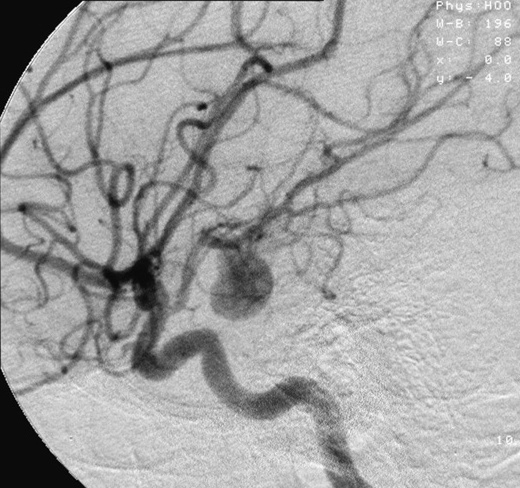
An aneurysm or aneurism (from Greek: ἀνεύρυσμα - aneurusma "dilation", from ἀνευρύνειν - aneurunein "to dilate") is a localized, blood-filled balloon-like bulge in the wall of a blood vessel. Aneurysms can commonly occur in arteries at the base of the brain (the circle of Willis) and an aortic aneurysm occurs in the main artery carrying blood from the left ventricle of the heart. When the size of an aneurysm increases, there is a significant risk of rupture, resulting in severe hemorrhage, other complications or death. Aneurysms can be hereditary or caused by disease, both of which cause the wall of the blood vessel to weaken.


Classification

Aneurysms may be classified by type, location, and the affected vessel. Other factors may also influence the pathology and diagnosis of aneurysms.

True and False Aneurysms

A true aneurysm is one that involves all three layers of the wall of an artery (intima, media and adventitia). True aneurysms include atherosclerotic, syphilitic, and congenital aneurysms, as well as ventricular aneurysms that follow transmural myocardial infarctions (aneurysms that involve all layers of the attenuated wall of the heart are also considered true aneurysms).

A false aneurysm or pseudo-aneurysm does not primarily involve such distortion of the vessel. It is a collection of blood leaking completely out of an artery or vein, but confined next to the vessel by the surrounding tissue. This blood-filled cavity will eventually either thrombose (clot) enough to seal the leak or rupture out of the tougher tissue enclosing it and flow freely between layers of other tissues or into looser tissues. Pseudoaneurysms can be caused by trauma that punctures the artery and are a known complication of percutaneous arterial procedures, such as arteriography, arterial grafting, or use of an artery for injection. Like true aneurysms, they may be felt as an abnormal pulsatile mass on palpation.

Morphology

Aneurysms are classified by their macroscopic shape and size and are described as either saccular or fusiform. Saccular aneurysms are spherical in shape and involve only a portion of the vessel wall; they vary in size from 5 to 20 cm (8 in) in diameter, and are often filled, either partially or fully, by thrombus. Fusiform ("spindle-shaped") aneurysms are variable in both their diameter and length; their diameters can extend up to 20 cm (8 in). They often involve large portions of the ascending and transverse aortic arch, the abdominal aorta, or less frequently the iliac arteries. The shape of an aneurysm is not pathognomonic for a specific disease.

Location

Cerebral aneurysms, also known as intracranial or brain aneurysms, occur most commonly in the anterior cerebral artery, which is part of the circle of Willis. The next most common sites of cerebral aneurysm occurrence are in the internal carotid artery.

Many non-intracranial aneurysms arise distal to the origin of the renal arteries at the infrarenal abdominal aorta, a condition some have postulated to be related to atherosclerosis. However, increasing evidence suggests abdominal aortic aneurysms are a wholly separate pathology.

The thoracic aorta can also be involved. One common form of thoracic aortic aneurysm involves widening of the proximal aorta and the aortic root, which leads to aortic insufficiency.

Aneurysms can also occur in the legs, particularly in the deep vessels (e.g., the popliteal vessels in the knee).

Arterial and Venous

Arterial aneurysms are much more common, but venous aneurysms do happen (for example, the popliteal venous aneurysm) ......

See the full article Aneurysm From Wikipedia, the free encyclopedia.


Ask a Scientist - Strokes and Aneurysms

Why do people have strokes after having suffered an aneurysm? Researchers answer your questions. For more details check out NRC's online S&T magazine Dimensions.


Brain Aneurysm Survivor: John's Story

While exercising on his lunch hour one day, John Davidson felt a sudden, severe shooting pain at back of head: his brain was bleeding. Hear from John and Lori Patsis, RN, about the immediate and life-saving care he received at Northwestern Lake Forest Hospital's Emergency Department.


Hemorrhagic Stroke Treatment at Barnes-Jewish Hospital

A hemorrhagic stroke, or what is also called a ruptured brain aneurysm, occurs when the walls of blood vessels are weakened, resulting in a blood-filled bulge. If left untreated, the aneurysm may rupture, causing a hemorrhagic stroke. Immediate and specialized treatment is a key element to minimize the damage, and survival depends on the expertise and speed with which a patient is treated.

Debbie was rushed to Barnes-Jewish Hospital after experiencing a hemorrhagic stroke. For more information about stroke treatment, visit http://www.barnesjewish.org/neurosciences/stroke-treatment-rehabilitation.

A hemorrhagic stroke, or what is also called a ruptured brain aneurysm, occurs when the walls of blood vessels are weakened, resulting in a blood-filled bulge. If left untreated, the aneurysm may rupture, causing a hemorrhagic stroke. Immediate and specialized treatment is a key element to minimize the damage, and survival depends on the expertise and speed with which a patient is treated.

The Stroke Team at Barnes-Jewish Hospital knows that time is critical, which is why they have honed treatment down to the second. They treat every stroke patient individually as no two aneurysms are the same, and each patient receives unique treatment based on their symptoms. The specialized critical care unit assigns a team to each patient and supervises the progress to help improve overall outcome.

To learn more, visit http://www.barnesjewish.org/neurosciences/stroke-treatment-rehabilitation.


Brain's Recovery Process After A Stroke or Aneurysm

Rehab specialist Dr. Andrea Toomer of Culicchia Neurological Clinic in New Orleans discusses how cells surrounding the brain recover from the trauma of a stroke or aneurysm. Dr. Toomer was addressing members of the New Orleans Brain Aneurysm Support Group.


Brain Aneurysms Animation

Brain Aneurysms, fusiform aneurysms, ruptured aneurysm, coiling of an aneurysm, clipping of an aneurysm.


Coil Embolization

This animation shows how a catheter is placed in a cerebral aneurysm, followed by coil placement inside the aneurysm.


Neurointerventional Stroke Rounds - Aneurysm Coiling

This 5 minute video walks through treatment of a brain aneurysm by coiling. Dr. Coleman Martin at the Saint Luke's Brain and Stroke Institute in Kansas City, Missouri explains the coiling process with models, animation and angiogram footage of an actual coiling.


Mayo Clinic Study on Brain Aneurysms

A new international collaborative study led by Mayo Clinic found that the risk of a brain aneurysm rupturing over time depends on the location and size of the aneurysm.

A brain aneurysm, also known as an intracranial or cerebral aneurysm, is an abnormal sac or tiny balloon on a blood vessel to the brain. Aneurysms can rupture and bleed into the area between the brain and the surrounding membrane, leading to stroke and death. An estimated 2 percent of Americans, approximately 6 million people, have brain aneurysms. These aneurysms rupture in about 25,000 people each year.

This study provides us with very useful information that will allow us to better guide our patients with unruptured aneurysms regarding the risk of aneurysm rupture during a very long period of follow-up, says Robert Brown, M.D., a Mayo Clinic neurologist and the studys lead investigator.

This study was part of the International Study of Unruptured Intracranial Aneurysms, which includes 4,059 patients with unruptured brain aneurysms at 61 different medical centers in North America and Europe. These patients have been followed for an average of more than nine years.

Dr. Brown and his team found that rupture risk was somewhat higher among patients with aneurysms in the back of the brain or in the posterior communicating artery, also in the back of the brain, compared to those in the front of the brain. Additionally, patients whose aneurysms were more than 13 millimeters (mm) in diameter were at least twice as likely to experience rupture, compared to those whose aneurysms were 712 mm in diameter.

This study will be presented at the 6th World Stroke Congress meeting in Vienna, Austria, on Sept. 25, 2008.

For more information from Mayo Clinic on aneurysms, click on the following link:
http://www.mayoclinic.org/cerebral-aneurysm/.


Saturdays Comics - Jan-05-2013


For Better and For Worse
Lynn Johnston - 2007-08-18

"No change. He's very bad tempered ..."
Dilbert
Scott Adams - 2013-01-04

"I quote as a news manufacturer..."

Garfield
Jim Davis - 2013-01-01

"Garfield, I'm taking the personal-hygiene pledge!"

Betty
Delainey & Rasmussen - 2013-01-04

"I think you should have a word with junior."    


* For Better and For Worse" is a serious topic of stroke but with a very nice cartoons. It is all about Grandpa Jim had a stroke and 88 further cartoon "strips" that happened to Grandpa Jim. (See as well  the author Lynn Johnston).
** I tried to get low or free price at the people http://www.UniversalUclick.com/ for the images for the cartoons. It was too high for Stroke Survivors Tattler i.e. we are not a regular newspaper and our budget is very low. Fortunately, you will have to do only 1-click more to see the cartoon image, it is legit and it is free using GoComics.com and Dilbert.com.
*** Changed from "Pickles" to "Betty" -- "Betty" is a excellent cartoon and Gary Delainey & Gerry Rasmussen are authors/artists/cartoon-strips and they live in Edmonton.

Saturday - Eclectic Stuff & Articles - Jan-05-2013

Definition:Eclectic(noun) a person who derives ideas, style, or taste from a broad and diverse range of sources.

Eclectic: Diane - I Swear, This Doctor Is Trying to Kill Me

Diane - The Pink House OTC
So, I think I have it all set up. I contacted the insurance company and got an approval for a home health care nurse to come to our house weekly to draw Bob's blood. Then yesterday, I get a call from  the insurance company telling me that the doctor refuses to sign the necessary paperwork and Bob's home draws are, therefore, cancelled.

I'm thinking, what the f---? So I call the doctor's office and talk to the nurse who tells me this decision was made by The Big Guy, I mean, The Big Kahuna, the doctor who owns the clinic, the Big Cheese. It's this pompous ass, excuse my French, who declined to sign the order.

The reason for this is, The Big Cheese says, that Bob is "too mobile" and, um, "too healthy", and (get this) "able enough" to get himself to the clinic to have his blood drawn every week. And therefore, Bob isn't "allowed" to have home health care.

I am sorry, but I about went through the roof! Because who does this hifalutin, pretentious jerk-off of a doctor think he is? God? And just how the hell does he think Bob is "able enough" to get to a lab? Weekly, mind you. And doesn't he realize that the only way Bob gets anywhere is if I push him there in his wheelchair? And is this arrogant, egotistcal, self-important bunghole of a doctor going to come to my house in his red freaking Ferrari and pick up Bob and take him to the clinic for me? (And yes, I am using my thesaurus today.) And, mind you, the clinic this overblown dickhead of a doctor wants Bob to go to is his clinic, so he can line his already overfilled pockets with more cash.

And jeepers, everyday I get out of bed with an aching back and sore legs and I am tired. I tell you, I am bone weary and near exhaustion with what I already do and this pinhead of a doctor wants to add pushing Bob to a clinic for a weekly blood draw to my already overwhelming list of chores?

Bob's regular doctor is on vacation until next week. I tell you, I will have to get on the phone and get a hold of that guy and if he insists on backing up The Big Cheese, there will be carnage. Mark my words.

Because, I tell you, this little girl is pissed! What a way to start off the New Year.

(PS: Phew! That felt really good! Just to get that off my chest.)

Posted by Diane at 9:50 AM December 29, 2012.

                                        in The Pink House On The Corner.

A few comments in the starting Dec/29. See the original article (above).

Anonymous said... Whew....glad you got that off your chest cause' I'd hate to be Bob if you hadn't.....lol. Seriously though, I agree with every word you said about that doctor and his reasoning. Inexcusable in my book too. I don't know how easy it is to change clinics/doctors but I think I would be looking. There is no good reason to have that extra work piled on you when sources are available to come to your home for the blood draw. Keep fighting, though you shouldn't have to. Hugs, Dan
December 29, 2012 11:12 AM

Anonymous said... I know is not good to wish bad things to others, but this people need to be in your shoes to comprenhed what are you going through, they have an easy life, they don't care. Stand up tall! I know you always do and I admire you for that. Yadira
December 29, 2012 11:20 AM

J.L. Murphey said... Diane, I went through a similar experience few years ago with my husband's cardiologist. I rightfully put him in his place...basically told him to his face what you wrote. He was humbled by the experience. I've seen too many doctors with a "god" complex.

This same cardiologist now listens when I talk and treats me with the proper respect. I was practicing medicine while he was still in high school.

I don't back down from a fight and neither should you.
December 29, 2012 10:56 PM

Cheri said... i'd like to know what exactly constitutes "immobile". Apparently this doctor doesn't think there is such a thing. ANYBODY can be dragged out of their bed, put in a wheel chair and hauled to a clinic. So where does this guy draw the line? Go get the mutha fucka, Diane! Chew him a new one!
December 30, 2012 8:10 AM

Article: SSTattler - Englishman Wakes up Speaking Welsh After Stroke

John - SSTattler

December 28 2012 By Daily Mail


An English man woke from a stroke to discover that the only language he could speak was Welsh.

Alun Morgan, 81, was forced to re-learn his native tongue, despite the  fact that he had never been able to speak fluent Welsh.

Indeed, he wasn’t entirely confident with his newfound talent and used a Welsh dictionary to make sure he was speaking it correctly.

Since suffering the stroke, Mr Morgan has been diagnosed with aphasia, which is caused by damage to the part of the brain responsible for using and understanding language.

While the condition can leave people with difficulties speaking and reading, the damage can also enhance other areas of the brain.

Doctors believe the stroke must have suppressed his memory of English, while bringing his knowledge of Welsh to the fore.

Although Mr Morgan was brought up in England, he was evacuated to his grandmother’s house in Wales during the war when he was 12 years old.

The retired Royal Navy Air Commodore, who lives with his wife Yvonne in Bathwick, Somerset, suffered the stroke in 2010.

He was taken to hospital where he spent three weeks being stabilised and assessed.

While he hadn’t lost the ability to speak, as happens to some stroke victims, doctors couldn’t understand a word he was saying.

He said: “It was clear something very funny was going on.

“I was compos mentis but was speaking totally Welsh. It gave my wife the shock of her life.”

He believes his memories of the Welsh language stem from his childhood. He moved to a small village in Mid-Wales for a year in 1944 but returned home to London the following year and lived the rest of his life in England.

He said: “I must have picked up the Welsh because my nan, who I went to live with during the war, spoke terrible English.”

Both Mr Morgan’s parents also spoke Welsh.

He added: “Having learned I was only speaking in Welsh and not English, I got myself a good Welsh dictionary to make sure I was speaking it correctly.”

Mr Morgan has been helped to overcome the condition by the Communication Support Service, run by the Stroke Association in Bath. He required lessons to learn to speak English again.

He said: “After the stroke it was hard going. Gradually the English words came back, but it wasn’t easy.”

But it seems his bilingual talents won’t last long. He added: “I’ve managed to remember English but I’ve almost forgotten Welsh again.”

Daily Mail © Associated Newspapers Ltd

Article: Dean - Medical Research - Stroke Rehab/Research

Deans' Stroke Musing

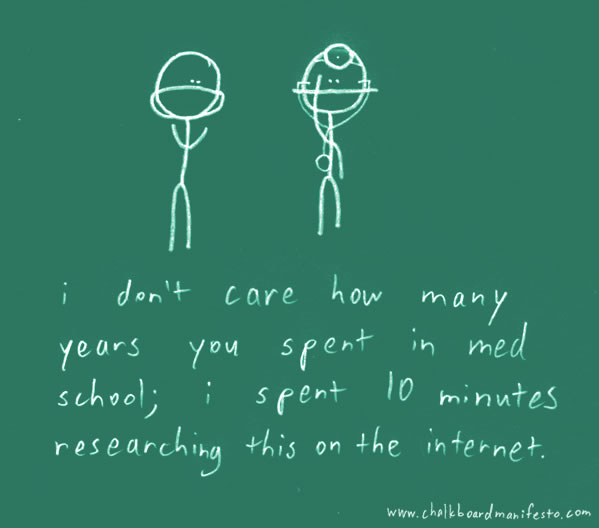
I couldn't help but spread this around. My version would have added a line: 
'Have you read any research articles since graduating?' 
'I didn't think so.' 
 -- Deans' Stroke Musing


See the article Medical Research - Stroke Rehab/Research
                        in Dean's Stroke Musing

Eclectic: Jackie - Medical Care in Texas

Jackie - SSTattler
The testicles of a Texas midget hurt and ached almost all the time. The midget went to the doctor and told him about his problem. The doctor told him to drop his pants and he would have a look. The midget dropped his pants.

The doctor stood him up onto the examining table, and started to examine him. The doctor put one finger under his left testicle and told the midget to turn his head and cough, the usual method to check for a hernia.

"Hmm..." mumbled the doctor, and as he puts his finger under the right testicle, he asked the midget to cough again.

Aha!" said the doctor, and reached for his surgical scissors... Snip-snip-snip-snip on the right side... then snip-snip-snip-snip on-the left side.

The midget was so scared he was afraid to look, but noted with amazement that the snipping did not hurt. The doctor then told the midget to walk around the examining room to see if his testicles still hurt. The midget was absolutely delighted as he walked around and discovered his testicles were no longer aching.

The doctor said, "How does that feel now?"

The midget replied, "Perfect Doc, and I didn’t even feel it. What did you do?"

The doctor replied, "I cut two inches off the top of your cowboy boots..."

Article: Mark - The Prevailing Winds -- A New Year Message

A prevailing wind blows predominantly from a single general direction over a particular point on the Earth's surface.  It is a natural phenomenon.  A prevailing wind is something that is expected.  To expect is to confidently believe something and to anticipate and prepare for it.   Prevailing winds are also metaphors for what to expect in the future.  During the last few years there have been new trends that cause us to develop new ways to deal with them.

Some of the trends we are now dealing with include:
  • Global weather changes
  • Financial and budgetary issues
  • The occurrence of increased violence 
  • Changes in world political views
  • Medicare and insurance coverage 
Most of us who provide and receive medical services have been keenly aware of the prevailing winds that pertain to personal insurance coverage and the moving away from expenses that were once covered by employer health insurance.  The costs for personal health care are dramatically increasing and we are realizing the increased costs for deductibles and percentages of medical fees.

In the very near future we will have higher personal health expenses and additional taxes.  The expectation that health policies and Medicare coverage will take care of all our medical needs is now changing with caps, ceilings and more stringent requirements for procedures and services.

Rehabilitative services for speech therapy are being significantly curtailed, especially for those with moderate to severe speech and communication difficulties due to the time required to treat these problems.

We must be aware of the prevailing winds within the profession and for those who need our services and begin educating the consumers who need speech therapy services that caps are becoming more commonplace for speech therapy and that they will have to take on greater responsibility for the care and expense for these services.

Yes, there are many changes that are affecting our society today and we must be prepared for them.  The Teaching of Talking was written to help both professionals, caregivers and loved ones find new ways to help those with speaking difficulties.

My message is plain and simple, like the way that we teach therapists and caregivers to help those who have lost the ability to speak and communicate.  Our health care system can no longer afford to provide ongoing speech therapy for severe speaking difficulties; family members and caregivers can learn how to stimulate speech and language at home.

We must all prepare for these changes by learning new speech and language stimulation methods that are simple and can become like second nature when incorporated into one's daily routine at home by loved ones and care givers.  Hopefully in the future therapists can train family members during the allotted time for speech therapy so that when it is time for discharge the speech and language stimulation can be continued at home.

The methods to stimulate speech and language in The Teaching of Talking can have a profound affect on one's ability to improve the ability to speak and communicate and I invite therapists, family members and caregivers to consider using this new approach to speaking instruction.  Our book is available on the teachingoftalking.com website and I am always accessible to help families or fellow professionals.

I wish for everyone a good year ahead in 2013 !

Sincerely,

Mark A. Ittleman, M.S., CCC/SLP
Speech Language Pathologist
http://teachingoftalking.com/

Article: Sharon - Things That You Can Do and Can Ask For!

Sharon - SSTattler
When I ask stroke survivors and their families why they don’t go to their local stroke recovery association or why they don’t look for information about stroke on the web, the most common answer is — “There is just no information that is useful  and useable for me.”  I understand that sentiment.

Although research on stem cells or a new treatment for arm and hand may be promising for someone who has a stroke ten or twenty years from now, it will make very little difference  for stroke survivors right now.

So what is available right now?  What does the research say is promising and available right now?

1. BionNess H200

The main commercially available neuroprosthesis developed to restore stroke survivors arm and hand movement is the Bioness H200.  It has various training modes for hand opening and closing.  It has been used with mild, moderate and severe paresis to undertake repetitive task-specific practice.

High quality randomized controlled trials and lower quality case studies report reductions in impairment (less spasticity and pain) and increases in use of hand in mild to moderate paresis in survivors using the Bioness H200.

Similarly, single case studies reported reduced impairment (less spasticity and pain) in survivors with severe arm and hand paresis (no active extension of the wrist or fingers).

In severe paresis of arm and hand, adding repetitive task specific training – in other words constraint therapy -- for 20 hours over 8 weeks resulted in increases in cortical activation (brain function in brain scans) which the researchers believe comes from increased use of the arm.

Based on these findings, these researchers suggest that the H200 could be used as an adjunct ‘gateway’ or ‘bridge’ in therapy.  Arm and hand therapy should include the use of the Bioness H200 along with constraint induced movement therapy (Hayward et al., 2010).

Read the review on FES:


2. The Acute Care Stroke Unit and Multidisciplinary In-patient Rehabilitation Unit

This is certainly not new research — Stroke survivors admitted to stroke units in acute care and then to in-patient rehabilitation units have much better recovery than those admitted to general wards(Chang et al., 2012; Chollet & Albucher, 2012) .  Canadian Stroke Network Best Practice Guidelines recommend this as best practice. So if you or someone in your family has a stroke, ensure that you (they) are admitted immediately to a dedicated stroke unit and to an in-patient stroke rehabilitation unit.  As well, rehabilitation should be as intensive as possible.

Read the studies:


3. Read-Right Therapy

This free downloadable therapy can help improve reading speed in people with Hemianopia Alexia. People with alexia have difficulty understanding written or printed language.   This program produced significant improvements in text reading speeds at with all amounts of use.  However there was a clear dose effect with more usage producing greater effects : 10 % at 5 h, 20 % at 10 h, 39 % at 15 h and 46 % at 20 h.  Sub-analyses demonstrated that greater dose effect was real. The gains were not likely due to multiple exposures to the testing materials (familiarity) or to the simple passage of time.

This is a good example of a clinically proven therapy being delivered over the internet. It demonstrates once again that therapists’ time is more limited than patients’ capacity to improve.  Consequently carefully designed, web-based resources like Read-Right are a realistic way of delivering a sufficient therapy dose to patients so they can obtain clinically meaningful improvements (Ong et al., 2012).

Read the study:


References


Article: Six Medical Heroes Named Canada's 2013 Hall of Fame Inductees

Six Medical Heroes Named Canada's 2013 Hall of Fame Inductees


Canada has an enduring culture of health care excellence – an achievement worth celebrating yet something we don’t do often enough. The Canadian Medical Hall of Fame – the only one of its kind in the world – aims to change that.

Every year, The Canadian Medical Hall of Fame elevates a select few of our country’s most brilliant minds to laureate status. Laureates are those who have pushed the boundaries of discovery and innovation beyond the realm of possibility to make the world a better place.

This year’s inductees, like the 95 laureates who have been similarly recognized since 1994, truly stand out. All are Officers of the Order of Canada, a fitting honour as they embody the good Canadian spirit of grit, perseverance and an overarching sense of humility.

Worthy of the world’s recognition, The Canadian Medical Hall of Fame is proud to announce the 2013 inductees:
  • Dr. Antoine Hakim (ON)
  • Dr. Arnold Naimark (MB)
  • Dr. David MacLennan (ON)
  • Dr. Bette Stephenson (ON)
  • Dr. Claude Roy (QC)
  • The Late Dr. Ian Rusted (NL) 

Dr. Antoine Hakim is among the world’s greatest neurologists. His focus: stroke. Dr. Hakim is the visionary behind the Canadian Stroke Network (CSN) – a national cadre of researchers and clinicians representing universities, government and non-profit organizations whose goal is to alleviate the burden of stroke on individuals, families and societies. As CSN’s founding CEO and Scientific Director, Dr. Hakim and his team championed the Canadian Stroke Strategy in 2005 in partnership with the Heart and Stroke Foundation of Canada which resulted in almost every Canadian province adopting a stroke strategy. Within five years, Ontario alone saw stroke patient admissions decrease by 11% and referrals to stroke prevention clinics increase by 34%. It takes steely resolve to change a health care system to that degree. Dr. Hakim heads up the Neuroscience Program at the Ottawa Hospital Research Institute, and is a professor of Neurology at the University of Ottawa.

Dr. Arnold Naimark transformed a “clinically-focused ... ===>>

See the Full Article Six Medical Heroes Named Canada's 2013...
                                 in The Canadian Medical Hall of Fame

Article: Janine Shepherd - You are not your body – my TED x KC Talk

Monty - SSTattler

You Are Not Your Body


We often define ourselves by things that are ‘outside’ us: relationships, work, family — even our own bodies. But what would it  mean to have your life dramatically altered and your body irrevocably damaged? Who would you be then? This talk explores the impact of loss on the human psyche and the universal quest to find meaning and fulfillment. It is only through the process of losing everything we thought we needed, that we find who we truly are.

Biography: 
 Janine Shepherd’s story reads like the plot of a Hollywood movie. A champion cross country skier in training for the winter Olympics, her life was irrevocably altered when she was run over by a truck during a training bicycle ride to the Blue Mountains. Today, Janine is much in demand as one of Australia’s most sought after motivational speakers. She travels extensively in Australia and overseas sharing her inspiring story of incredible courage and strength. It is a testament to the power of the human spirit and one that will move and inspire all.
(SSTattler: Acclaimed speaker and author.  See her site http://www.janineshepherd.com)

Article: SRA of Edmonton - My Story -- Tim Seefeldt

My old life ended early on the morning of Monday, March 15, 2010. I woke up that morning -- the first day after a long business road trip – tired and groggy, but otherwise fine.

It was the first work day following the “spring ahead” switch to daylight savings time. My house was quiet, so I figured I deserved a bit more sleep.

Minutes later, I’m really not sure how many, I woke up again and the world had changed. I was dazed and confused. The right side of my body was numb from head to toe. I couldn’t see properly. It was like somebody had covered my right eye with Vaseline. I knew where I was, but I didn’t… my surrounding seemed surreal. Familiar and strange at the same time. I tried to get out of bed. I figured a shower would shake off the cob-webs. But my right side wasn’t cooperating. I couldn’t make my right leg work like it was supposed to, and being half blind wasn’t helping either. Never mind the confusion. And the fear that was starting to take grip.

It wasn’t a smooth trip down the two flights of stairs to my bath-room. More trip than smooth. When I came out of the shower, none the better for my efforts to wash this away, my wife was there. I suppose she heard me bang and crash my way down-stairs. She looked scared. I remember her saying that she was going to call an ambulance. When I didn’t argue, she looked even more frightened.

These were the first moments of my new life. I was only 45 and the sole bread earner for my wife Patricia and my daughters, Kristina and Anna, who were 16 and 13 at the time my brain decided to short circuit.

I found out later that I’d had a large left posterior cerebral artery territory infarct. While that, like much else, made no sense to me, I knew that I was messed up. As I looked around my room at the Grey Nuns stroke unit I was amazed and frightened to realize that none of the posters on the walls made sense. It was like they were written in some other language.

It was shocking, I was an ex-newspaper reporter with designs on writing a book one day. Now, in a flash, I couldn’t read or write. There were other missing pieces in my brain, as well – short term memory, math skills... My future, my family’s future was in real jeopardy.

But I had some things going for me, too. I had fast treatment. And I had access to amazing medical staff and rehab pros. I re-learned my ABCs, figured out tricks to improve the memory and within six months I was back working. And working on a book about this bizarre journey.

I’m not the same guy I was before the stroke. I still have deficits like not being able to read at even close to normal speed. My brain just can’t recognize words the way it used to. And those closest to me notice differences in mood and attitude. But I’m able to work and live a meaningful life and function as an active father and husband. None of this was a certainty back when my brain started short circuiting.

There is hope after a stroke.

Copyright © 2013 Stroke Recovery Association of Edmonton. All Rights Reserved.

Eclectic: SSTattler - Blue Rodeo

Blue Rodeo 
Tuesday, Jan 8 & 9, 2013, 8 – 10pm
Northern Alberta Jubilee Auditorium
11455-87 Avenue

John - SSTattler
City / Town: Edmonton
Event Venue: Northern Alberta Jubilee Auditorium
Description: Blue Rodeo 25th Anniversary Tour
Category:    Concerts / Performances
Cost:        $25.00, $49.50, $65.50 (Plus FMF & 
             Service charges)
Ticketmaster: www.ticketmaster.ca…
Phone:       1.855.985.5000
Information: All ages show
Link:        www.jubileeauditorium.com


In celebration of 25 years since the release of their debut album, Outskirts, Blue Rodeo announces a cross-Canada tour, kicking off on January 2nd in Whitehorse, YT.

Blue Rodeo emerged in the early 80's as a countrified rock band in the era of hair metal and glossy pop. Despite sticking out like a sore thumb (or maybe because of it), their single "Try" became omni-present on radio across Canada and set in motion a three decade long career of headlining every club, theatre and arena in Canada. In 1993, when grunge rock was squeezing commercial rock off the radio, they recorded their most acoustic album, Five Days In July, and scored their biggest hit selling over a half million copies of that one record alone.

Over the course of the next 20 years, Blue Rodeo has been inducted into the Canadian Music Hall of Fame, sold over 4 million records, won an unprecedented 5 Juno awards as Group of the Year, been handed keys to the City of Toronto and given a Star on Canada's Walk of Fame. But for them, the accolades and awards pale in comparison to the good fortune of being musicians.

(SSTattler: I really like their country/blues/rock/... -- only my opinion but ... )

Blue Rodeo - Try

Live performance from Live 8 Canada, 2004.


Blue Rodeo: Heart Like Mine (early '80's)

I was in London, Ontario, producing a segment with a top American act. The interview was over and we were kinda shmoozing and then I heard the opening act band, Blue Rodeo. I was blown away. I offered them a spot on the show immediately and this was their first TV appearance. Live on my award-winning series IT'S ONLY ROCK 'N ROLL. No lip sync, no retakes, they rocked into Canadian rock history. Directed by Joan Tosoni.
qualityshows  I don't mean this to sound negative to American late night shows, but look at Joni's directing and the greatest handheld camera op I've ever worked with, Bongo Kolycius, and their work on this live cut blows the doors off whatever else you can see. One rehearsal, live audience, no cut or retakes or budget for post. That, my friends, is why Canada rules!

Article: New Header + Stat's for 2012 + ...

1) New Header for the Lead-Article

In January 2012 the lead-articles is one per YouTube and that is it!  This year, 2013,  I changed the header for the lead-article, formerly called "YouTube" article, to include some necessary ideas:
  1. Important reason is to tell people the Saturday News is going to happen today.
  2. Include a definition using Wikipedia, frequently possible,
  3. Include YouTube, Vimeo, and coming new video format,
  4. Include articles i.e. text in various forms .pdf, .doc, .LyX, ...
  5. Include pictures i.e. pic in various forms .gif, .jpg, .png, .tiff, ...
The emphasis is video but (1) to (4) are all optional.

This is the header:


The old header maybe used for other uses:


2) Statistical Unique-Vistor for the Year 2012 in the Weekly and Monthly


For weekly in Jan/01 started approximate 20 UV and goes up Dec/31 220+ UV (this last week partly include Jan-2013 - mark by the red segment).  The conclusion - it goes up approximate 10 times per year 2012.  See also the Last Week Statistic for Google Analytics.


For Monthly it smooth the curve but the data is about the same - Jan/01/2012 to Dec/31/2012..


3) Separate Preview Files "Preview 2013" and "Preview 2012"

At the start of Preview 2013 (i.e. ▶ Preview Next Saturday News) it has a link to:
See the whole Preview 2012.

---------