SSTattler: The motion of the shoulder is very complex; we will give you some examples for your shoulder motion & therapy but you have to ask your doctor or physiotherapy for your specific injury and specific type of therapy. A sling may be necessary for some therapy activities but as the patient begins to recover slings are of no value at this point.
Glenohumeral (or shoulder) subluxation is defined as a partial or incomplete dislocation of the shoulder joint that typically results from changes in the mechanical integrity of the joint. Subluxation is a common problem with hemiplegia, or weakness of the musculature of the upper limb. Traditionally this has been thought to be a significant cause of post-stroke shoulder pain, although a few recent studies have failed to show a direct correlation between shoulder subluxation and pain.
The exact etiology of subluxation in post-stroke patients is unclear, but appears to be caused by weakness of the musculature supporting the shoulder joint. The shoulder is one of the most mobile joints in the body. To provide a high level of mobility the shoulder sacrifices ligamentous stability and as a result relies on the surrounding musculature (i.e., rotator cuff muscles, latissimus dorsi, and deltoid) for much of its support. This is in contrast to other less mobile joints such as the knee and hip, which have a significant amount of support from the joint capsule and surrounding ligaments. If a stroke damages the upper motor neurons controlling muscles of the upper limb, weakness and paralysis, followed by spasticity occurs in a somewhat predictable pattern. The muscles supporting the shoulder joint, particularly the supraspinatus and posterior deltoid become flaccid and can no longer offer adequate support leading to a downward and outward movement of arm at the shoulder joint causing tension on the relatively weak joint capsule. Other factors have also been cited as contributing to subluxation such as pulling on the hemiplegic arm and improper positioning.
Diagnosis can usually be made by palpation or feeling the joint and surrounding tissues, although there is controversy as to whether or not the degree of subluxation can be measured clinically. If shoulder subluxation occurs it can become a barrier to the rehabilitation process. Treatment involves measures to support the subluxed joint such as taping the joint, using a lapboard or armboard. A shoulder sling may be used, but is controversial and a few studies have shown no appreciable difference in range-of-motion, degree of subluxation, or pain when using a sling. A sling may also contribute to contractures and increased flexor tone if used for extended periods of time as it places the arm close to the body in adduction, internal rotation and elbow flexion. Use of a sling can also contribute to learned nonuse by preventing the functional and spontaneous use of the affected upper extremity. That said, a sling may be necessary for some therapy activities. Slings may be considered appropriate during therapy for initial transfer and gait training, but overall use should be limited. As the patient begins to recover, spasticity and voluntary movement of the shoulder will occur as well as reduction in the shoulder subluxation. Slings are of no value at this point.
Functional electrical stimulation (FES) has also shown promising results in treatment of subluxation, and reduction of pain, although some studies have shown a return of pain after discontinuation of FES. More recent research has failed to show any reduction of pain with the use of FES.
Logical treatment consists of preventive measures such as early range of motion, proper positioning, passive support of soft tissue structures and possibly early re-activation of shoulder musculature using functional electrical stimulation. Aggressive exercises such as overhead pulleys should be avoided with this population.
References
Teasell RW: "The Painful Hemiplegic Shoulder". Physical Medicine and Rehabilitation: State of the Art Reviews 1998; 12 (3): 489-500.
Boyd EA, Goudreau L, O'Riain MD, et al.: A radiological measure of shoulder subluxation in hemiplegia: its reliability and validity. Arch Phys Med Rehabil 1993 Feb; 74(2): 188-93
Brandstater ME: Stroke rehabilitation. In: DeLisa JA, et al., eds. Rehabilitation Medicine: Principles and Practice. 3rd ed. Philadelphia: Lippincott-Raven; 1998:1165-1189.
Chae J, Yu DT, Walker ME, et al.: Intramuscular electrical stimulation for hemiplegic shoulder pain: a 12-month follow-up of a multiple-center, randomized clinical trial. Am J Phys Med Rehabil. 2005 Nov; 84(11): 832-42
Chantraine A, Baribeault A, Uebelhart D, Gremion G: Shoulder pain and dysfunction in hemiplegia: effects of functional electrical stimulation. Arch Phys Med Rehabil 1999 Mar; 80(3): 328-31
See the full article: Shoulder Subluxation From Wikipedia, the free encyclopedia.
The DeRoyal(R) Specialty Arm Sling is durable navy canvas construction with deep pocket design. To purchase your own DeRoyal(R) Specialty Arm Sling, just visit us at Rehabmart.com: http://www.rehabmart.com/category/Arm_Slings.htm
Hi, I'm James, and today I want to show you the DeRoyal Pro Shoulder Support. This is it, wearing it on the left shoulder. But with its unique design, it can be worn on the left or the right shoulder, and you don't need two different sorts of braces. The measurement is taken around the top of the bicep, and then you simply look on the Internet to find the right size for you on the chart. That's all available on Optomo.com.au.
Now the DeRoyal Pro Shoulder Support is made of a material called neotex. It's a little bit like a wetsuit material, and it wicks away the moisture so you can wear it for a long period of time without getting overly sweaty.
Now, the DeRoyal Pro Shoulder Support should be used for warmth and stability. It provides a medium level of structure. I'd feel quite comfortable playing football in this, but I wouldn't want to get out there and have to rely on it to provide 100% stability for a sore shoulder. You might want to use it for arthritis or a little bit of subluxation.
This shoulder support here is simply Velcro, and you can adjust that as you deem necessary. And that's it. That is the DeRoyal Pro Shoulder Support. It's in stock and available now on Optomo.com.au.
The comfort sling was designed out of necessity earlier this year when my friends sister had a shoulder surgery and was forced to immobilize her arm. Well, if anyone has ever worn those flimsy, confusing emergency room issued slings, you'll know they are extremely uncomfortable! The strap digs into your neck and near impossible to put on by yourself! Besides which, they do NOT immobilize your limbs!
So Theresa set out to make her sister more comfortable and it resulted in this amazing sling!
For the first time in 8 months following surgery, after wearing the comfort sling for just a short amount of time, Theresa's sister was finally pain free. This sling comfortably and completely immobilized her affected arm and she could finally rest without pain.
This sling is made out of approximately 1.5 yards of prewashed 100% cotton and can be adjusted to fit any adult frame easily. It is snug and non-binding across the back and sides. The shoulder strap length is adjustable also. It is completely machine washable, and comes in a variety of colors and patterns. ORDERS can be requested at "thecomfortsling@aol.com". Your request will be responded to within 24 hours.
http://collegeteamdoctor.com - How to put on an arm sling demonstrated by specialists in joint and bone injuries. How to wear your arm sling and maximize comfort.
Instructional video showing how to fit a Donjoy abduction immobiliser sling and a cloth immobiliser sling. Useful for patients following shoulder reconstruction and rotator cuff repairs when required to wear a sling. Also shown are techniques to passively move the shoulder when allowed by the surgeon, how to wash under the arm and how to position for sleeping.
Physical Therapy Treatments : How to Treat Subluxation
Uploaded on Jul 10, 2010
To treat subluxation of the shoulder, use a sling and an exercise ball to strengthen the shoulder muscles. Prevent further injury from subluxation with help from a physical therapist in this free video on physical therapy treatments.
Expert: Tricia Trinque MHE, PT
Contact: www.seabreezephysicaltherapy.com
Bio: Tricia Trinque MHE, PT is a physical therapist with more than 25 years of experience.
Filmmaker: Leonora Fishbein
Series Description: Physical therapy treatments are beneficial for many injuries and illnesses, from gout to arthritis and fractured bones. Learn an array of stretches and exercises to relieve pain and tension from illness and injury with help from a physical therapist in this free video series on physical therapy treatments.
*For Better and For Worse" is a serious topic of stroke but with a very nice cartoons. It is all about Grandpa Jim had a stroke and 88 further cartoon "strips" that happened to Grandpa Jim. (See as well the author Lynn Johnston).
** I tried to get low or free price at the people http://www.UniversalUclick.com/ for the images for the cartoons. It was too high for Stroke Survivors Tattler i.e. we are not a regular newspaper and our budget is very low. Fortunately, you will have to do only 1-click more to see the cartoon image, it is legit and it is free using GoComics.com and Dilbert.com.
*** Changed from "Pickles" to "Betty" -- "Betty" is a excellent cartoon and Gary Delainey & Gerry Rasmussen are authors/artists/cartoon-strips and they live in Edmonton.
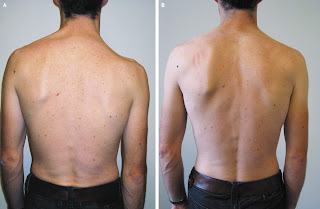
The topic today for the Tattler is subluxation. For me it was my shoulder and still is. I had a minor problem with this immediately after my stroke where my right shoulder which was paralyzed dipped below the unaffected side.
My arm weighs roughly seven pounds of dead weight. It threw my balance off when trying to walk. It also was pulling my shoulder out of the joint. The quick fix was a sling to hold the arm close to the body and take some of weight of the arm off the shoulder while standing. It helped on both counts. My balance was better and my shoulder was not bearing the full weight of the arm.
There are two schools of thought regarding sling use- use it and don't use it. I can see the reasons behind both of them. If a sling is used all of time it prevents the brain from relearning the proper alignment and posturing. It also limits or delays the recovery of use of that joint through range of motion. My point is it works well when limited in use for post stroke.
Now for part two of the story. Some of you may remember the hard fall I took right after I returned home. The one where I tore my AC joint tendon that took months to heal on its own because surgery wasn't an option.
This is another way to get shoulder subluxation. I had a definite dip and forward rotation of my shoulder because of it. I was put in a sling for pain control and to limit the motion of the shoulder. I was supposed to wear it constantly, but I didn't. I had regained full use of the shoulder by staying out of the sling as much as possible and moving the shoulder after my stroke, so I didn't want to lose that motion by making the arm inactive.
Not entirely smart on my part, but that was my reasoning. Yes, there was pain. Nine or ten out ten on the pain scale, but the old adage of 'use it or lose it' kept ringing in my ears. I didn't remove the sling until I was ready to work the arm and shoulder, and then it went right back into the sling. And yes, I did tell my orthopedist that I was doing it. His response was, "Don't go overboard. It's injured."
I'll admit it was rough going for months. It took three shots of steroids, extra PT, seven months, and a whole lot of pain pills to get through it, but I did it. Now with added PT on the shoulder and ten months later, it's almost back to where it was. The only thing holding me back is the spasticity in the upper arm from regaining 100% again. But that's another issue.
I'm on the fence on whether the best option is to sling or not sling a shoulder subluxation. I see the benefits and detriments having lived both. I guess it's ultimately up to you and your doctor on what the best course of action is. I'm just hard headed by nature and I'll kick a sleeping dog in the hinny. Sometimes it works, and sometimes I get bit.
Be proactive in your care. Research alternatives and be vocal about it or as best as you can be. Ask questions. Think about what is best for you and your goals. What works for me may not be the best option for you. Just as there are varying degrees and types of strokes, there are various tools that help us recover uniquely to the best of our abilities.
Nothing is impossible with determination.
3 comments:
Hilary Melton-Butcher May 11, 2013 said... Hi JL .. pleased to read this - at least you're being proactive ... the most important help in healing. All the best - Hilary J.L. Murphey May 11, 2013 said... Hilary, I always try to be. Zan Marie May 12, 2013 said... Proactive is the course of wisdom, if you ask me. I would be much worse off than I am if I had let doctors who didn't accept Fibro keep treating me. Not going to do it. Keep pushing as you see fit, Jo. ; ) See the original article: Stroke Survival ~ Subluxation in The Murphey Saga
In case this is one of your problems, they do talk a bit about shoulder pain which was one of my problems although my shoulder never subluxed. This has nothing to do with chiropractic subluxation. Glenohumeral Subluxation in Hemiplegia: an Overview
The shoulder complex consists of four separate joints, which afford it incredible mobility in all planes of motion, but at the expense of its stability. The glenohumeral joint (GHJ) relies on the integrity of muscular and capsuloligamentous structures rather than bony conformation for its stability. Injury or paralysis of muscles around the shoulder complex may lead to GHJ subluxation. Glenohumeral subluxation (GHS), a frequent complication for patients with a poststroke hemiplegia, is reported to be present in 17 to 81 percent of patients with hemiplegia following stroke, However, GHS’s role in poststroke complications is still controversial. Although the impact of GHS on the development of shoulder pain (SP) and upper-limb functional recovery has not been completely explained, a number of authors consider GHS an important source of SP. Moreover, several recent reviews focused on SP describe GHS management as the main intervention to prevent SP. Thus, although GHS is probably the most cited problem causing shoulder complications after stroke, no paper is available that focuses directly on this problem and describes in detail the main aspects of the origin, assessment, or treatment of this frequent
and poorly understood complication.
This paper intends to —
provide an extensive overview on GHS,
help explain its role in poststroke complications,
report the reliability and validity of clinical evaluations, and,
summarize the effectiveness studies on its prevention and management.
Flaccidity is an example of a point in the poststroke arc of recovery with consequences as bad, or worse, than spasticity. Spasticity carries with it the potential for contracture, pressure sores, pain, joint instability and deformities. Flaccidity, too, carries obvious physical risks (i.e., subluxation, muscle atrophy, etc.). But flaccidity also provides an ominous window onto the prognosis of the limb. Flaccidity says 2 things: “Recovery will have to wait” and/or “Recovery may have ended”.
There are two kinds of paralysis; flaccid paralysis and spastic paralysis. Most of the patients therapists see fall into neither category. Part of the reason that therapists typically don't see truly paralyzed patients is because, traditionally at least, little can be done to help. With the advent and broadening use of intrathecal baclofen, injectable neurolytics and the dorsal root rhizotomy, etc., the potential for treatment has broadened. Still, most of the people that are candidates for treatments that aim to improve limb movement are not going to be hemiplegic (paralyzed) -- they'll be hemiparetic (weak). The question becomes, is there more potential and somebody who has near flaccid or spastic?
We can look to pioneering physical therapist Signe Brunnström for insight. Brunnström’s six stages (Thanks “Pink House On The Corner” blog!) of recovery provide the ultimate template for recovery from stroke. Stage I is flaccid (although reflexes are available), stage II is harkened by the emergence of spasticity and synergies, and in stage III synergies and spasticity are at their zenith. So the progression is clear; flaccidity to spasticity. And as with much of Brunnström’s work there is an underlying wisdom; spasticity, as disdained and dangerous as it is, is preferable to flaccidity. This is especially true early after stroke. A patient with emergent spasticity can work in a repetitive and demanding fashion very early in the arc of recovery. And when it comes to stroke recovery, early is better. This is as true in rat models as it is in clinical trials involving human participants. But if somebody's flaccid, how you begin rehab? Although most patients do not remain flaccid, the delay that flaccidity creates provides a much more shallow recovery trajectory.
Spasticity may have another advantage over flaccidity with regard to issues outside of the progression towards recovery. Often the flaccid limb, whose dearth of sensation usually parallels its dearth of movement, is at risk of injury. Bluntly, the world can be a dangerous place to a flaccid limb. Like a weakling in a neighborhood of bullies, the flaccid limb is surrounded by walls, corners, countertops and other unforgiving surfaces. In the lower extremity is usually less of an issue because the flaccid limb can be controlled within the confines of a wheelchair. In the upper extremity the limb is often put in a trough and/or sling to protect the limb. These forms of stabilizing the upper extremity protect the limb in two ways; keeping the arm from flailing with the potential for injury; protecting the shoulder from subluxation.
Spasticity manages to protect the limb from these “bullies.” In the upper extremity the spastic posture brings the arm across the body, internally rotated and flexed at the elbow wrist and fingers. This posture is dictated by the overwhelming strength of the flexors and internal rotators. For an unprotected arm spasticity can be seen as a good thing, simply because it keeps the limb out of trouble.
Beyond providing an immature protection mechanism, spasticity may do other beneficial things as well. Spasticity may induce Wolf’s law, which states that bone will remodel through osteoblastic activity dependent on the loads it’s placed under. That is, the pull of muscle on bone is what keeps bones from becoming osteoporotic. This is particularly important issue because stroke survivors tend to fall towards the affected side. Because there is less bone strength on that side there is a higher chance of fracture. Spasticity may also improve circulation because of the activity in the triceps surae (gastroc, soleus). The primary way blood is delivered from the extremities back to the heart and lungs is the muscle contraction. With regard to the circulatory system spasticity is preferential to flaccidity, because the blood gets shunted towards the heart and lungs. Spasticity also maintains muscle bulk because, as pathologic as it is, at least the muscle is contracting.
Most importantly, spasticity provides a crude template for future recovery. But despite its advantage over flaccidity, all is not rosy with regard to spasticity. As the first line of defense, therapists are tasked with interrupting the march towards contracture. Tools in neurology and physiatry are helping with that task. Serial casting and a dedicated stretching program are also essential tools. The bottom line is, as much as spasticity is a welcome visitor it is best when it is exactly the: a visitor. Spasticity allows for at least the chance of its visit being shortened by allowing for movement in some planes and pivots. Take what spasticity give as you usher it out the door.
oc1dean May 7, 2011 said... I really like your analysis Pete but I want the ability to go back to flaccidity so I can recover easier. -- Dean Peter G Levine May 8, 2011 said... As always Dean, excellent point. Have you tried biofeedback? Here's some funny: In all survivors (if the research is to be believed) spasticity completely wanes during sleep. If thats true then why can't one volitionally relax even when awake? There seems to be some research that BF works. But why not buy a cheap unit (~$200) and see of you can self relax? oc1dean May 11, 2011 said... Thanks Pete, I'll have to look one up. My OT back when I had 'real' therapy never was able to find the unit and she had not worked with it anyway. It is slowly but surely getting better, flexing the finger thousands of times a day does work. I still need to find finger motors. -- Dean Pamela May 24, 2011 said... My stroke was in October 2009, and I started getting botox injections in my right arm for severe spasticity in April of 2010. I'm one of those lucky ones that has responded well and gotten back movement. But I continue to After Stroke, Spasticity Is a Bad Thing—but Things Could Be Worse.need injections every 3 months. The progress I make has been within each 8 to 9 week window the injections provide. I can now reach with an (almost) straight arm and grasp and release things, and can even perform some basic manipulations with my hand. What's frustrating is the gain/loss cycle every three months, even though the overall progress has been upward. Has there been any research about this gain/loss cycle, and the potential for eventually stopping use of the botox? See the original article: After Stroke, Spasticity Is a Bad Thing—but Things Could Be Worse in The Stroke Recovery Blog
On Wednesday, we finally got Bob a new G tube. I truly wanted and asked for one of those "low profile" tubes which has detachable tubing and looks like this:
Bob's new tub
I thought Bob would be much more comfortable without that tube dangling from his belly. And a detachable tube would be easier to clean.... But we ended up with this "standard" one, instead:
Because the doctor told me they didn't have anything like that. So I asked if one could be ordered for the next peg tube replacement and he said, if I wanted anything fancy, I should go out buy it myself! Jeepers. Like you can pick these things up at Wal-Mart...
I know the insurance will cover a low profile tube and other people on Medicare get them all the time, so why won't this doctor order one for Bob? grrrr....
Then I asked if I could be "trained" to do the next tube replacement at home, because I have read that a lot of people/caregivers do this with the balloon type of tubes. It really is just a matter of deflating the balloon, pulling it out, and sticking a new one in. But he said, no, it was not possible to "train" me.
I tell you, sometimes I think it's all just a crapshoot depending on what doctor you end up with.
The good news, however, is that this new GI doctor says that the tube should be changed out every three months to decrease risk of infection. He also said the balloon that keeps the thing in his belly does not last much more than three months and after that, there is a risk of it "deflating" and falling out. So he's ordering a home health care nurse to come and do the replacement at home every 3 months. Which will certainly be cheaper than paying a doctor to do it. Not to mention, if it's replaced every three months, the darn thing won't get so clogged. Though, I'm sure I could do the replacement myself if someone would just give me instructions and supplies. And that would save everyone, including the insurance company, money....
But I'm happy it's going to be replaced every three months. And to think, the old GI doctor just told me the tube should last "until it needs replacing" so we always ended up replacing it in an emergency situation.
This is Bob's 4th tube. The first tube was surgically implanted and after about nine months, it just exploded one day, split right down the side. Kaboom! Scared the crap out of me when that happened. And had to make an emergency run to the doctor's office. The 2nd tube was a balloon device and the darn thing deflated and just fell out after about 5 months. It fell out during the middle of the night and I found it in the morning, with a big mess on my hands, because the feeding pump was still going and the bed sheets were getting fed instead of Bob... when I called the GI doctor's office, I was told to bring him in at 1:00 p.m. but by that time, the hole in Bob's belly had closed and they had to take him to surgery to punch a new hole in....
The last tube, another surgically implanted one, was in there for nine months.... I wanted it replaced before KABOOM, or worse....
What a difference a doctor makes. Replacing it every 3 months makes some darn sense.
Lovenox
The last GI doctor also just yanked out Bob's first surgically implanted tube, without taking him off warfarin. He also did the second surgical procedure while Bob was on warfarin. This new doctor said that doing it that way was "too risky"and Bob could have hemorrhaged.
So, to prepare for this procedure, I had to take Bob off the warfarin starting on the Saturday before, then starting on Monday, I had to inject Bob each morning with Lovenox, a fast-acting heparin blood thinner. On the day of the procedure, I was not to inject the Lovenox until after the procedure was performed. This way, Bob was only off the blood thinner for a "small window" of time.
Now, I've never injected anybody with anything before--so this had me a bit freaked out. The doctor said he could send a home health nurse over to do the injections, but I declined that, because the injection only lasts 24 hours and has to be given at the same time daily and I did not want to sit around worrying if this nurse would show up on time every day or even show up at all. I'd rather have the whole thing under my control, so I know it's getting done right.
Anyway, the GI doctor's nurse told me she would send me directions, but unfortunately when they came it was only directions for when to start the warfarin etc. No directions on how to administer the injection. Then the pharmacy sent the lovenox and the only directions it had were "inject into the skin" and "see patient insert for further directions" however there was no patient insert... So I ended up downloading the patient insert from the internet.... and it didn't look too hard. I told myself, I could do it as long as I didn't freak out and remained calm.
The first morning of the injection, unfortunately, was total chaos. Starting with my morning bath, when I stepped into the tub only to find that I was--- GA! sharing a bath with a lizard! Whom I had to catch/rescue and release outside in the garden. Then, Bob was totally constipated and I had to ultimately get out the latex gloves and baby oil and go up there and "digitally stimulate/remove" a bowel movement, which is truly as gross as it sounds. Then the pharmacy arrived with a delivery which was all screwed up. Then one of the cats threw up all over my desk. And when I finally went to give that first injection, I was so frazzled I couldn't get the darn cap off the needle. It was like the darn thing was super glued on there.
And all this happened before we had to rush to catch the 10:15 a.m. transport for a doctor's appointment! So much for remaining calm...
But I managed. And I got through. And Bob's still alive, so I must've done it right.
This new tube is a love/hate relationship for me. I love it, because it's new and clean and boy, oh boy, does it flow. Not like the old one which ran like a clogged drain. But I hate it, because it's clunky and too short--I'm breaking my back leaning over Bob to do his feedings/medications. I already called to ask for a tubing extension but they didn't have any for Bob's brand of tube and told me "to go out and buy it" myself.
Jeepers.
I tell you, the medical community just sometimes baffles me....
2 comments:
J.L. Murphey May 11, 2013 said... Diane, You can expect more of the buy-it-yourself with the medicare cuts. The good news is you can bill medicare with the receipts...it will only take 6 months for the reimbursement. But at least it's not totally out of pocket. I'm glad you have a nursing service to help with Bob's peg tube. They can be cantankerous at best. A shower curtain hook from a coat stand works well. So much for a relaxing mind set for Bob's injection. lol those lizards are out to get you. The new needles make it easy to inject patients once you get over the first time. Of course I have plenty of practice between being a nurse and a diabetic. IM shots may be difficult when dealing with thin people, but normal people it's hit the biggest muscle group. IV shots take practice. Joyce May 12, 2013 said... Well darn. Who would have thought that the simpler tube would be considered "fancy" by the doctor. Don't understand that one! I agree, think it all depends on which doctor you happen to get. Also agree about home health visits. Our home health is good, but always later than they thought they would be, and their helpfulness varied. Also have to be homebound to qualify. Decided getting out and about was what Gary needed now. -- Joyce See the original article: A New Tube For Bob in The Pink House On The Corner
Just learned that The Teaching of Talking has been selected as a special offer by Amazon for the special price of $1.99. Hope many people who have lost the ability to speak and their caregivers will take advantage of this opportunity to save considerably and learn how to stimulate speech and language at home during daily activities. Likewise, parents whose children are not talking can take advantage of this opportunity to buy the Kindle Edition of the Teaching of Talking. We are also offering mentoring for those who purchase The Teaching of Talking should they have questions and wish additional guidance. This opportunity is wonderful for those who do not have easy access to professional services or those who are no longer eligible for insurance to cover speech pathology services. The Teaching of Talking would also make a wonderful edition to any speech language pathologist's library if they work with children or adults who have mild to profound speaking difficulties.
We don't get many second chances. This one could save your life. A TIA or transient ischemic stroke is a mini-stroke. Symptoms usually go away within twenty-four hours and you feel fine again. But if you don't get to a stroke center or hospital fast, you risk a full-fledged stroke that can change your life forever. Don't take that chance. Contact National Stroke Association at 1-800-STROKES, or visit stroke.org. and find out more about recognizing stroke symptoms fast.
Boston just relocated its rehab hospital. The new building is state-of-the-art and faces the river. That’s nice. It is also completely unfriendly to disabled people who need public transportation. Or their families. Before, the hospital was centrally located, near lots of trains. The new building is on the outskirts of town.
Today I had an appointment there. No trains go there. You can wait for a shuttle which does not drop you off at hospital, but a couple blocks away. Really? These are the people who need this service the most. There is a city bus that also drops you off somewhere else. I opted for the bus, which never arrived. So I walked along the bus route 40 minutes, near a bucolic freeway.
I received a marketing card in the mail from the hospital. I quote:
“Accessible via public transportation” “Less than 10 minutes from the former Nashua Street locations”
Truth in advertising?
3 Responses to “Distance”
Meg writes: No. 1 — May 2nd, 2013 Please let the rehab center know about this! They need to go back to square on on availability. They should be horrified by what you’ve found and take immediate corrective action. Chris Politano writes: No. 2 — May 3rd, 2013 Hope they correct this situation for you and others. Nasua street was very accessible. xina writes: No. 3 — May 4th, 2013 In my experience it is never disabled people making the decisions about accessibility and therefore accessibility needs are never truly addressed because those who do not NEED accessibility do no understand how important it is. I became physically disabled at the age of 35. I am 41 now. I have a progressive, degenerative neuromuscular disease. I encounter obstacles to accessibility on a daily basis. Nothing surprises me anymore. I have to take paratransit (public transportation for the disabled, protected by federal law with the Americans with Disabilities Act of 1990) and the vehicles used for this paratransit are very difficult for a disabled person like myself, who wears two braces on her legs and uses a walker to walk to get into and out of – and no one seems to find this ridiculous. I will call places in advance and ask if they are handicapped accessible and they will say yes and when I arrive there is a stair. One stair is enough to make it inaccessible. Or I will go to a place that is supposedly accessible, but it really isn’t. For example – all Target stores have handicapped accessible bathrooms – except they have a heavy door that you have to pull toward you to get into the bathroom. How exactly is someone in a wheelchair supposed to do that? Sometimes I feel like I’m doing a death march when where I need to go is the farthest point from where I am at. I feel your pain – and the pain of everyone else struggling just to make it to where they need to go.
Faced with a flight emergency, a Polish pilot pulled off a remarkable feat of airmanship that saved hundreds of lives and made it's way into aviation history. Actual video shot inside the cabin shows the passengers in the moments before the crash landing.
SSTattler: ""Still, the biggest threat to Google can be found 850 miles to the north: Bing. Microsoft’s revamped and rebranded search engine... helped boost Microsoft’s share of the US search market from 8 percent to about 11..." See Wired - Exclusive: How Google’s Algorithm Rules the Web.
About Search
Every day Google answers more than one billion questions from people around the globe in 181 countries and 146 languages. 15% of the searches we see everyday we’ve never seen before. Technology makes this possible because we can create computing programs, called “algorithms”, that can handle the immense volume and breadth of search requests. We’re just at the beginning of what’s possible, and we are constantly looking to find better solutions. We have more engineers working on search today than at any time in the past.
Search relies on human ingenuity, persistence and hard work. Just as an automobile engineer designs an engine with good torque, fuel efficiency, road noise and other qualities – Google’s search engineers design algorithms to return timely, high-quality, on-topic, answers to people’s questions.
Algorithms Rank Relevant Results Higher
Our algorithms attempt to rank the most relevant search results towards the top of the page, and less relevant search results lower down the page.
For every search query performed on Google, whether it’s [hotels in Tulsa] or [New York Yankees scores], there are thousands, if not millions of web pages with helpful information. Our challenge in search is to return only the most relevant results at the top of the page, sparing people from combing through the less relevant results below. Not every website can come out at the top of the page, or even appear on the first page of our search results.
Today our algorithms rely on more than 200 unique signals, some of which you’d expect, like how often the search terms occur on the webpage, if they appear in the title or whether synonyms of the search terms occur on the page. Google has invented many innovations in search to improve the answers you find. The first and most well known is PageRank, named for Larry Page (Google’s co-founder and CEO). PageRank works by counting the number and quality of links to a page to determine a rough estimate of how important the website is. The underlying assumption is that more important websites are likely to receive more links from other websites.
Panda: Helping People Find More High-Quality Sites
To give you an example of the changes we make, recently we launched a pretty big algorithmic improvement to our ranking—a change that noticeably impacts 11.8% of Google searches. This change came to be known as “Panda,” and while it’s one of hundreds of changes we make in a given year, it illustrates some of the problems we tackle in search. The Panda update was designed to improve the user experience by catching and demoting low-quality sites that did not provide useful original content or otherwise add much value. At the same time, it provided better rankings for high-quality sites—sites with original content and information such as research, in-depth reports, thoughtful analysis and so on.
Market Pressure to Innovate
“[Google] has every reason to do whatever it takes to preserve its algorithm’s long-standing reputation for excellence. If consumers start to regard it as anything less than good, it won’t be good for anybody—except other search engines.” Harry McCracken, TIME, 3/3/2011
Testing and Evaluation
We rely on rigorous testing and evaluation methods to rapidly and efficiently make improvements to our algorithms.
We rely on rigorous testing and evaluation methods to rapidly and efficiently make improvements to our algorithms.
Google is constantly working to improve search. We take a data-driven approach and employ analysts, researchers and statisticians to evaluate search quality on a full-time basis. Changes to our algorithms undergo extensive quality evaluation before being released.
A typical algorithmic change begins as an idea from one of our engineers. We then implement that idea on a test version of Google and generate before and after results pages. We typically present these before and after results pages to “raters,” people who are trained to evaluate search quality. Assuming the feedback is positive, we may run what’s called a “live experiment” where we try out the updated algorithm on a very small percentage of Google users, so we can see data on how people seem to be interacting with the new results. For example, do searchers click the new result #1 more often? If so, that’s generally a good sign. Despite all the work we put into our evaluations, the process is so efficient at this point that in 2010 alone we ran:
13,311 precision evaluations: To test whether potential algorithm changes had a positive or negative impact on the precision of our results
8,157 side-by-side experiments: Where we show a set of raters two different pages of results and ask them to evaluate which ones are better
2,800 click evaluations: To see how a small sample (typically less than 1% of our users) respond to a change
Based on all of this experimentation, evaluation and analysis, in 2010 we launched 516 improvements to search.
A Peek Inside
“At any moment, dozens of these changes are going through a well-oiled testing process…Every time engineers want to test a tweak, they run the new algorithm on a tiny percentage of random users, letting the rest of the site’s searchers serve as a massive control group.” – Read more from Steven Levy’s in-depth story in Wired, 02/22/10
Manual Control and the Human Element
In very limited cases, manual controls are necessary to improve the user experience:
Security Concerns: We take aggressive manual action to protect people from security threats online, including malware and viruses. This includes removing pages from our index (including pages with credit card numbers and other personal information that can compromise security), putting up interstitial warning pages and adding notices to our results page to indicate that, “this site may harm your computer.”
Legal Issues: We will also manually intervene in our search results for legal reasons, for example to remove child sexual-abuse content (child pornography) or copyright infringing material (when notified through valid legal process such as a DMCA takedown request in the United States).
Exception Lists: Like the vast majority of search engines, in some cases our algorithms falsely identify sites and we sometimes make limited exceptions to improve our search quality. For example, our SafeSearch algorithms are designed to protect kids from sexual content online. When one of these algorithms mistakenly catches websites, such as essex.edu, we can make manual exceptions to prevent these sites from being classified as pornography.
Spam: Google and other search engines publish and enforce guidelines to prevent unscrupulous actors from trying to game their way to the top of the results. For example, our guidelines state that websites should not repeat the same keyword over and over again on the page, a technique known as “keyword stuffing.” While we use many automated ways of detecting these behaviors, we also take manual action to remove spam.
The Engineers Behind Search
“So behind every algorithm, and therefore behind every search result, is a team of people responsible for making sure Google search makes the right decisions when responding to your query. Obviously, there’s no other way it could have happened: Google is a living example of what’s possible when brilliant people devise a smart algorithm and marry it to limitless computing resources.” – Tom Krazit, The human process behind Google’s algorithm, CNET, 09/07/10
Fighting Spam
Ever since there have been search engines, there have been people dedicated to tricking their way to the top of the results page. Common tactics include:
Cloaking: In this practice a website shows different information to search engine crawlers than users. For example, a spammer might put the words “Sony Television” on his site in white text on a white background, even though the page is actually an advertisement for Viagra.
Keyword Stuffing: In this practice a website packs a page full of keywords over and over again to try and get a search engine to think the page is especially relevant for that topic. Long ago, this could mean simply repeating a phrase like “tax preparation advice” hundreds of times at the bottom of a site selling used cars, but today spammers have gotten more sophisticated.
Paid Links: In this practice one website pays another website to link to his site in hopes it will improve rankings based on PageRank. PageRank looks at links to try and determine the authoritativeness of a site.
Today, we estimate more than one million spam pages are created each hour. This is bad for searchers because it means more relevant websites get buried under irrelevant results, and it’s bad for legitimate website owners because their sites become harder to find. For these reasons, we’ve been working since the earliest days of Google to fight spammers, helping people find the answers they’re looking for, and helping legitimate websites get traffic from search.
SSTattler: Made films for Neuro Film Festival goes on to the end of January 31, 2013 and this year's winning videos were announced and screened March 22, 2013. There is 23 films (25%) about "stroke" or related topic such as Traumatic Brain Injury and Epilepsy and... Other non-stroke films SSTattler will not show them but you can find them at View Videos - Neuro Film Festival (80 total).
Each film shown by SSTattler it has the labels about stroke e.g. Moyamoya or Central Pain Syndrome or ... and the corresponding definition by Wikipedia.
2013 Neuro Film Festival
The American Brain Foundation, the foundation for the American Academy of Neurology, is calling on all neurology patients, caregivers, and others to submit a short video to its 2013 Neuro Film Festival telling their story about why more money for research is needed in finding cures for brain diseases. Winners could win up to $1,000 and a trip to San Diego, California. The deadline to enter is January 31, 2013. Entries can come in the USA or Canada. Now in its fourth year, the Neuro Film Festival aims to raise awareness about the need to donate money for research into the prevention, treatment, and cure of brain and nervous system diseases, such as Alzheimer's disease, stroke, autism, Parkinson's disease and multiple sclerosis. Since 2010, more than more than 300 films have been submitted with more than 100,000 video views.
This year's winning videos were announced and screened March 22, 2013, at the Neuro Film Festival in San Diego in conjunction with the American Academy of Neurology's 65th Annual Meeting, the world's largest meeting of neurologists.
And the winners are...
GRAND PRIZE ($1,000 and a trip to San Diego)
Awarded by a select panel of judges for the film exhibiting creativity in a technically polished presentation:
Hope for HumaNS by Suzanne Gazda, San Antonio, TX
RUNNER-UP PRIZE ($500 and a trip to San Diego)
Awarded by a select panel of judges:
Epillepsy by Ingrid Pfau, Bozeman, MT
FAN FAVORITE AWARD (Online Recognition)
Awarded by peers as a result of public voting on video entries:
Little Heroes by Paola Leone, Stratford, NJ
The Neuro Film Festival, presented by the American Brain Foundation, aims to raise awareness about the need to donate money for research into the prevention, treatment, and cure of brain and nervous system diseases, such as Alzheimer's disease, stroke, autism, brain injury, Parkinson's disease, and multiple sclerosis.
A call was put out to neurology patients, caregivers, and others to submit a video sharing a personal story about why more money is needed in finding cures for brain diseases. This year's video submissions were touching, informative and inspiring.
Please continue to spread the word on the need for brain research. Join the American Brain Foundation in the fight to cure brain disease.
Kyle Bryant hosts an annual charitable bike ride that raises funds and awareness for ataxia research. In Ride 4 Ataxia: A Community of Care, Bryant discusses his initial feelings about being diagnosed with the disease and how he got involved in adaptive sports.
I have Epilepsy. I am trying to help raise awareness about the effects neurological conditions have on the people who live with them and their loved ones. It is something we don't often hear about in the media. I am hoping you'll watch this video, and consider checking out the web-site I mention in it. It's an important subject. And please check out the Neuro Film Festival You Tube Channel. Hopefully, my video will be amongst the many that will be featured on it for the 2013 Neuro Film Festival. Voting starts in early February! Peace!
This film has been entered into the 2013 Neuro Film Festival from the American Brain Foundation at www.NeuroFilmFestival.com. Let's put our brains together to cure brain disease. Visit CureBrainDisease.org.
View the Faces of CADASIL, a slideshow video about people from around the world with a rare and serious genetic disease. CADASIL is believed to affect many more people than have yet been diagnosed. CADASIL is sometimes misdiagnosed as MS, as patients may have similar symptoms. People from ten countries are represented in this video, but a world map of CADASIL would show that CADASIL does not discriminate.
This film has been entered into the 2013 Neuro Film Festival from the American Brain Foundation at www.NeuroFilmFestival.com. Let's put our brains together to cure brain disease. Visit CureBrainDisease.org.
"This film has been entered into the 2013 Neuro Film Festival from the American Brain Foundation at www.NeuroFilmFestival.com. Let's put our brains together to cure brain disease. Visit CureBrainDisease.org."
This film has been entered into the 2013 Neuro Film Festival from the American Brain Foundation at www.NeuroFilmFestival.com. Let's put our brains together to cure brain disease. Visit CureBrainDisease.org.
This film presents an epileptic patient describing and experiencing a feeling he experiences before getting an episode of seizure. This feeling is called Jamais Vu, which is described as being in a familiar situation or with a familiar person but not being able to recognize them. The film also discusses how little is known about epilepsy despite the major advances in diagnosis and treatment and it highlights the emotional difficulties epileptic patients face as a result of having the disease.
This film has been entered into the 2013 Neuro Film Festival from the American Brain Foundation at www.NeuroFilmFestival. com. Let's put our brains together to cure brain disease. Visit CureBrainDisease.org.
This film has been entered into the 2013 Neuro Film Festival from the American Brain Foundation at www.NeuroFilmFestival.com. Let's put our brains together to cure brain disease. Visit CureBrainDisease.org." In this video, a neurologic disease called CADASIL, affects not only the patient and the family but also the future of their children and future of other generations unless researchers can find a treatment or cure.
Unconditional Love by Marty Novitsky (#39 - Stroke)
Published on Jan 31, 2013
This film has been entered into the 2013 Neuro Film Festival from the American Brain Foundation at www.NeuroFilmFestival.com. Let's put our brains together to cure brain disease. Visit CureBrainDisease.org.
Short film about the Son Marty Novitsky, who took care of her paralyzed mom for 10 years. And the amazing gift that he received at the end.
In our speeded-up, highly complex society we need to remind ourselves about the REAL important things in life. "Unconditional love" is a video that emphasizes the importance of taking care of a loved one and to inspire that you too can be your family's care giver. As the traditional phrase reminds us, "Do to others as you would have them do to you."
Marty: I have had countless friends. They were all very important. I was the best man 7 times. My bests friends were Alex and Irene Novitsky. They taught me to obey the golden rule. The golden rule is give onto others what we would have others give onto us.if you follow this rule you will be a very proud caregiver.
This film has been entered into the 2013 Neuro Film Festival from the American Brain Foundation at www.NeuroFilmFestival.com. Let's put our brains together to cure brain disease. Visit CureBrainDisease.org.
Let's put our brains together to prevent brain disease. Visit CureBrainDisease.org ABF, Neuro Film Festival, American Brain Foundation, AAN, neurology, and film festival.
My wife Nataile suffered a stroke in the hospital after a mild brain surgery related to here Moyamoya condition. It has affected our lives in ways that I can't even put into words, but the person that has felt the brunt of the changes is our son Evan. This is a look at the Events through the eyes of a 6 year old (4 when it happened).
"This film has been entered into the 2013 Neuro Film Festival from the American Brain Foundation at www.NeuroFilmFestival.com. Let's put our brains together to cure brain disease. Visit CureBrainDisease.org."
Meet Kenna, a 14 year old highschool student. She is in the color guard, enjoys creating YouTube videos, and hanging out with her friends. Kenna is a "normal" kid, the only difference is that she has epilepsy.
This film introduces a mysterious and fatal neurological disease plaguing the children of northern Uganda. Neurologist Suzanne Gazda and Sally Baynton, PhD discuss the disease, its ramifications and their efforts to bring hope to the families suffering as a result. In this film, Hope for Humans documents the opening of its Care Center in August, 2012 which serves as a site for education, research, and much needed respite for the children and their families.
This film has been entered into the 2013 Neuro Film Festival from the American Brain Foundation at www.NeuroFilmFestival.com. Let's put our brains together to cure brain disease. Visit CureBrainDisease.org.
"This film has been entered into the 2013 Neuro Film Festival from the American Brain Foundation at www.NeuroFilmFestival.com. Let's put our brains together to cure brain disease. Visit CureBrainDisease.org."
"This film has been entered into the 2013 Neuro Film Festival from the American Brain Foundation at www.NeuroFilmFestival.com. Let's put our brains together to cure brain disease. Visit CureBrainDisease.org."
"This film has been entered into the 2013 Neuro Film Festival from the American Brain Foundation at www.NeuroFilmFestival.com. Let's put our brains together to cure brain disease. Visit CureBrainDisease.org."
Asiati has had five strokes resulting in physical and speech disabilities. But she is a fighter. She struggles daily to overcome her speech disability known as Aphasia. The strokes have confined her to a scooter, but she defies that by getting out of it and walking a few steps when she can. She will never give up!
"This film has been entered into the 2013 Neuro Film Festival from the American Brain Foundation at www.NeuroFilmFestival.com. Let's put our brains together to cure brain disease. Visit CureBrainDisease.org."
This film has been entered into the 2013 Neuro Film Festival from the American Brain Foundation at www.NeuroFilmFestival. com. Let's put our brains together to cure brain disease. Visit CureBrainDisease.org.
Often taken for granted, thrombolytic therapy and interventional modalities of stroke require further research and momentum to improve the rate of excellent clinical outcomes. We highlight a case which shows just how important and amazing such therapies can be. Lets put our brains together to cure brain disease.




 Just learned that The Teaching of Talking has been selected as a special offer by Amazon for the special price of $1.99. Hope many people who have lost the ability to speak and their caregivers will take advantage of this opportunity to save considerably and learn how to stimulate speech and language at home during daily activities. Likewise, parents whose children are not talking can take advantage of this opportunity to buy the Kindle Edition of the Teaching of Talking. We are also offering mentoring for those who purchase The Teaching of Talking should they have questions and wish additional guidance. This opportunity is wonderful for those who do not have easy access to professional services or those who are no longer eligible for insurance to cover speech pathology services. The Teaching of Talking would also make a wonderful edition to any speech language pathologist's library if they work with children or adults who have mild to profound speaking difficulties.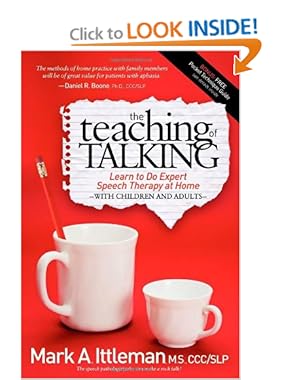


 Published on Apr 4, 2013


